


More and more people are considering tattoo removal due to past traces or changes in style. However, the ink is already deeply embedded in the skin. Applying ointment at home or trying folk remedies will not remove it.
While there are talks of cover-ups or procedures at beauty salons, it is better to receive treatment with laser equipment at a dermatology clinic to safely remove tattoos while minimizing skin damage.
Layer where pigment is located
Tattoo pigment is injected deep into the dermal layer of the skin. To remove it, precise lasers are needed to selectively destroy the pigment while minimizing damage to the surrounding skin.

What to look for when choosing equipment
The dermatology clinic first checks the condition of the tattoo and then selects the equipment. The items checked are as follows:
- Tattoo color
- Depth of pigment
- Patient's skin tone
The appropriate equipment varies depending on these three factors. The detailed procedure flow is summarized in Tattoo Removal Treatment Guide.
Picosecond unit changed the conditions
PicoWay is a picosecond laser that penetrates strongly in a short time to quickly break down pigment. Compared to existing nanosecond lasers, it is reported to cause less thermal damage and break pigment fragments into smaller pieces. It offers advantages in both removal capability and recovery conditions.
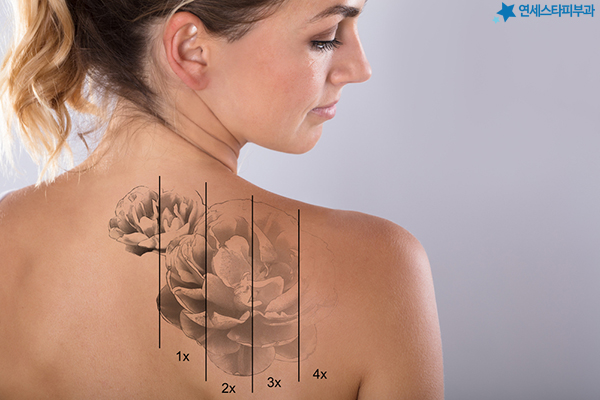
Meaning of multiple wavelengths
As picosecond tattoo removal has become established, the types of equipment have gradually diversified. A wider range of choices is an advantage, but it can also make it confusing to decide what to receive.
Each wavelength that reacts to pigment has different characteristics. For tattoos with multiple colors, the more types of wavelengths the equipment can handle, the more advantageous it is.
PicoWay can be performed by combining 4 wavelengths, approaching it in a way that enhances completeness compared to removal with a single wavelength.
This difference is particularly evident in tattoos with multiple pigments. Equipment configurations can be found in R-Zero Pico-Frectat Tattoo Removal Guide, and other methods in Nd:YAG Tattoo Removal.
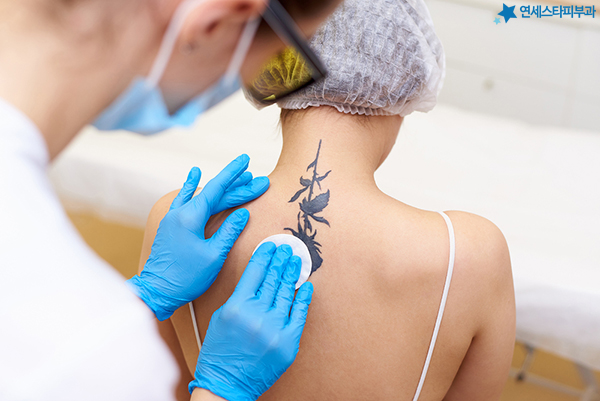
A process that doesn't end in one session
Even with a pico laser, it cannot be erased in one go. This is because the pigment is layered deep within the skin, and to reduce the probability of side effects such as burns or blisters, it must be done in multiple sessions.
At this time, processes that help reduce pain and prevent scarring, such as the Pinhole Technique or cooling, are considered together. It is better to balance safety and speed rather than focusing solely on removal. The principles of scar management are summarized in Pinhole for Burn & Surgical Scar Treatment Guide.
| Item | Standard | Note |
|---|---|---|
| Treatment interval | Usually 4 to 6 weeks | Adjusted according to recovery status |
| Number of sessions | 5 to 10 or more depending on pigment condition | Significant individual differences |
| Variable factors | Tattoo color, size, treatment depth | Confirmed together during consultation |
| After treatment | UV protection, moisturizing care | Throughout the recovery period |
If you have any questions, you can easily ask them via Chat Now.
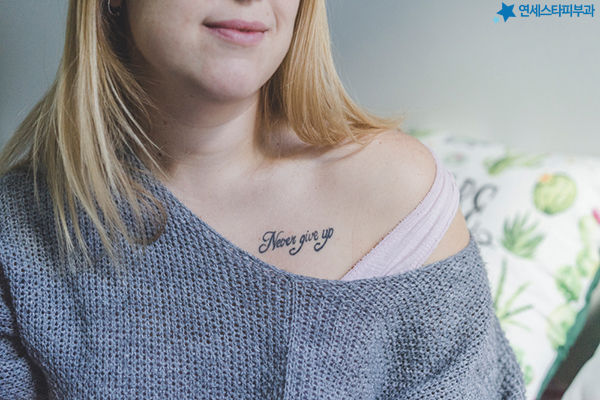
Why consultation comes first
The specialist adjusts the laser wavelength according to skin tone, tattoo depth, and color. Therefore, thorough consultation and condition check come before starting treatment. This approach differs from simply increasing intensity without a plan.


Authored · Medically Reviewed by Chief Director Lee Sang-joo (Dermatologist) Graduated from Yonsei University College of Medicine · Ph.D. in Medicine from the same graduate school · Resident in Dermatology at Severance Hospital Currently Adjunct Professor, Department of Dermatology, Yonsei University College of Medicine · President of the Korean Dermatological Association in 2026 View Medical Staff Profile
First published 2025-10-20 · Last reviewed 2026-07-29
This article contains general medical information and does not substitute for individual diagnosis and treatment. Results and recovery may vary individually.