


Many people seek skin tattoos to eliminate concerns like melasma, stretch marks, scars, or dark circles all at once.
There's a significant increase in cases where people prefer to conceal skin conditions or tattoos with cover-up tattoos that match their skin tone, rather than treating them.

Concerns that don't need to be covered
Melasma, dark circles, scars, and stretch marks can be removed or treated at a dermatology clinic without the need for cover-up tattoos.
However, due to the need for repeated treatments, many people opt for skin-tone cover-up tattoos.


The limitations of skin tone created by mixing colors
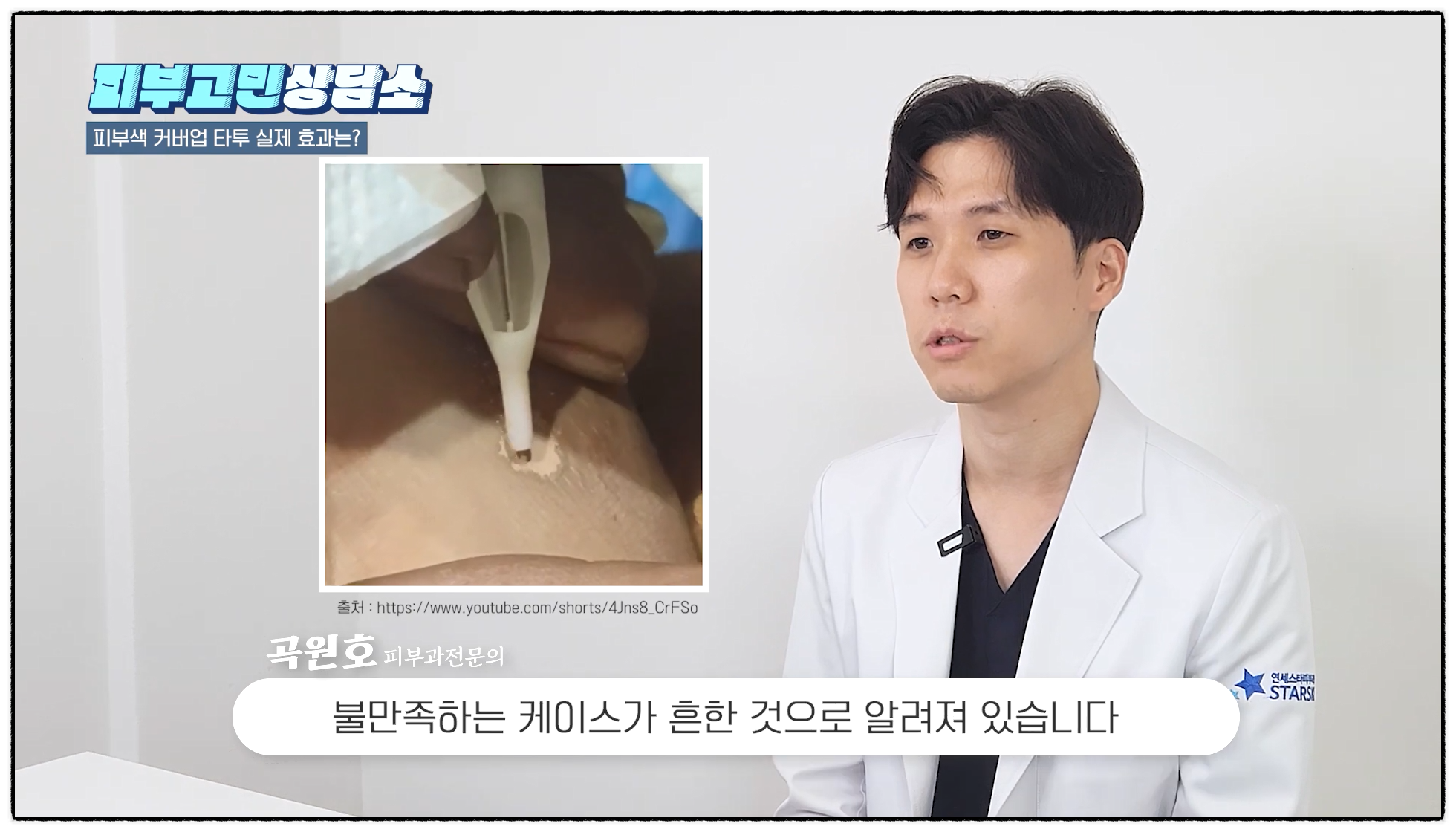
To achieve a skin tone, tattoo artists mix various colors. Although pigments are injected to match the skin tone as closely as possible, it is common for cases to be unsatisfactory after the procedure due to a mismatch with the actual skin tone.
Due to the nature of tattoos, covering an existing tattoo with a skin-tone tattoo often results in a mottled appearance as the colors mix.

It becomes visible when the seasons change
Even if you received a well-done tattoo that initially showed no signs, problems can still arise. This is because our skin tone changes slightly with the seasons.
Colors that initially matched well may become noticeable in the covered-up area over time, leading to regret in many cases.

What comes with mixing various pigments
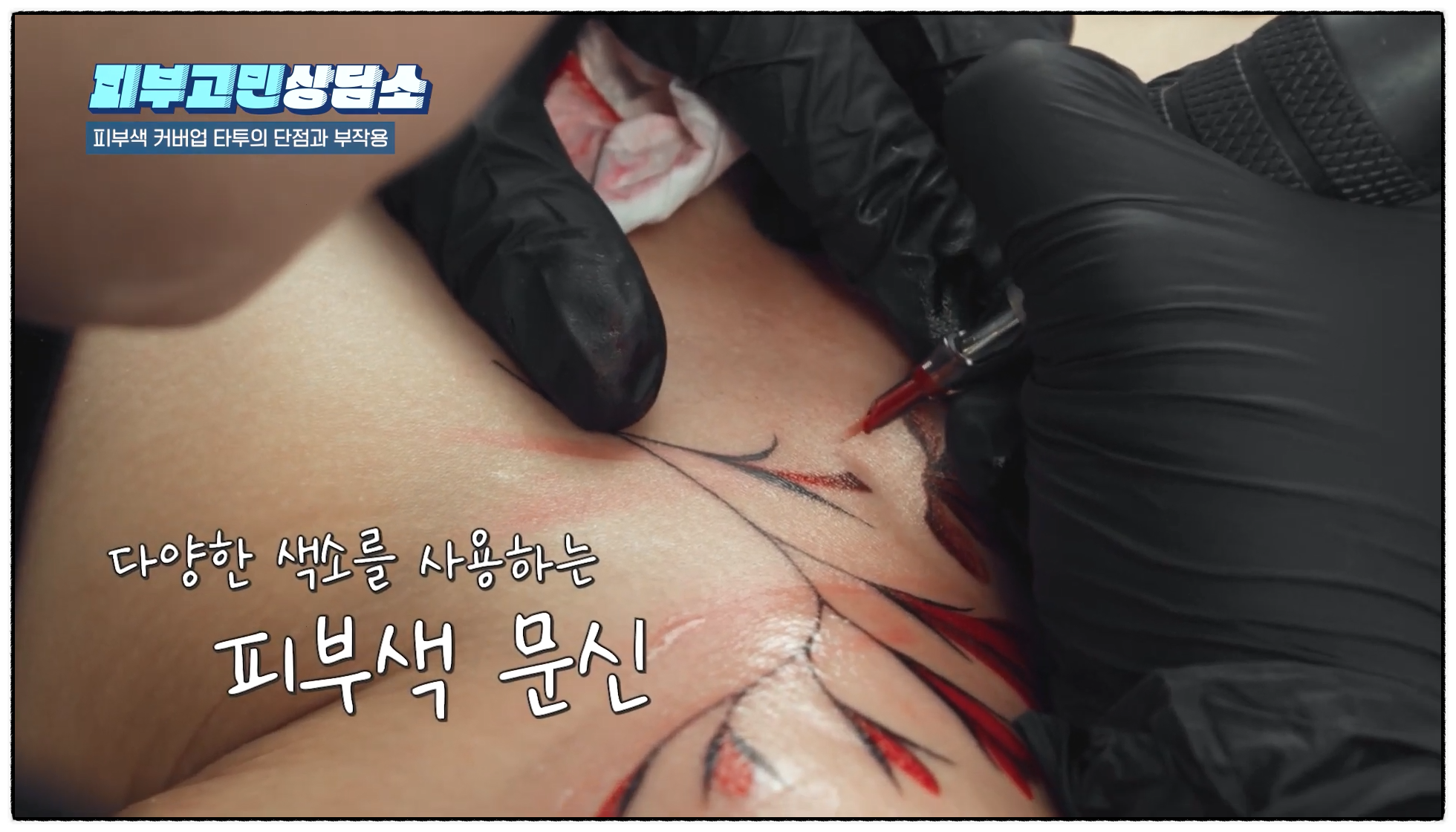
When various tattoo pigments are mixed to create similar colors, the possibility of including pigment substances that trigger allergic reactions in certain skin types also increases.
For these reasons, if you cover melasma, dark circles, or stretch marks with a cover-up tattoo, you may end up in a situation where you need to remove the tattoo again and also treat the original skin concern.


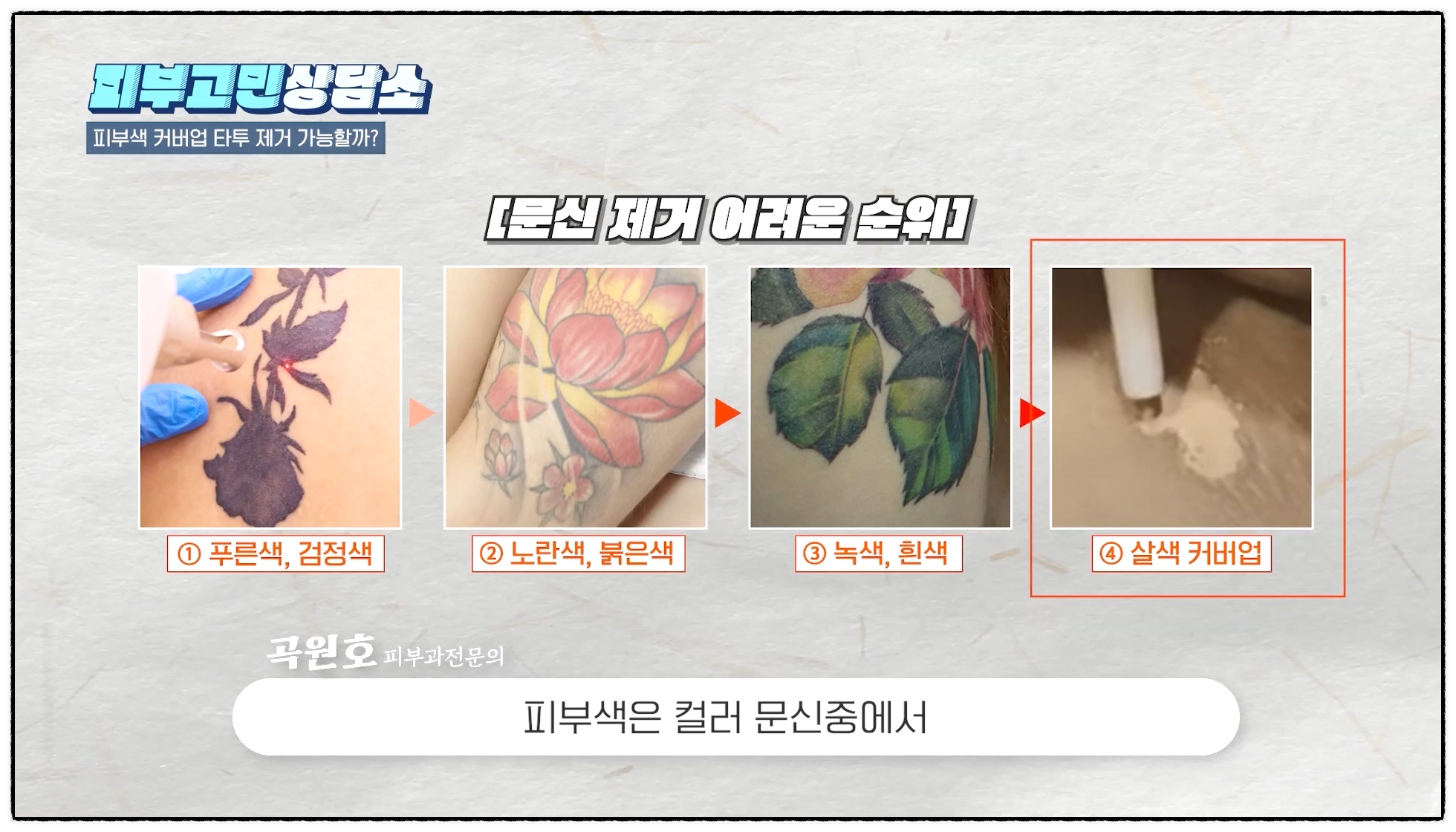
Skin-tone tattoos are among the hardest to remove
Skin-tone tattoos are among the most difficult color tattoos to remove. Not only does removal take a long time, but it is also common for the following changes to occur during the removal process:
- The color may become even darker
- The pigment may turn green
- The area may remain patchy
Consistent treatment can gradually remove it, but dozens of sessions may be required, and some parts might remain. Therefore, you should make a careful decision before getting a skin tattoo.
Especially if you had a cover-up tattoo over an existing tattoo, it means pigment was layered over pigment, requiring a much longer removal period. The methods for handling color pigments are detailed in the R-Zero Pico-Frectat Tattoo Removal guide.


Choosing methods to reduce the duration
For cover-up tattoos, shortening the removal period is key. Therefore, it is better to choose methods that proceed faster than conventional ones.
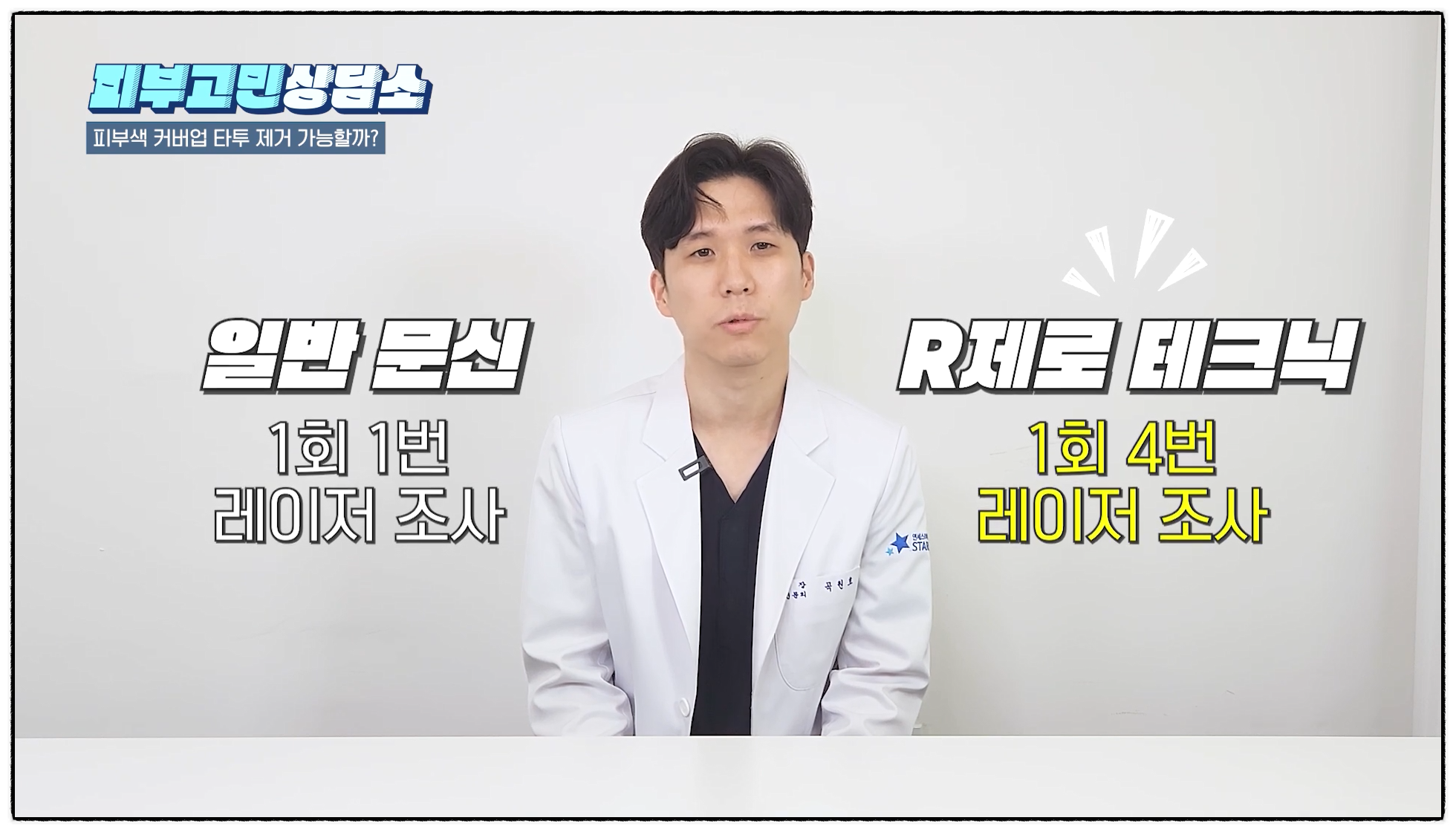
When a laser is applied to the tattooed area, white bubbles rise, meaning that with general tattoo removal, the area can only be irradiated once per session.
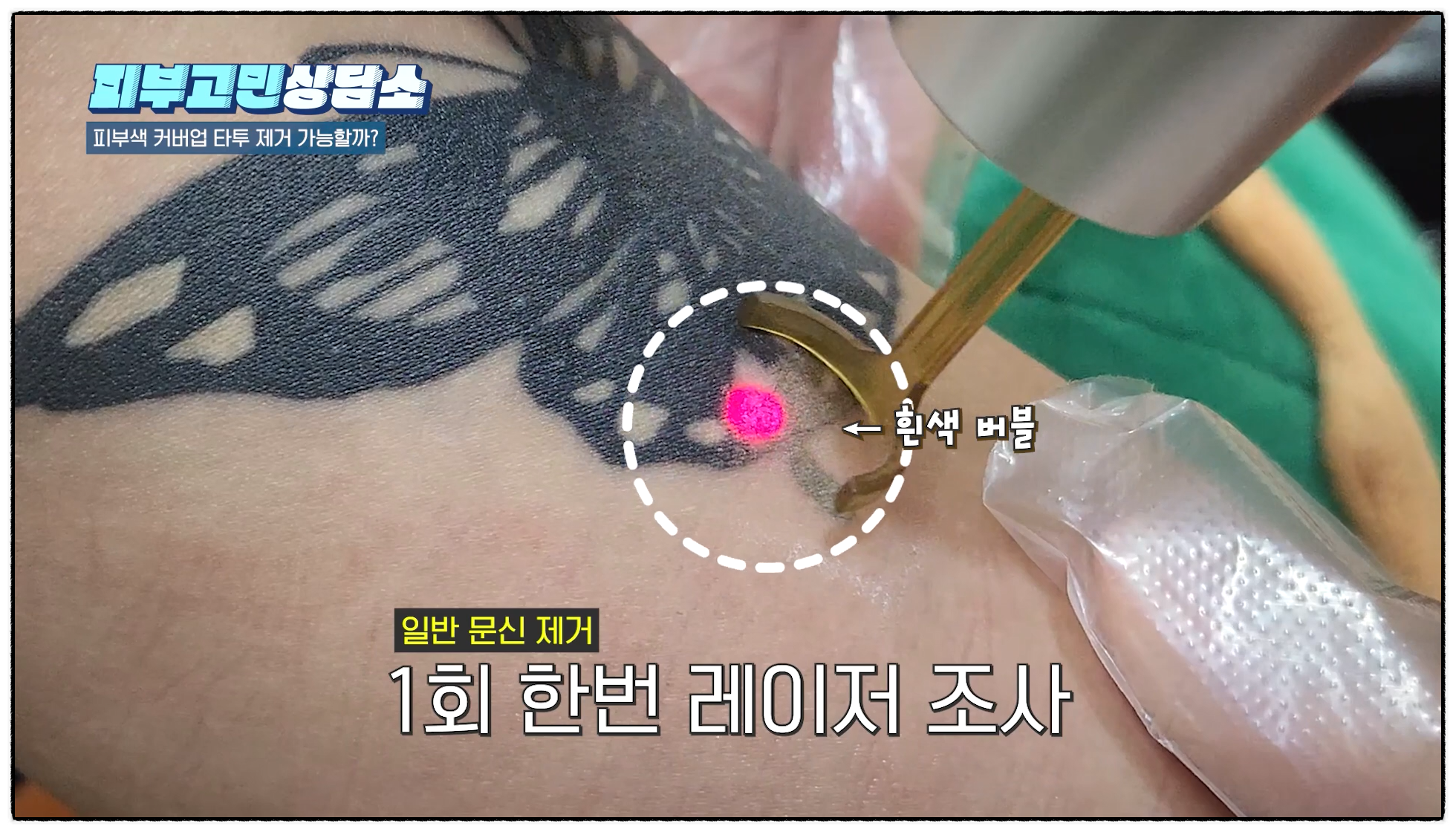
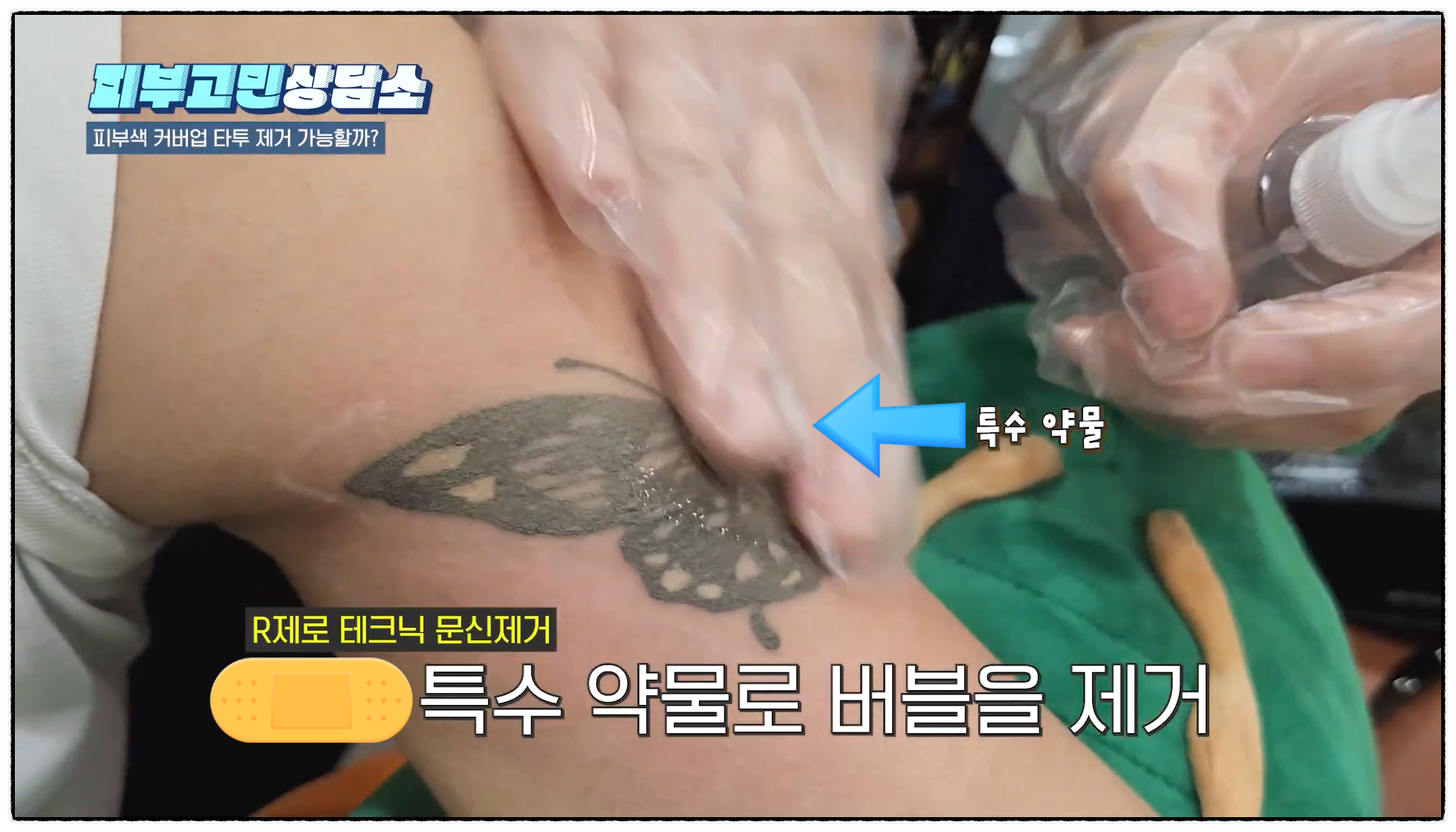
RO Technique allows for up to 4 repeated treatments because it applies a special medication to make the bubbles disappear.
| Category | Number of irradiations per session | Burden on cover-up pigment |
|---|---|---|
| General Tattoo Removal | 1 time | Tends to prolong the duration |
| RO Technique | Up to 4 times | Aims to reduce the duration |
For scars, you can refer to the Pinhole for Burn & Surgical Scar guide, and for predominantly black tattoos, Nd:YAG Tattoo Removal can also be considered.


Before covering, treat the original concern
If you opt for a skin tattoo, trying to solve a skin concern easily can lead to needing both tattoo removal and treatment for the original concern, doubling the time and cost.
It's like trying to remove one lump only to add another.
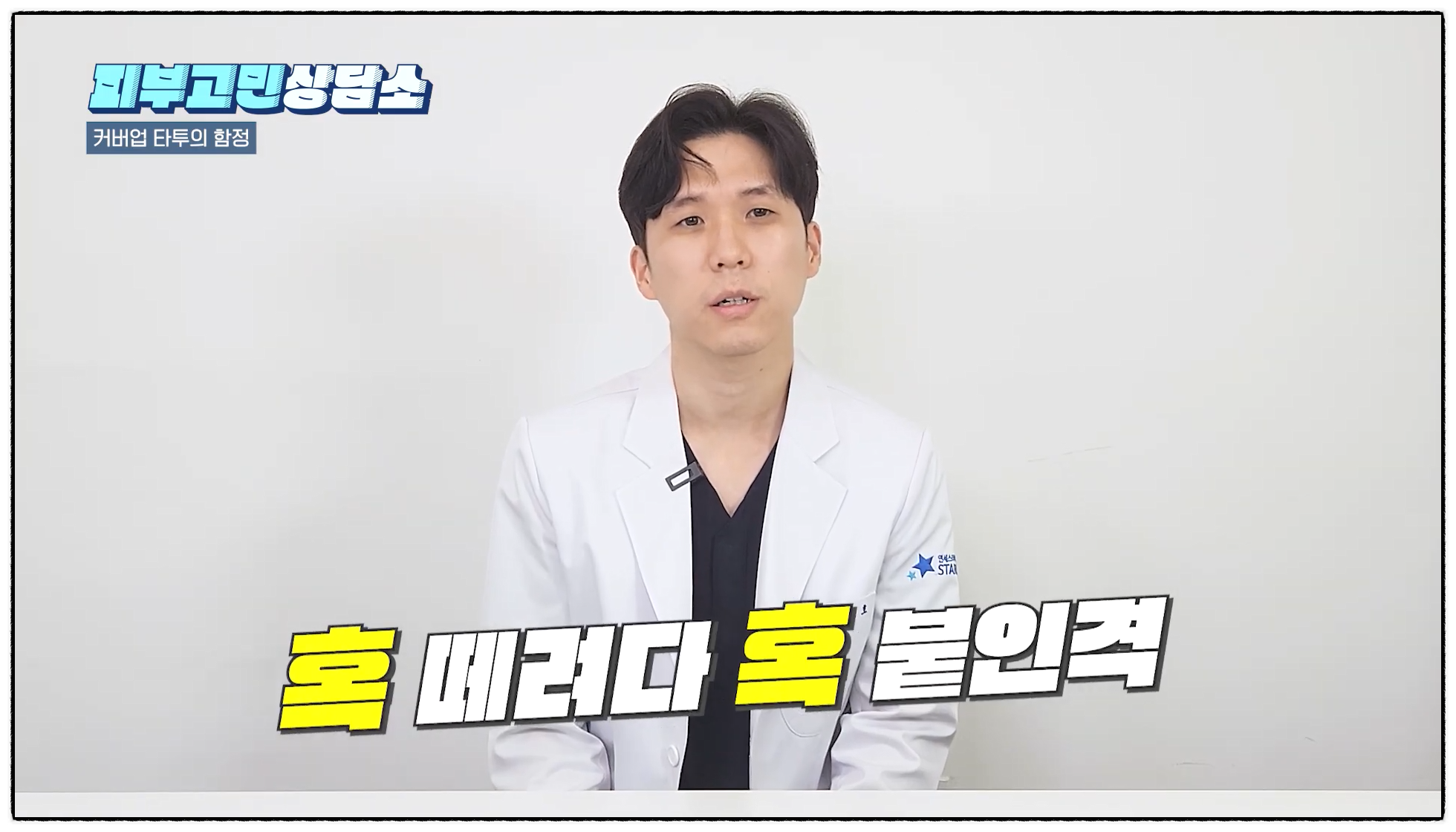

If you are considering a skin tattoo, we recommend receiving dermatological treatment for the underlying concern. It is advisable to consult a dermatologist with extensive experience in treating your specific skin concerns.
Even if you have already had a cover-up, there are still options. Please refer to the Tattoo Removal Treatment guide, and if you need your condition checked, please contact us via chat now. Individual results and recovery may vary.


Authored and Medically Reviewed by Dr. Jinmoon Kang, Chief Director (Dermatologist) Graduated from Yonsei University College of Medicine · Completed Dermatology Residency at Severance Hospital · Former Professor at Bundang CHA Hospital Member of the Korean Dermatological Association · Member of the Korean Association of Dermatologists · Author of 'Medical Body Care' View Medical Staff Profile
First Published 2024-12-10 · Last Reviewed 2026-07-29
This article provides general medical information and does not substitute for individual diagnosis and treatment. Results and recovery may vary by individual.