

Semi-permanent makeup tattoos are common, and you might think they are easy to remove.
Today, we will explain why you should not get them removed at a shop and whether they are actually easy to remove.

If it lasts more than a month, it's a tattoo
Semi-permanent makeup is a procedure that injects pigment into the skin. If that pigment lasts for more than a month, you can consider it a tattoo.

Why is it more challenging despite less ink?
Semi-permanent makeup uses less ink than regular tattoos. However, because various pigments are mixed to create beautiful colors, removal can be surprisingly difficult.
Since a variety of colors are used, the response to laser treatment can vary, sometimes high and sometimes low. This often makes the treatment more challenging.


Removal is also the domain of hospitals
Performing semi-permanent tattoos is illegal, and removing them outside of a hospital is also strictly illegal.

The ink for cosmetic tattoos is located in the dermis. In the past, removal methods involved using chemicals to abrade the skin.
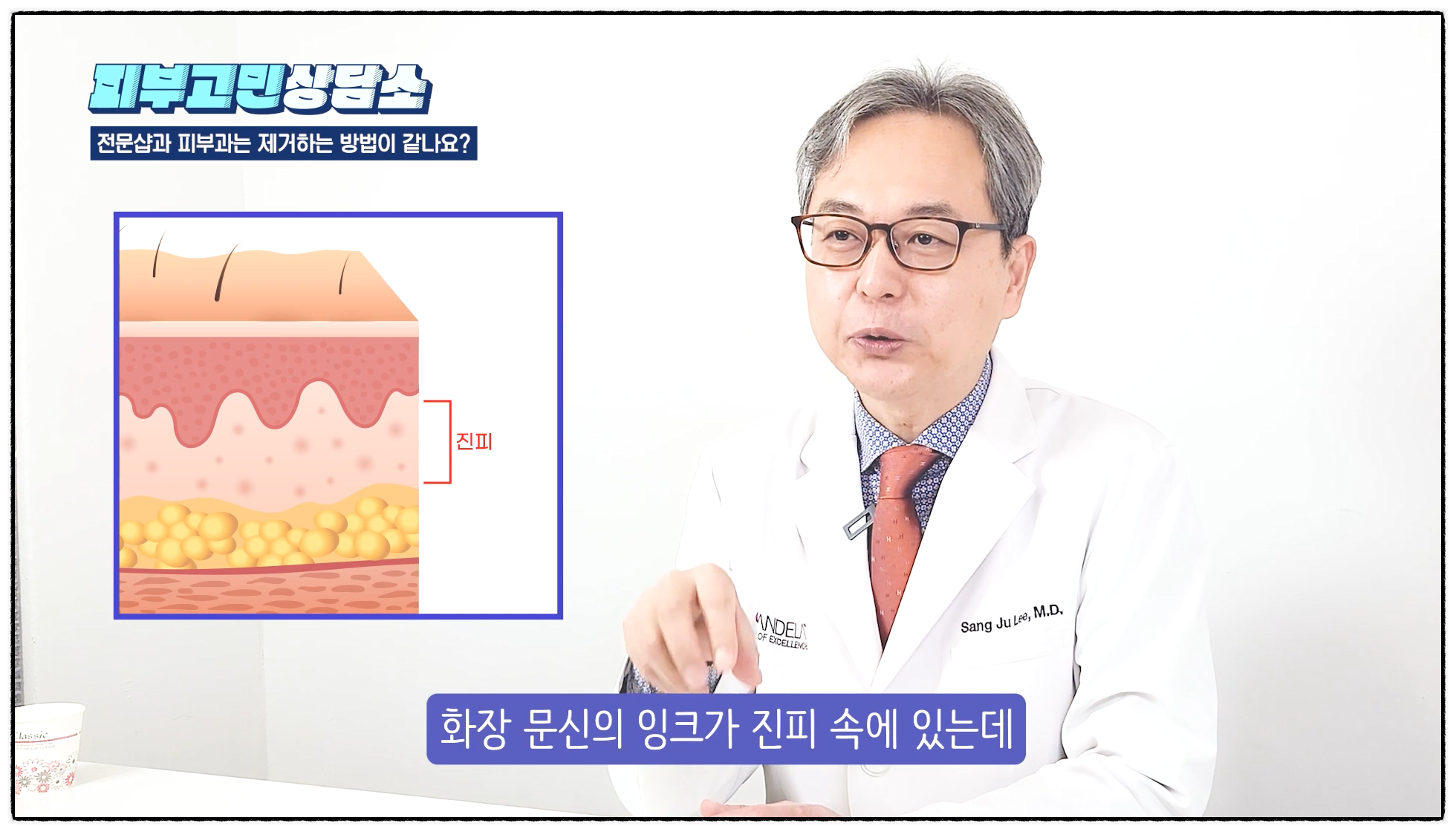
However, this method had the disadvantage of causing many scars, so dermatologists no longer use it. Some shops are still known to perform it illegally.

Lasers can currently only be used by medical professionals. Therefore, all semi-permanent tattoo removal procedures performed at shops are illegal.

Standardized Treatment Method
The standard treatment method for removing semi-permanent tattoos or tattoos is laser treatment. This is because it has a low risk of side effects and confirmed treatment efficacy.
Since shops cannot use this method, their approach is fundamentally different from what is done in dermatology clinics. The procedure details are summarized in the R-Zero Pico-Frectat Tattoo Removal Guide.

Pain follows the amount of ink
If there is a large amount of ink in the skin, the pain may be more severe. This is because the principle of removal involves breaking down the ink into tiny fragments, and pain occurs during this fragmentation.
| Condition | Perceived Pain |
|---|---|
| Regular tattoos with a large amount of ink | Relatively more intense |
| Semi-permanent makeup with less ink | Relatively less intense |
| Sensitive areas like eyelashes | Pain may still occur even with semi-permanent makeup |


Reasons for multiple sessions
Semi-permanent tattoo removal requires multiple sessions because the tattoo ink needs to be broken down into tiny fragments.
- Pigment can be thickly layered from the top to the bottom of the skin.
- In such cases, the treatment proceeds layer by layer, as if peeling off each layer.
Therefore, semi-permanent makeup, like regular tattoos, requires multiple treatment sessions. The number of sessions needed may vary from person to person.


Equipment advancements
To enhance efficacy, it is appropriate to use lasers with confirmed treatment effects and a low risk of side effects.
In the past, Q-switched Nd:YAG lasers were widely used for cosmetic tattoos. Recently, picosecond lasers have been reported to show good responses in semi-permanent tattoo removal. The Nd:YAG method can be viewed separately under Nd:YAG Tattoo Removal.

If you wish to see removal effects in a short period, it is important to receive treatment at a dermatology clinic with specialized equipment. The treatment flow is available in the Tattoo Removal Treatment Guide, and if you are curious about the condition of your eyebrows or eyeliner, please contact us via chat now.

Authored and Medically Reviewed by Dr. Sang-Joo Lee, Chief Director (Dermatologist) Graduated from Yonsei University College of Medicine · Completed Dermatology Residency at Severance Hospital Served as Neutrogena Advisor · Currently Adjunct Professor, Department of Dermatology, Yonsei University College of Medicine View Medical Team Introduction
First Published 2024-12-06 · Last Reviewed 2026-07-29
This article contains general medical information and is not a substitute for individual diagnosis and treatment. Results and recovery progress may vary from person to person.