


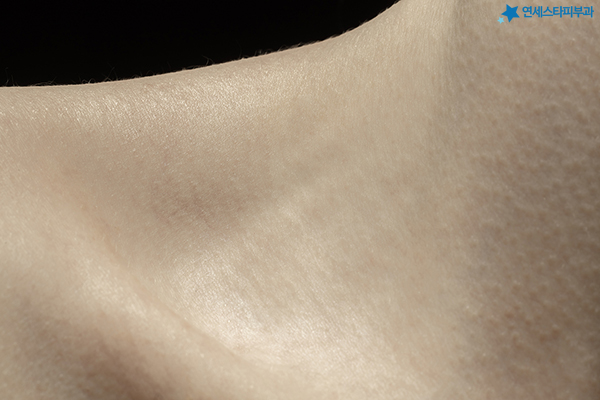
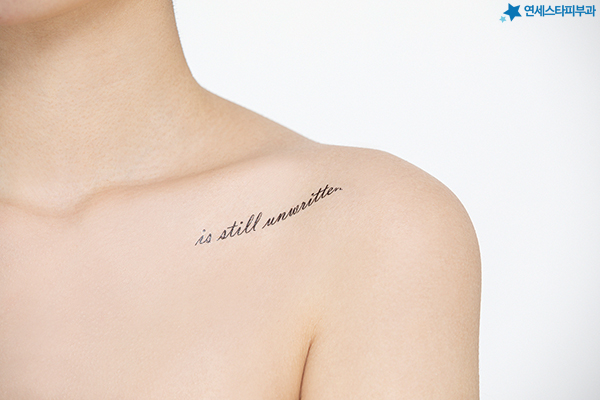
The collarbone is structured with thin skin directly over bone. While tattoos here can look impressive, it is also an area associated with high pain and difficulty.
This article explains how tattoo removal is performed on the collarbone, the level of pain involved, and what precautions to take after the procedure.
Conditions of the Collarbone Area
The skin is thin, with bone and muscle directly underneath. When a tattoo is applied, ink can easily penetrate deep into the dermis, and during removal, laser energy delivery can directly translate into pain.
There's another characteristic of this area: the collarbone is frequently involved in arm and shoulder movements, making it susceptible to friction or irritation after the procedure. This condition can slow down recovery.
Step-by-Step Pigment Fragmentation
PicoWay Laser delivers light in picosecond (one trillionth of a second) pulses to break down tattoo pigments into microscopic particles. It is reported to have higher pigment-destroying power and less thermal damage than traditional nanosecond lasers, making it suitable for sensitive areas like the collarbone.
By using multiple wavelengths, it can effectively treat a wide range of colors, from dark pigments like black and navy to colored tattoos like red and yellow. The equipment configuration is detailed in the R-Zero Pico-Frectat Tattoo Removal guide.
Passing Over the Same Spot Multiple Times
After laser treatment, a 'bubble reaction' occurs where the skin turns white. Traditionally, practitioners would wait for this reaction to subside before re-irradiating.
By rapidly removing bubbles, the laser can pass over the same spot up to four times.
It is reported that continuous irradiation before pigment particles can resettle increases the removal rate. This approach aims to reduce the number of treatment sessions, as well as the burden of pain and inflammatory reactions.

How Much Pain Is Involved?
The collarbone is an area where pain can be felt relatively strongly due to the bone being directly beneath the skin. When laser energy reaches the pigment layer, its vibrations and heat are transmitted to the bone, often causing a stinging or tingling sensation.
To alleviate this, we consider the following:
- Topical Anesthetic Cream or cooling anesthesia is applied before the procedure to reduce skin pain.
- When considering scar prevention, the Pinhole for Burn & Surgical Scar procedure may be combined.
However, PicoWay Laser has a very short irradiation time, so the sensation of heat does not last long. Many patients find the pain tolerable. Individual differences in pain perception may exist.
Feel free to ask any questions via Chat now.
Post-Procedure Care
| Item | Method | Reason |
|---|---|---|
| Immediately after procedure | Cold compress to soothe heat | Alleviates redness and swelling |
| Scabs, peeling skin | Do not remove with hands | Risk of infection and potential for pigmentation |
| 3 to 5 days | Avoid sauna, exercise, alcohol | Increased blood flow can lead to inflammation |
| Throughout recovery | Use sunscreen | Prevents repigmentation and recurrence of color |
| Throughout recovery | Use moisturizer | Prevents dryness and helps prevent scarring |
| Before full recovery | Minimize friction from clothing, bag straps | Area is susceptible to irritation |
The Nature of a Frequently Exposed Area
As the collarbone is often exposed for aesthetic reasons, when removing a tattoo from this area, a clean, scar-free result is highly desired.
By combining PicoWay Laser with the bubble removal technique, it is possible to treat dark ink pigments while reducing the burden of pain and side effects. However, consistent post-procedure care and minimizing irritation are necessary.
The overall treatment flow can be found in the Tattoo Removal Treatment Guide, and other methods in Nd:YAG Tattoo Removal.


Authored and Medically Reviewed by Dr. Kang Jin-Moon, Chief Director (Dermatologist) Graduated from Yonsei University College of Medicine · Resident in Dermatology at Severance Hospital · Currently Adjunct Professor, Department of Dermatology, Yonsei University College of Medicine Member of the Korean Dermatological Association · Korean Society for Laser Medicine and Surgery View Medical Staff Profile
First Published 2025-10-22 · Last Reviewed 2026-07-29
This article contains general medical information and does not substitute for individual diagnosis and treatment. Results and recovery progress may vary by individual.