
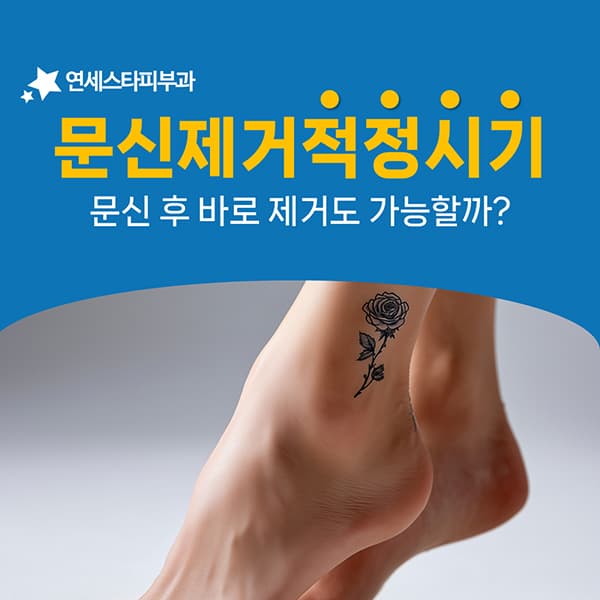
After a tattoo is inked, over time, the dye is absorbed and the skin heals. At this point, the pores through which tattoo particles could escape become blocked, causing the pigment to remain for a long time.
From the perspective of removal, this means it will take longer. Therefore, if you are considering removal, it is better to start as soon as possible after consulting with medical staff.
Is it possible to remove a tattoo immediately after getting it?
Some people want to remove a tattoo right after getting it because they don't like it, while many others come later due to fading over time, social perceptions, or a change of heart.
Removing a tattoo immediately after receiving it is not theoretically impossible. However, the difficulty varies depending on how deeply the pigment has penetrated the skin, so a thorough verification process is required beforehand.
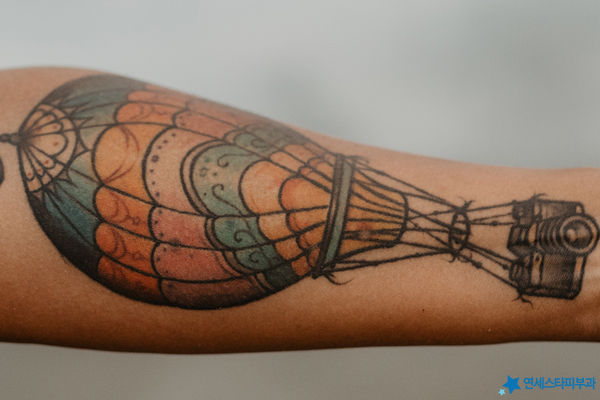
After oozing and scabs have subsided
Once oozing or scabs on the skin have disappeared, you can immediately receive Laser Lesion Removal.
However, the skin has already been stimulated once and is in the process of recovery. You should carefully check its condition and confirm whether the clinic uses methods and equipment that ensure safety even with rapid progression.
The outcome also varies depending on where the pigment is located.
- If the pigment remains close to the skin surface, removal is relatively easy.
- If it has penetrated deeply into the dermis, it may take relatively longer.
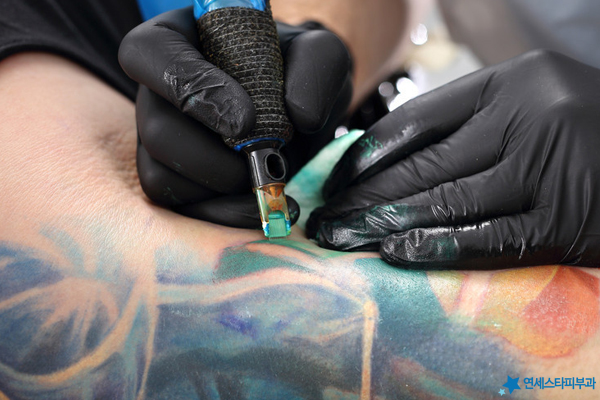
The reason for maintaining a one-month interval
Treatment is rarely completed in a single session. Therefore, the interval between sessions is an important factor.
The basic interval is 4 weeks. Pigment is gradually removed with monthly sessions. This allows sufficient time for the treated skin to recover well. If this is not followed and the skin is repeatedly stimulated in a short period, side effects such as burns or pain due to damage may occur.
| Timing | What to check |
|---|---|
| Immediately after tattooing | Check pigment penetration depth |
| After oozing and scabs disappear | Can start after checking recovery status |
| Treatment interval | Basic 4 weeks |
| After treatment | Avoid sun exposure, use regenerative cream |
If inflammation or pain persists during care, please visit the hospital where you received the treatment immediately.

The limitations created by the bubble layer
The key to tattoo removal is how well the pigment is broken down. However, when the pigment area is irradiated with a laser, a bubble layer forms. This bubble layer hinders further irradiation, so most laser treatments could only perform one irradiation at a time. This is why removal took a long time.
The R-Zero Technique is a method that improves this inconvenience. By using Perfluorodecalin (PFD) specialized medication, up to 4 repeated irradiations are possible in a single session. Even with multiple irradiations, it can be performed smoothly with the PicoWay Laser device, reducing the time taken and making the treatment more comfortable.
Detailed information on the R-Zero Technique is available in the R-Zero Pico-Frectat Tattoo Removal guide, and other methods are summarized in Nd:YAG Tattoo Removal.
Pinhole Technique as the final step
After PicoWay Laser irradiation, performing the Pinhole Technique as the final step secures space for blisters to drain and helps prevent scarring. This process is called the R-Zero Technique. You can see the principle in the Pinhole for Burn & Surgical Scar guide.
In addition to good equipment and appropriate timing, the expertise and know-how of the medical staff performing the procedure also determine the results. When choosing a clinic, check the equipment, methods, and expertise together.


Authored and medically reviewed by Chief Director Lee Sang-joo (Dermatologist) Dermatologist · Ph.D. in Medicine, Yonsei University College of Medicine Graduate School · Resident in Dermatology, Severance Hospital Currently, Adjunct Professor, Department of Dermatology, Yonsei University College of Medicine View Medical Staff Profile
First published 2025-11-11 · Last reviewed 2026-07-29
This article contains general medical information and does not substitute for individual diagnosis and treatment. Results and recovery may vary by individual.