
As perceptions of tattoos have become more flexible, more people are getting memories etched onto their bodies. At the same time, a significant number of people spend a long time removing them as their thoughts or situations change over time. In such cases, some may seek clinics that offer sleep anesthesia due to pain.
While sleep anesthesia can reduce pain, caution is needed regarding recovery and safety. Since lasers penetrate deep into the skin, pain is inevitable, and various anesthesia methods are used to alleviate it.
Each Anesthesia Method Has a Different Role to Play

| Anesthesia Method | Procedure | Considerations |
|---|---|---|
| Topical Anesthetic Cream | Cream applied to the skin surface | Less burden and simple, but limited pain relief |
| Local Anesthetic Injection | Injected directly into the treatment area | Discomfort during injection, temporary swelling after treatment |
| Sleep Anesthesia | Medication injected intravenously to induce temporary sleep | Longer recovery time and safety considerations needed |
| Nitrous Oxide Anesthesia | Inhalational non-sleep method that maintains consciousness | Immediate return to daily life after treatment |
Points to Consider When Proceeding While Asleep

Sleep anesthesia involves administering intravenous anesthetics like propofol to perform the procedure while the patient is completely asleep. The ability to forget pain is a clear advantage.
However, since the procedure is performed while the patient is unconscious, communication with the medical staff is difficult, and safety factors such as respiratory depression should not be overlooked.
Furthermore, since tattoo removal procedures are usually not long, applying general anesthesia might be excessive.
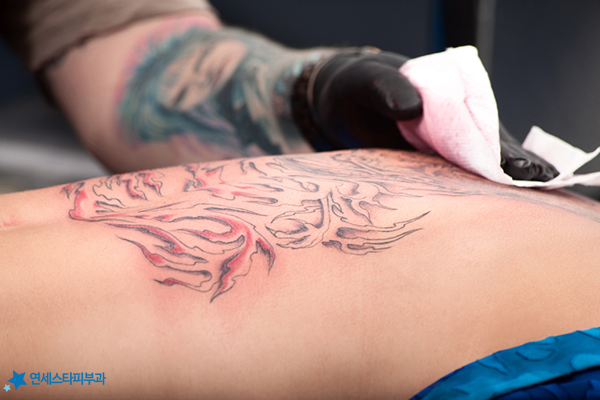
An Option to Reduce Pain While Remaining Conscious
Nitrous oxide anesthesia is gaining attention as a method that can reduce pain while minimizing these burdens.
- It is relatively safer as it does not induce sleep.
- Communication with medical staff is possible, allowing for more delicate procedures.
- You can return to daily life immediately after the procedure.
This method is approved by the U.S. FDA and is already used in various fields, including dentistry, pediatrics, and obstetrics and gynecology.

The Intensity of Anesthesia Follows the Tattoo's Conditions
Tattoo removal often involves pain during the procedure and is not completed in one or two short sessions, leading many to feel burdened by the decision to start. However, if the pain is not severe or the tattoo is small, an excessively strong anesthesia method may not be necessary.
We can consider alternatives to sleep anesthesia based on the treatment area, individual pain sensitivity, and current health status. The overall treatment flow is summarized in Tattoo Removal Treatment Guide.
The Procedure Itself Can Also Reduce Pain
Anesthesia is not the only answer. There are also procedural approaches to reduce pain and expect faster progress, such as R-Zero, which reduces pain, and air cooling, which lowers skin temperature.
Information on equipment and irradiation methods can be found in the R-Zero Pico-Frectat Tattoo Removal Guide, and methods using different wavelengths can be found in Nd:YAG Tattoo Removal.

What to Check Before Deciding
Tattoo removal is a procedure performed directly on your body. We recommend making a careful decision with safety in mind and thoroughly examining your condition to choose the most suitable anesthesia method. Individual differences in response and recovery may occur depending on the anesthesia chosen.
If you are wondering which method is right for you, you can consult us via Chat Inquiry Now.
Authored and Medically Reviewed by Dr. Jinmoon Kang, Chief Director (Dermatologist) Former Resident in Dermatology at Severance Hospital · Former Professor at Bundang CHA Hospital · Current Adjunct Professor at Yonsei University College of Medicine, Department of Dermatology Member of the Korean Dermatological Association · Member of the Korean Society for Aesthetic and Dermatologic Surgery View Medical Staff Profile
First Published 2025-09-17 · Last Reviewed 2026-07-29
This article contains general medical information and does not substitute for individual diagnosis and treatment. Results and recovery progress may vary by individual.