
![Recommended Treatments for Depressed Scars: Lasers and Causes | [Yonsei Star Dermatology Sinchon]](/_next/image?url=https%3A%2F%2Fagqdgbuateknhwpocrgu.supabase.co%2Fstorage%2Fv1%2Fobject%2Fpublic%2Fsources%2Fbbf3bebe-45b6-4415-bd04-bda18b2cac0f%2Fblog-images%2F223790648715_00_52862ec03a07.jpg%3Ftype%3Dw966&w=3840&q=75)
Hello, this is Yonsei Star Dermatology Sinchon.
Many people are concerned about depressed marks on their skin every time they look in the mirror, which cannot be covered even with makeup. Why do these depressed scars form, and can scars that appeared a long time ago still be improved? To put it simply, depressed scars are traces left when the skin's regeneration process is not fully completed, and improvement is reported when treatment appropriate for the condition is carried out in stages.
What are depressed scars?
Scars can form on various parts of the face, including the forehead and glabella, as well as on the body, due to various causes. Among them, depressed scars, which appear as if the skin has sunken in, are considered difficult to treat. They can remain as distinct marks after an accident involving impact or puncture, when the affected area does not regenerate sufficiently after surgery, or after chickenpox or acne.


Depressed scars are also called atrophic scars. They often form when regeneration does not proceed completely, and they tend to be thinner and less elastic than the surrounding skin. Because their recovery ability is inferior to normal skin, the depressed marks persist even over time.
Depressed scars are atrophic scars left where the skin's regeneration process has stopped. Understanding that they are thinner and have less recovery ability than normal skin is the starting point for treatment.
The most common cause is acne.
Acne is likely the most common cause of depressed scars in daily life. In particular, deep depressed marks can remain after experiencing severe cystic acne. In severe cases, external concerns can become so great that people may avoid going out or even meeting others due to stress.
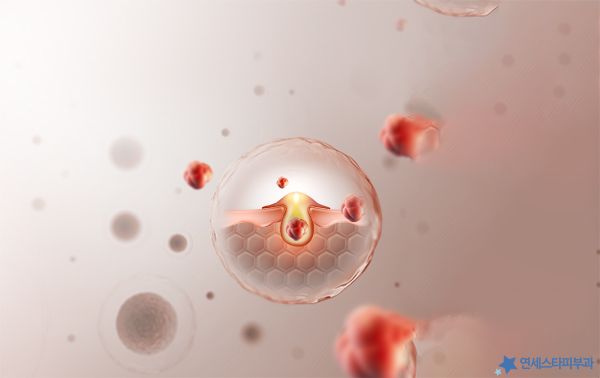
If you are concerned about marks left after acne, it may be helpful to also review content on types and characteristics of acne scars or depressed acne scars, which are deeply indented.

Severe unevenness in the skin can leave an overall untidy impression, and because it is difficult to cover with makeup, many people gradually lose confidence and become withdrawn. To improve this, strong skin regeneration must be induced to fill in the depressed areas. Stimulating skin cells with a laser can more actively promote regeneration.

What should be checked before treatment?
Before planning scar improvement, it is necessary to carefully check the following. It is easy to think all depressed scars are the same, but the cause of occurrence varies from person to person.
- Distinguish whether the scar was caused by trauma, surgery, or acne.
- Examine the area, depth, and shape of the scar.
- Determine whether one method is sufficient or if a combination of two or more is needed.
- Set a period to observe the progress, considering the current state of the skin and its recovery ability.
Properly understanding these points allows for the selection of the appropriate laser and the clear planning of future treatments while observing the improvement process. The difficulty of treatment can vary depending on the shape, and in some cases, a combination of two or more treatments may be necessary.
For questions, inquire with a depressed scar treatment consultation
Subcision to lift sunken skin
Thick and tough fibrous tissue can also cause the skin to appear sunken. To lift this sunken skin again, treatments such as Subcision may be combined.

The reason lesions appear depressed is that fibrous bands in the skin pull it downwards. Subcision is a method that uses a medical needle to cut these strongly pulling fibrous bands, helping the depressed area to recover. By accelerating the recovery speed with a laser and matching the height with normal skin, good results can be expected.

However, as this is a procedure performed with a needle, we recommend carefully choosing a clinic to ensure it can be performed without skin damage. If scar revision is also needed, treatments tailored to the condition, such as Surgical Scar Revision or Premium Customized Acne Scar Care, can be considered.
Adding skin boosters to aid regeneration
Supplying regenerative substances to the skin can help with scar recovery. Combining skin boosters like Rejuran or Juvelook with lasers can help accelerate regeneration. Even for the same depressed scar, skin condition and scar depth vary from person to person, so it is important to have a thorough consultation to establish an appropriate treatment plan.
In the consultation room, we often see many people give up prematurely, especially with deeply depressed or old scars. While older scars may require more effort for treatment, it is not an entirely impossible area to treat.
Don't give up on old scars
There is potential for improvement if treatment is carried out in a manner appropriate for the condition. You do not need to give up prematurely, thinking that deeply depressed or very old scars will not show results. We hope this article has provided some small help to those who are already giving up and feeling stressed.

If you are overwhelmed by depressed scar treatment for the first time, examine the cause and depth of the scar together to set a direction.
💬 Consult NowWe will continue to strive to deliver useful news to those who are stressed by skin troubles. Thank you.

Chief Director Lee Sang-joo (MD, PhD, Yonsei University College of Medicine and Graduate School; Resident, Severance Hospital Dermatology; President, Korean Dermatological Association) Chief Director Lee Sang-joo's Profile First published 2025-03-10 / Last reviewed 2026-06-16
This content is for general information purposes only. Treatment effects and progress may vary by individual, and accurate diagnosis and treatment direction should be determined through consultation with medical staff.