


Is tattoo removal possible by my desired date? This is a frequent question in the consultation room.
The answer depends on the area, color, and remaining time. In this article, based on treatment experience at Yonsei Star Dermatology Sinchon, we've summarized what to consider first when planning tattoo removal.
Response Varies by Area
Generally, tattoos are often on the arms. However, based on treatments at our clinic, areas closer to the upper face tended to respond better to treatment.
When tattoo particles are broken down by a laser, the body needs to transport them. This process is slower in lower areas where blood flow is concentrated. Therefore, lower body areas may take a bit longer.


For Those Planning to Wear a Dress
Many women wish to remove tattoos on their chest or shoulders when planning to wear a dress.
These areas tend to be less painful than others, making it relatively easier to plan treatment over time. It's also possible to remove tattoos from multiple areas simultaneously.


Color Tattoos Are More Challenging
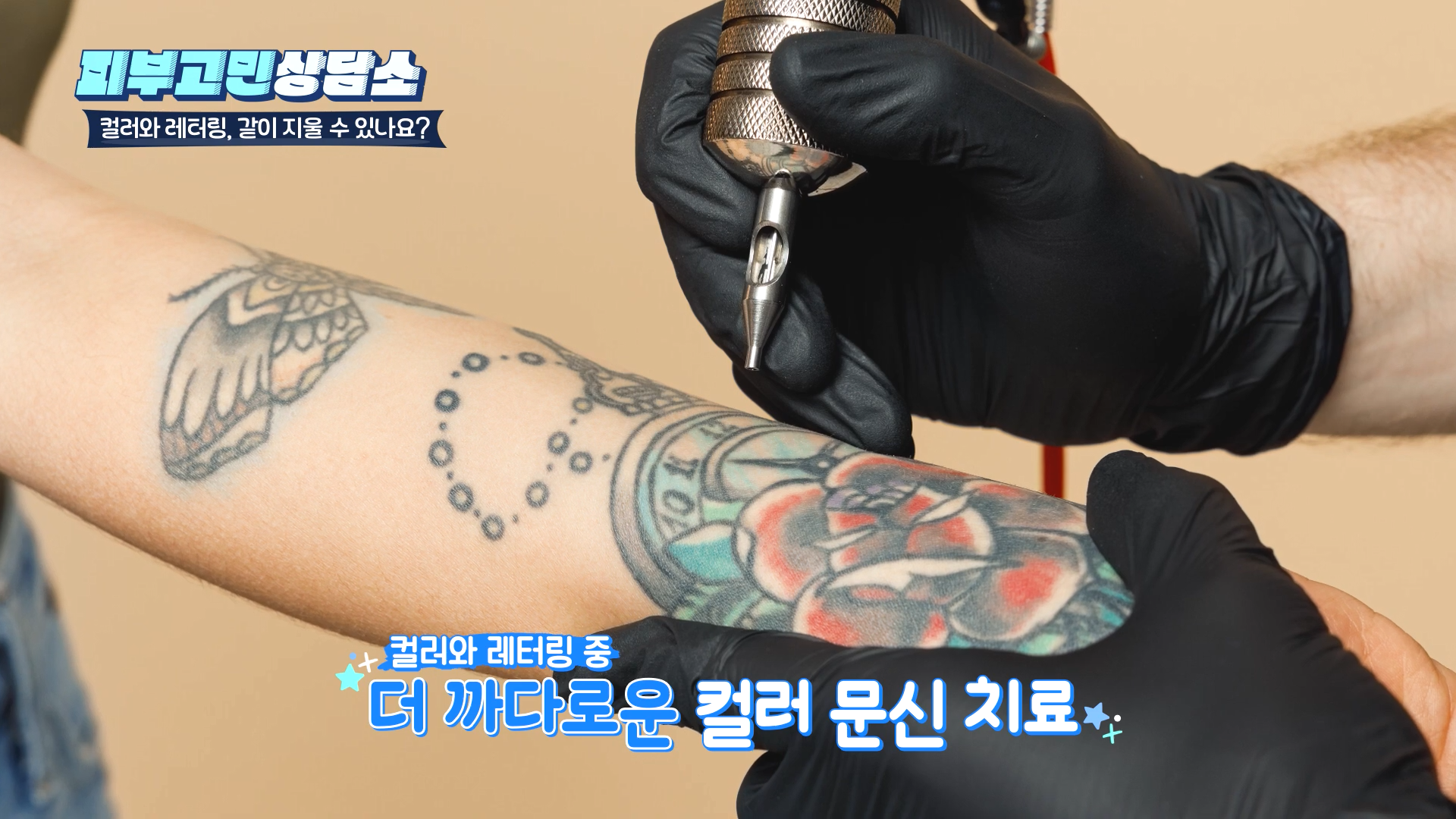
Comparing color and lettering tattoos, color tattoos are a bit more challenging to treat. Black tattoos often erase relatively well, but color tattoos use a variety of hues.
Certain colors may show a slightly reduced response to the laser, so it's better to start treatment for color tattoos earlier. Wavelength operation by color is summarized in the R-Zero Pico-Frectat Tattoo Removal guide.

Difference Between Picture Tattoos and Lettering Tattoos
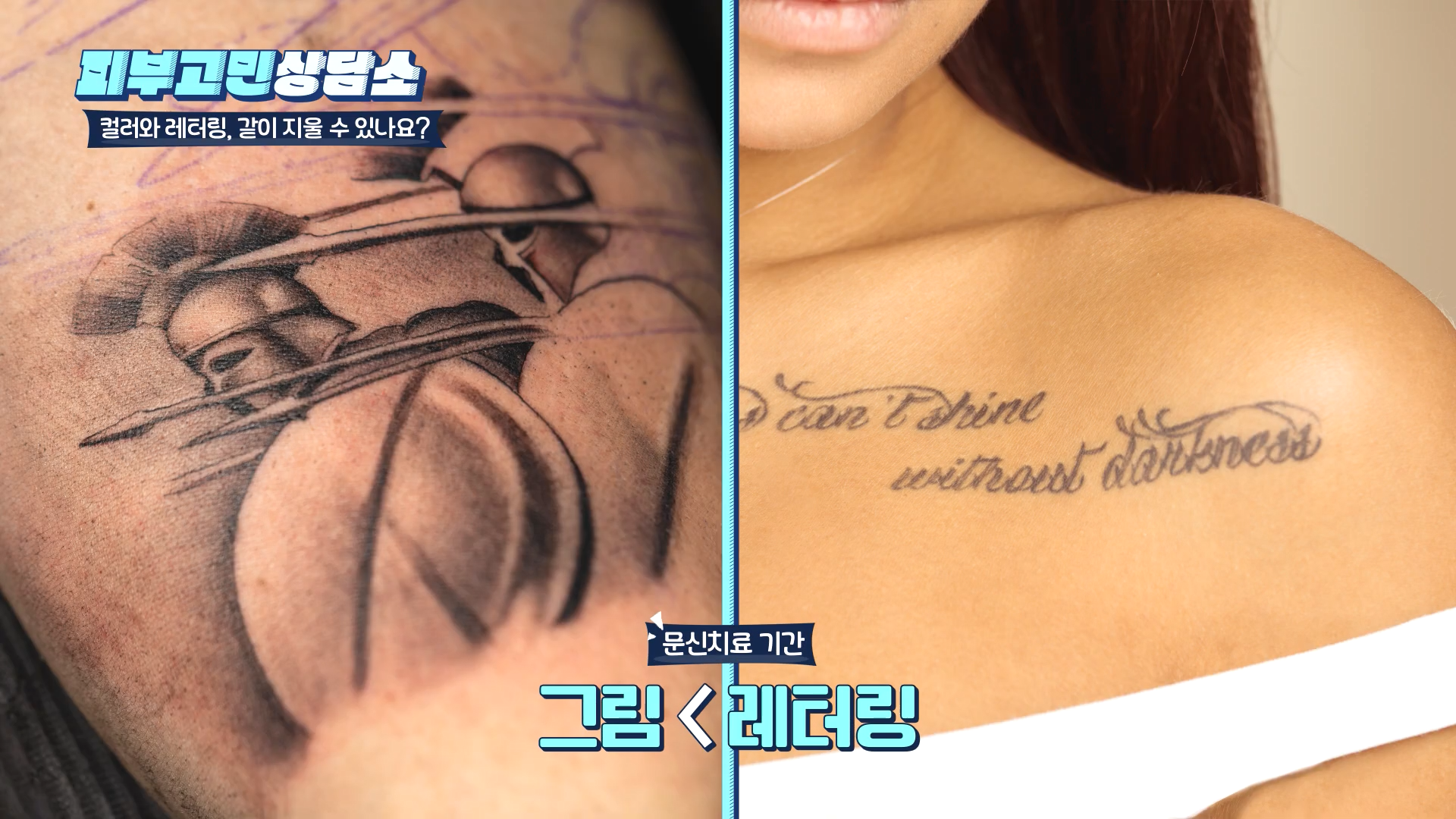
Some tattoos are purely pictorial. Compared to lettering, lettering tattoos take longer.
Picture tattoos don't contain much tattoo pigment, but lettering tattoos, being written like text, contain a lot of pigment. With more pigment, more sessions are needed, which extends the treatment period.

Summary by Condition
| Condition | Tendency in Treatment |
|---|---|
| Upper body areas | Tends to respond well to treatment |
| Lower body areas | Slower particle movement, takes longer |
| Chest, shoulders | Relatively less painful |
| Black tattoos | Often erase relatively well |
| Color tattoos | Certain colors may show reduced laser response |
| Picture tattoos | Tend to have less pigment |
| Lettering tattoos | More pigment, takes longer |

Working Backward from Sessions and Timeframe
Starting tattoo removal is half the battle.
Here are the guiding numbers when scheduling your treatment:
- Treatment intervals are usually once every one to two months.
- You should plan for at least five sessions.
- Five or more sessions, once every one to two months, will take almost a year.
- For shoulder areas where you plan to wear a dress, the number of sessions may increase as marks need to be cleared completely.
If you have about one year remaining, the schedule is tight. It's best to start as soon as possible.


Even with the Same Conditions, Speed Varies
During treatment, the rate of fading varies among individuals. For those with active lymphatic cells and good physical activity, the process tends to be faster. For those with slower recovery, it fades more gradually.
Therefore, it's safer to plan with a generous number of sessions. You can find information on the treatment process in the Tattoo Removal Treatment Guide and Nd:YAG Tattoo Removal.
If you need schedule consultation, please use Chat for Schedule Inquiry.



Authored · Medically Reviewed by Dr. Lee Sang-Joo, Chief Director (Dermatologist) Former Resident in Dermatology at Severance Hospital · Former Professor of Dermatology at Yeongdong Severance Hospital President of the Korean Dermatological Association in 2026 View Medical Staff Profile
First Published 2025-01-20 · Last Reviewed 2026-07-29
This article contains general medical information and is not a substitute for individual diagnosis and treatment. Results and recovery progress may vary by individual.