
While tattoos are no longer uncommon, an increasing number of people are considering their removal over time. For large tattoos covering the entire back, arms, or legs, a vague worry about whether they can truly be erased often comes to mind first.
We will guide you through the most frequently asked questions, organized by chapter.
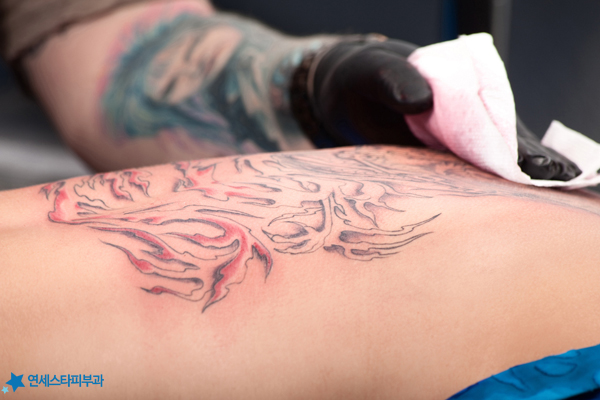
It is true that large tattoo removal is a difficult procedure
This is because large tattoos often have a high volume of pigment, are deeply etched, may contain a mixture of various colors, and their extensive treatment area means a larger area of skin irritation.
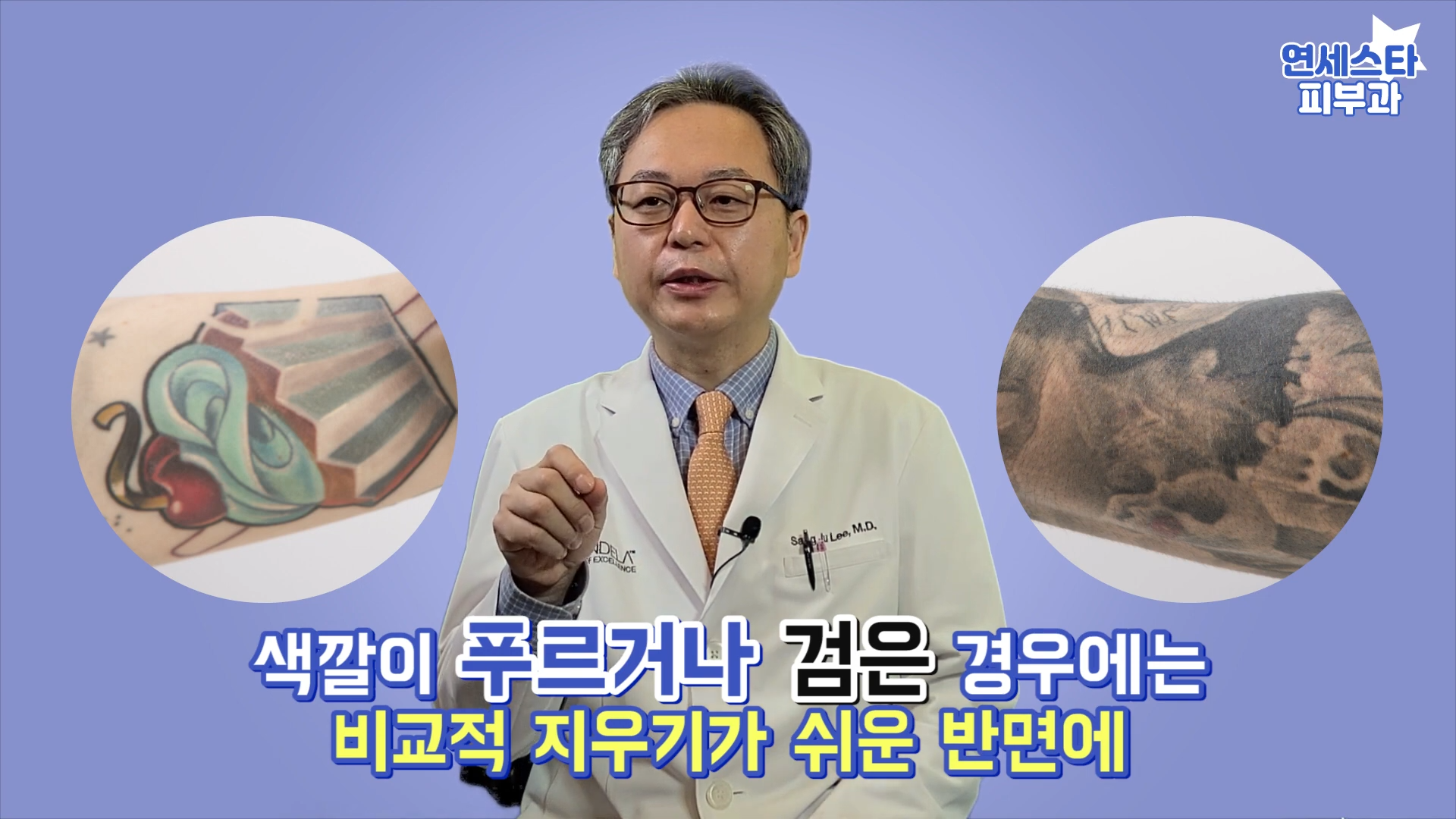


However, with an experienced specialist in tattoo removal and advanced laser equipment, large tattoo removal can certainly be performed. This does not mean it will be erased easily or quickly; it is important to first understand that this procedure requires a systematic plan and sufficient time.
The treatment approach is divided into three categories
First, we use high-output multi-wavelength lasers. We utilize high-output picosecond lasers, among which PicoWay is considered equipment that can handle color tattoos by supporting four wavelengths. Equipment configurations can be checked under R-Zero Pico-Frectat Tattoo Removal and Nd:YAG Tattoo Removal respectively.
Second, we conduct a precise diagnosis before the procedure. We analyze skin condition, tattoo ink reactivity, and skin thickness to establish a personalized treatment plan. For large tattoos, this diagnosis becomes the stage that determines the overall direction.
Third, we combine various management techniques. For larger tattoo areas, laser treatment alone may have limitations, so we sometimes perform calming care or scar prevention care concurrently. This includes the Pinhole for Burn & Surgical Scar using a CO2 laser.

How long should the treatment period be?
Large tattoo removal varies depending on the tattoo's size, color, and individual skin condition, but treatment intervals are typically 4 to 8 weeks, with more than 10 sessions usually performed. If it's difficult to treat a large area all at once, the area is divided and treated sequentially.
The darker the pigment, the more diverse the dyes used to create the color, and the bolder and clearer the tattoo, the more laser sessions may be required. It is more realistic to approach this with a long-term plan rather than expecting short-term completion, and ensuring sufficient recovery time can ultimately lead to a more stable procedure.

Will increasing the output speed up the process?
Sometimes, patients request the laser output to be maximized, hoping to remove the tattoo faster.
Laser output and tattoo removal speed are not directly proportional.
After the laser destroys pigment particles, our body's immune system is responsible for absorbing and expelling the debris. This expulsion process requires a certain amount of time and does not speed up by increasing the output.
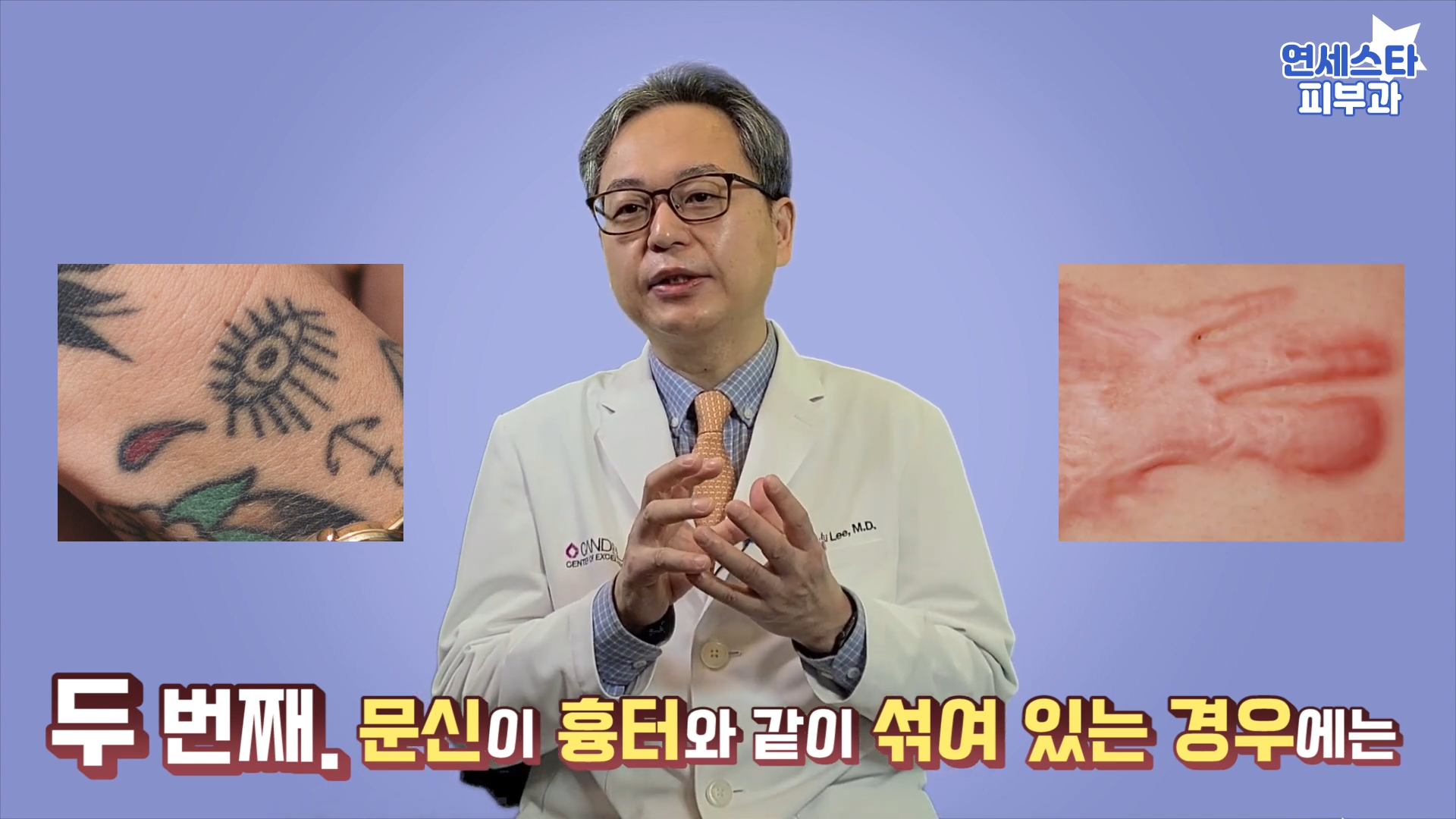

On the contrary, excessively high output can unnecessarily irritate surrounding skin tissue, increasing the possibility of side effects such as scarring, pigmentation, and fibrosis (hardening of the skin). For large tattoos, managing these risks becomes even more crucial due to the extensive treatment area.
There's a separate way to increase efficiency
| Element | How it contributes |
|---|---|
| Advanced laser equipment | Precise picosecond lasers with multiple wavelengths efficiently break down pigment, enhancing the effect per session |
| Precise pre-diagnosis | A plan tailored to skin reactivity and tattoo characteristics helps reduce unnecessary treatment sessions |
| Area-specific treatment plan | Dividing large areas for treatment ensures stable overall recovery management |
| Experienced medical staff's know-how | The process of checking reactions and adjusting the next plan is accumulated with each session |
The key is precision and planning, not intensity. Safe and efficient progress is possible when equipment, diagnosis, planning, and expertise work together.

What to check when choosing a clinic
In conclusion, large tattoo removal is a procedure that can be effectively performed at a dermatology clinic specializing in tattoo removal. However, it is recommended to confirm the following three points before starting:
- Whether a board-certified dermatologist with extensive experience in tattoo removal is present
- Whether advanced equipment, such as multi-wavelength pico lasers, is available
- Whether a systematic treatment plan based on personalized diagnosis is provided
Accurate diagnosis comes before vague worries. You can find the consultation procedure in Tattoo Removal Treatment Guide and start a consultation via Chat with us now.

Authored · Medically Reviewed by Representative Director Dr. Jin-Moon Kang (Board-Certified Dermatologist) Graduated from Yonsei University College of Medicine · Former Professor at Bundang CHA Hospital · Current Adjunct Professor at Yonsei University Department of Dermatology Member of the Korean Dermatological Association · Korean Society for Laser Medicine and Surgery · Korean Society for Aesthetic and Dermatologic Surgery View Medical Staff Profile
First Published 2026-06-12 · Last Reviewed 2026-07-29
This article contains general medical information and does not substitute for individual diagnosis and treatment. Results and recovery progress may vary by individual.