


Even if you initially liked a full-sleeve tattoo, your feelings might change over time. Many people wish to remove them due to work, social perceptions, or personal reasons, but feel overwhelmed about how to start with such a large area.
This article summarizes the methods for removing large-area tattoos at a dermatology clinic.
Why does a larger area take longer?
Full-sleeve tattoos, which cover the entire arm, often have dark colors and multiple layers.
If colors other than black are mixed in, the laser response also changes, requiring different laser wavelengths.
| Condition | Impact on Removal |
|---|---|
| Dark colors | More pigment, increasing the number of sessions |
| Multiple layers | Requires a layered approach by depth |
| Black mixed with colors | Requires changing wavelengths for each color |

Picosecond Laser and R-Zero Method
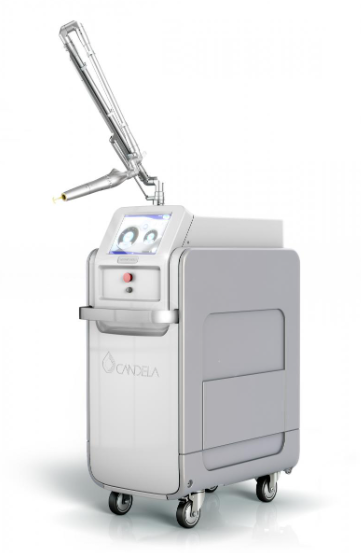
Picosecond lasers are typically used for full-sleeve tattoo removal. This is because they can handle everything from dark black to various colors and support multiple wavelengths.
However, removing a large area all at once can take a long time. Using the R-Zero Technique, which irradiates up to 4 sessions' worth in a single treatment, can make the process much smoother.
Equipment configurations are detailed in R-Zero Pico-Frectat Tattoo Removal, and single-wavelength methods are summarized in Nd:YAG Tattoo Removal.
Marks Remaining After Removal
While removing the tattoo is important, the marks or scars left behind are also crucial.
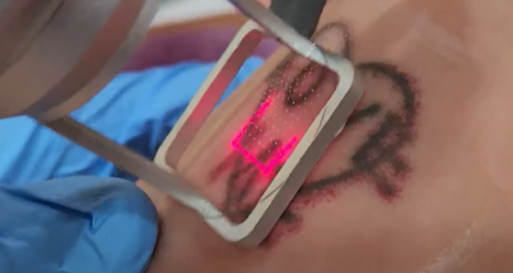
In the final stage, performing the Pinhole Technique using a CO2 laser can help promote skin regeneration and prevent scarring. More details can be found in Pinhole for Burn & Surgical Scar.
The Approach of Dividing and Conquering
- It is not possible to remove an entire arm tattoo in one go.
- By planning and dividing the treatment, you can experience the fading process over several months.
- It is better to approach it slowly and without rushing.
What's important is choosing safe equipment and a skilled dermatologist, and controlling the pace.
If you have any questions, you can ask them via Chat Now.

If You've Been Postponing the Start
If you've been putting it off because of the large area, now is the time to be brave, bring it out, and slowly erase it. Recovery progress may vary individually.

Authored and Medically Reviewed by Chief Director Dr. Jinmoon Kang (Dermatologist) Board-certified Dermatologist · Former Resident at Severance Hospital Dermatology · Former Professor at Bundang CHA Hospital Member of the Korean Dermatological Association · Member of the Korean Association of Dermatologists View Medical Staff Profile
First Published 2025-06-20 · Last Reviewed 2026-07-29
This article contains general medical information and is not a substitute for individual diagnosis and treatment. Results and recovery progress may vary individually.