


The shapes, locations, and colors of tattoos are becoming increasingly diverse. Many people start with curiosity or because it looks pretty, but over time, it no longer feels as attractive, or they look into removal due to social perceptions.
More to Consider Than Meets the Eye
The arm is a location where many people get tattoos. At first glance, it may seem like a low-difficulty area.
However, removal is not determined solely by the body part. It must be performed after carefully considering detailed factors such as ink density, color, and tattoo size, and adjusting accordingly.
| Check Item | Common Aspects of Arm Tattoos | Aspects Reflected in Planning |
|---|---|---|
| Ink Density | Mixed with densely filled sections | Choice of wavelength and irradiation intensity |
| Color | Different wavelengths react to different colors | Combination of wavelengths to use |
| Tattoo Size | Sometimes covers the entire arm | Estimated sessions and overall duration |
| Layers | Often layered | Equipment selection after precise analysis |

Points Where Conditions Differ for Full-Sleeve Tattoos
Full-sleeve tattoos, which cover the entire arm, often have dense colors and multiple layers.
Therefore, a precise analysis by a clinic with sufficient dermatological knowledge is necessary, followed by selecting appropriate equipment and planning the procedure. You can see how the treatment proceeds in Tattoo Removal Treatment Guide.
What It Means to Use Four Wavelengths in One Device
Recently, picosecond lasers are widely used for arm tattoo removal. Color tattoos with multiple colors are difficult to treat because different laser wavelengths react to different colors.
PicoWay Laser utilizes four wavelengths in one device. Even with a wide range of ink concentrations and colors, the treatment range expands accordingly. You can quickly understand the characteristics of each device by comparing R-Zero Pico-Frectat Tattoo Removal Guide and Nd:YAG Tattoo Removal.

What Happens If You Increase Output All at Once?
One reason for hesitating about arm tattoo removal is the total treatment period. It is not advisable to increase the output all at once to shorten the period.
Even with high-performance equipment, irradiating with high output at once can lead to the following skin damages:
- Wounds
- Blisters
- In severe cases, permanent scars
Even if you decide to proceed safely, there are cases where people give up midway and neglect the treatment. Therefore, it is necessary to be more cautious from the moment you get the tattoo.
A Method of Removing Bubbles to Increase the Number of Shots
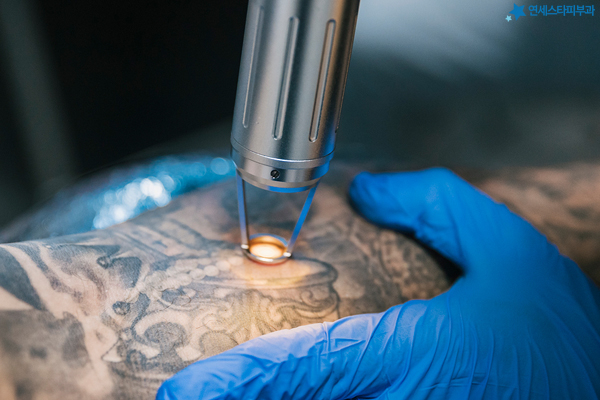
Technology has steadily advanced along with lasers. One method that somewhat alleviates existing discomfort is the R-Zero Technique.
White bubbles that form when erasing tattoos with a laser interfere with continuous irradiation. R-Zero quickly removes these bubbles, allowing up to 4 laser shots in one session.
The essence of this method is that it can speed up the process without excessively increasing the intensity.
If you are curious whether the treatment method is right for you, try Inquire via Chat Now.

Things to Check Together Before Erasing
Getting a tattoo involves pain, but removing it takes even more time and difficulty. It is better to decide after long consideration.
It is also difficult to overlook that marks or scars may remain during the removal process. In addition to treatment methods like PicoWay Laser and R-Zero Technique, check if scar prevention management is also prepared. Pinhole for Burn & Surgical Scar is also a helpful reference.


Authored and Medically Reviewed by Chief Director Lee Sang-Joo (Dermatologist) Former Resident in Dermatology at Severance Hospital · Former Professor of Dermatology at Yeongdong Severance Hospital · Former Head of Dermatology at National Police Hospital Current Adjunct Professor, Department of Dermatology, Yonsei University College of Medicine View Medical Staff Introduction
First Published 2025-12-24 · Last Reviewed 2026-07-29
This article contains general medical information and does not substitute for individual diagnosis and treatment. Results and recovery may vary by individual.