

If you have a black mole on a noticeable area like your face, it can bother you every time you look in the mirror. Therefore, many people are interested in mole removal procedures, or have already undergone laser treatment. However, the most common question is not about mole removal itself, but what to do about the scars left behind after mole removal.
While it's common to think that mole removal is a simple laser procedure, not all moles are that straightforward.
Why Mole Removal Isn't Always Simple
The method chosen should be appropriate for the mole's size, depth, and location. If the procedure is not performed sufficiently, or conversely, if the laser is applied too aggressively in one go, it can damage healthy skin tissue and leave depressed scars.
If a mole has deep roots and is large, it may be safer to remove it in several sessions rather than attempting to remove it all at once, to reduce scarring.

If you are considering mole removal, it's good to consider the following before the procedure:
- The mole's shape, color, and surface condition
- The mole's depth and how deep its roots are
- Whether the location is a highly visible area like the face, where scars are easily noticeable
- Whether to remove it in one session or multiple sessions
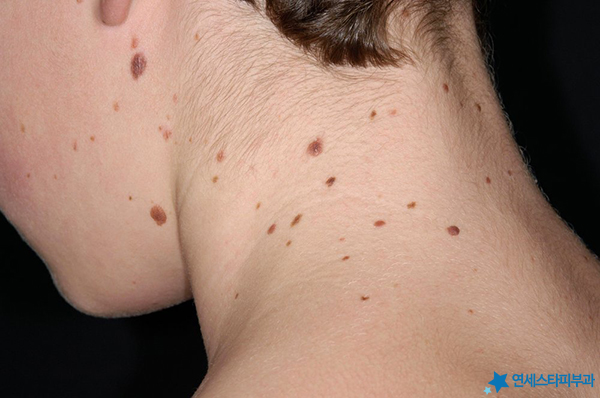
How long does it take to recover after mole removal?
After mole removal, it takes time for the skin to regenerate. Recovery time varies from person to person, but it generally takes about 3 to 6 months, and considering the time it takes for redness to completely fade, it could take almost a year. It is by no means a light procedure.

During the recovery process, it's important to minimize irritation and protect the area.
- Do not forcibly remove scabs; let them fall off naturally
- Prevent pigmentation by using sunscreen when going out
- Avoid frequently touching or scratching the treated area with your hands
- If oozing or pain persists, seek medical attention

If the area where the mole was removed bothers you and you keep touching it, or if you feel that recovery is slow, it's better to have your condition checked rather than making your own judgment. For any questions, you can use Inquire via chat consultation about post-mole removal scars.
If the area where the mole was removed is indented
If the area remains deeply indented almost a year after mole removal, you might suspect a post-mole removal scar. In actual clinical practice, depressed post-mole removal scars are quite common. Since skin regeneration has not proceeded smoothly and has stopped, treatment to boost regenerative power is needed.

With the emergence and upgrade of various laser devices, treatment effects can be expected without complex surgical procedures.

For example, Ultrapulse Encore uses high-output energy to create microscopic holes in the post-mole removal scar area, acting on the dermal layer to activate regeneration. This principle helps new skin grow better during the skin's wound healing process. This laser method is similarly used in depressed acne scar treatment, which addresses depressed scars.


In cases of severe indentation, other methods may be combined with laser treatment to enhance the effect. Subcision, which uses a medical needle to sever fibrous bands pulling the skin down from below, can also be considered. This complex approach aligns with combining methods according to the scar condition, such as in Premium Customized Acne Scar Care.

Conversely, if it's a raised form
Conversely to depressed scars, there are cases where the area where the mole was removed becomes raised. This occurs when collagen proliferates excessively during the recovery process after initial skin tissue damage. Initially, it may appear reddish, then gradually turn white over time.
This form is approached by using injectable medication to break down excessively proliferated collagen to reduce its height, and then precisely refining the raised area with a laser. Since it can resemble keloid scars, where scars become firm and raised, it is important to accurately distinguish the form and determine the treatment direction.
| Post-Mole Removal Scar Type | Main Characteristics | Approach |
|---|---|---|
| Depressed type | Area appears deeply indented | Laser to stimulate regeneration, combined with Subcision if necessary |
| Raised type | Firmly raised and changes color | Injectable to break down collagen, then laser to refine the surface |
Even if the same mole removal procedure was performed, the appearance of post-mole removal scars can vary from person to person.

Old scars, you don't have to give up
Choosing the right laser and treatment for the scar's shape and depth can significantly increase satisfaction. Many people consider treatment belatedly because their scars haven't improved even after a long time since mole removal. While it's best to start treatment early, old scars can still be treated, so we hope you don't give up and neglect them. Information about mole removal itself can also be found in the Laser Lesion Removal guide.

If you're wondering whether your post-mole removal scar is depressed or raised, and what method might be suitable, it's best to have your condition checked first.
💬 Consult NowWe hope this article is helpful to those concerned about post-mole removal scars.

Dr. Lee Sang-Joo, Chief Director (MD, PhD, Yonsei University College of Medicine and Graduate School, completed dermatology residency at Severance Hospital, President of the Korean Dermatological Association) Dr. Lee Sang-Joo's Profile First published 2025-05-23 / Last reviewed 2026-06-16
Scar patterns and recovery speeds vary individually, and accurate diagnosis and treatment direction should be determined through consultation with medical staff.