


R-Zero is a method that can reduce the number of tattoo removal sessions. This article summarizes its principles and procedure.
What was blocking the irradiation?
With conventional methods, time was needed after each irradiation due to the white bubbles that formed on the skin surface. These bubbles interfere with the penetration of laser light.
R-Zero is a method designed to eliminate this phenomenon and enable repeated irradiation. It allows up to 4 irradiations in a short amount of time.
A special medication is used to quickly remove the white bubbles, preventing interference with subsequent irradiations.
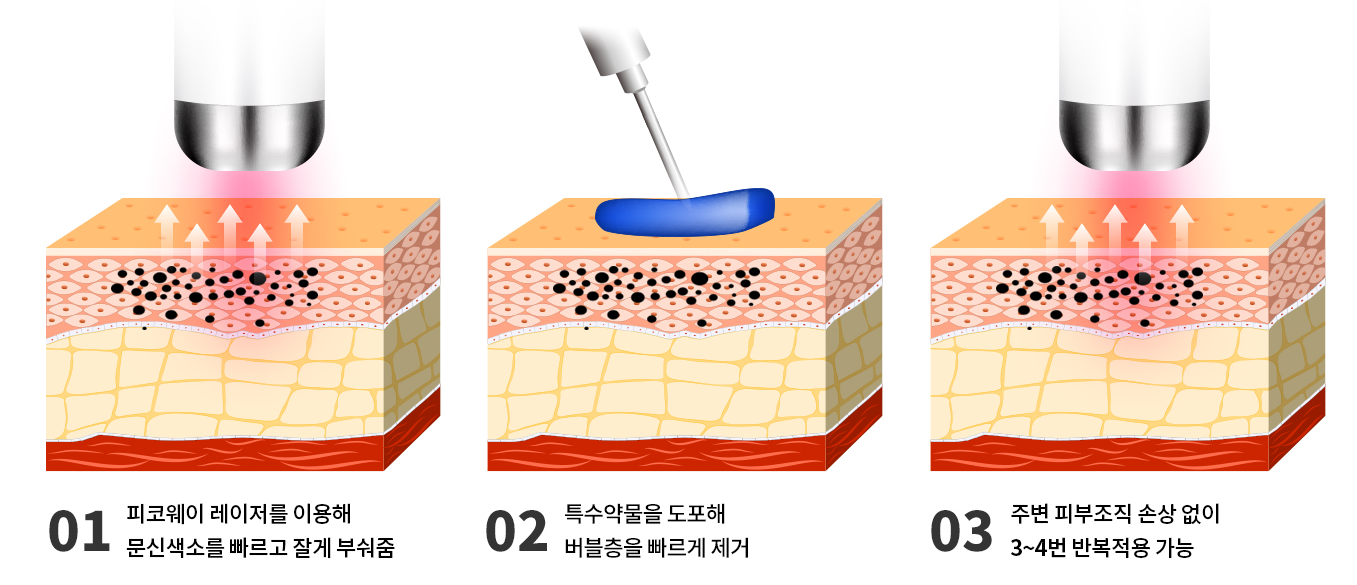
Sequence of events in one spot
| Sequence | Procedure |
|---|---|
| 1단계 | 1st laser irradiation to destroy tattoo pigment |
| 2단계 | White bubbles form on the skin |
| 3단계 | Apply special medication to remove bubbles |
| 4단계 | Proceed immediately with 2nd and 3rd irradiations |

Advantages of this method
- It may reduce the number of sessions. Significant removal may be possible with fewer sessions than conventional methods, which could shorten the treatment period.
- Up to 4 irradiations can be performed in a single session, which may reduce the amount of remaining pigment.
- Skin damage may be less than with conventional methods.
The equipment configuration and procedure are summarized in R-Zero Pico-Frectat Tattoo Removal.

Who performs it is important
The R-Zero method must be performed by an experienced dermatologist to ensure safety. The number of sessions may vary depending on the type of pigment and skin condition.
If you wish to reduce the number of sessions or were unsatisfied with previous treatments, you may consider this method.
For questions, you can ask via Chat Now.

The plan comes from the diagnosis
The R-Zero method's treatment plan may vary depending on the individual's skin condition, tattoo depth, and color. It is important to make a decision through a dermatologist's diagnosis.
Other methods can be found in Nd:YAG Tattoo Removal, and the overall procedure flow in Tattoo Removal Treatment Guide.

Authored·Medically Reviewed by Chief Director Lee Sang-joo (Dermatologist) Dermatologist · Graduated from Yonsei University College of Medicine · Severance Hospital Dermatology Resident Former Professor of Dermatology at Yeongdong Severance Hospital · President of the Korean Dermatological Association in 2026 View Medical Staff Profile
First published 2025-07-21 · Last reviewed 2026-07-29
This article contains general medical information and does not substitute for individual diagnosis and treatment. Results and recovery progress may vary by individual.