


Tattoos are a way to leave certain emotions or moments on the skin. However, there may come a time when you wish to reverse that choice.
This article outlines the methods available for tattoo removal, the principles behind laser removal, and what factors influence the duration and cost.
Tattoo removal methods are broadly divided into three categories
There are several methods for tattoo removal. The categories typically addressed in actual clinical practice are as follows:
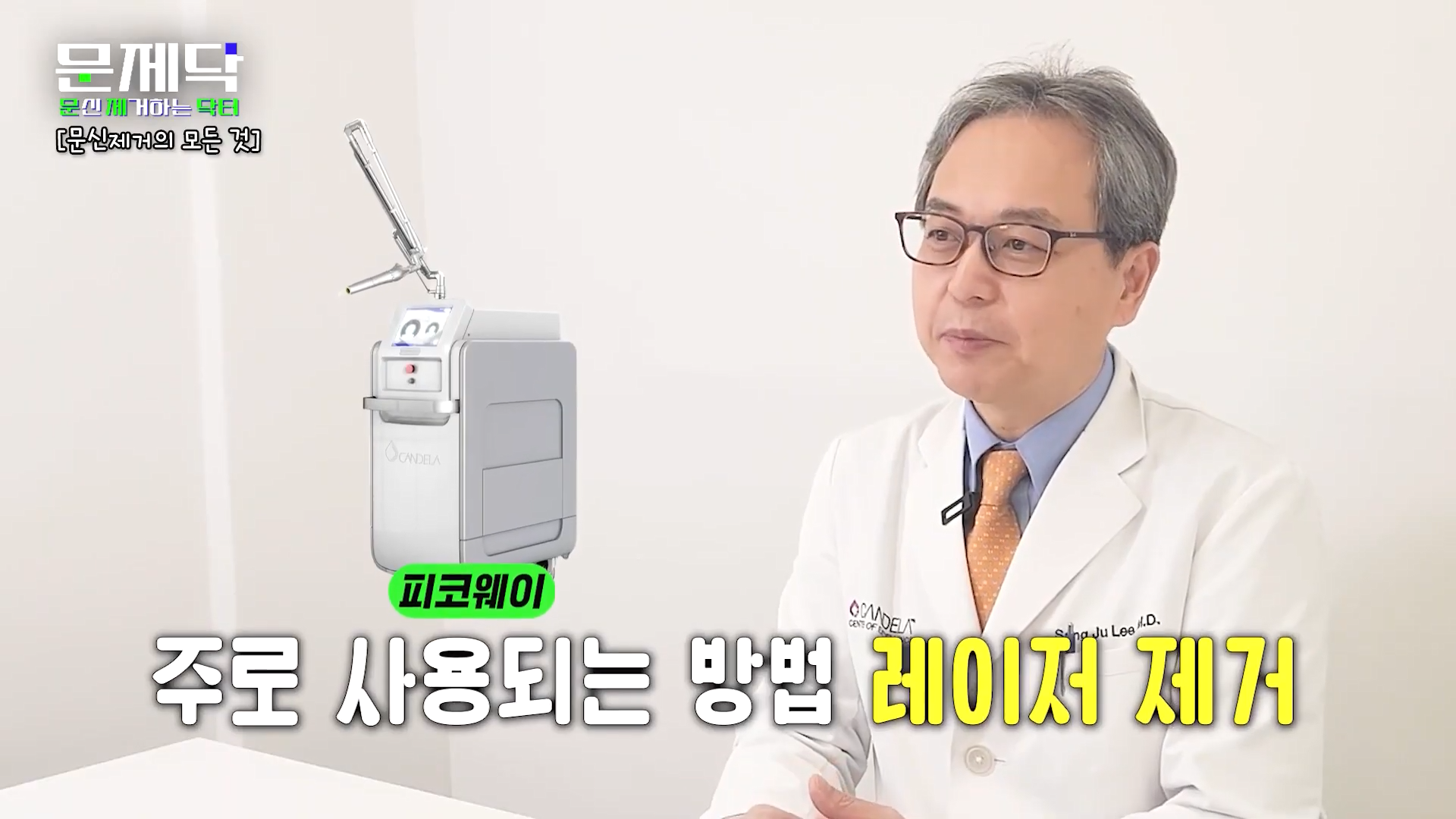
- Laser Lesion Removal, the most commonly used method
- Applying tattoo removal creams
- Surgically removing the tattooed area

What lasers do to pigment
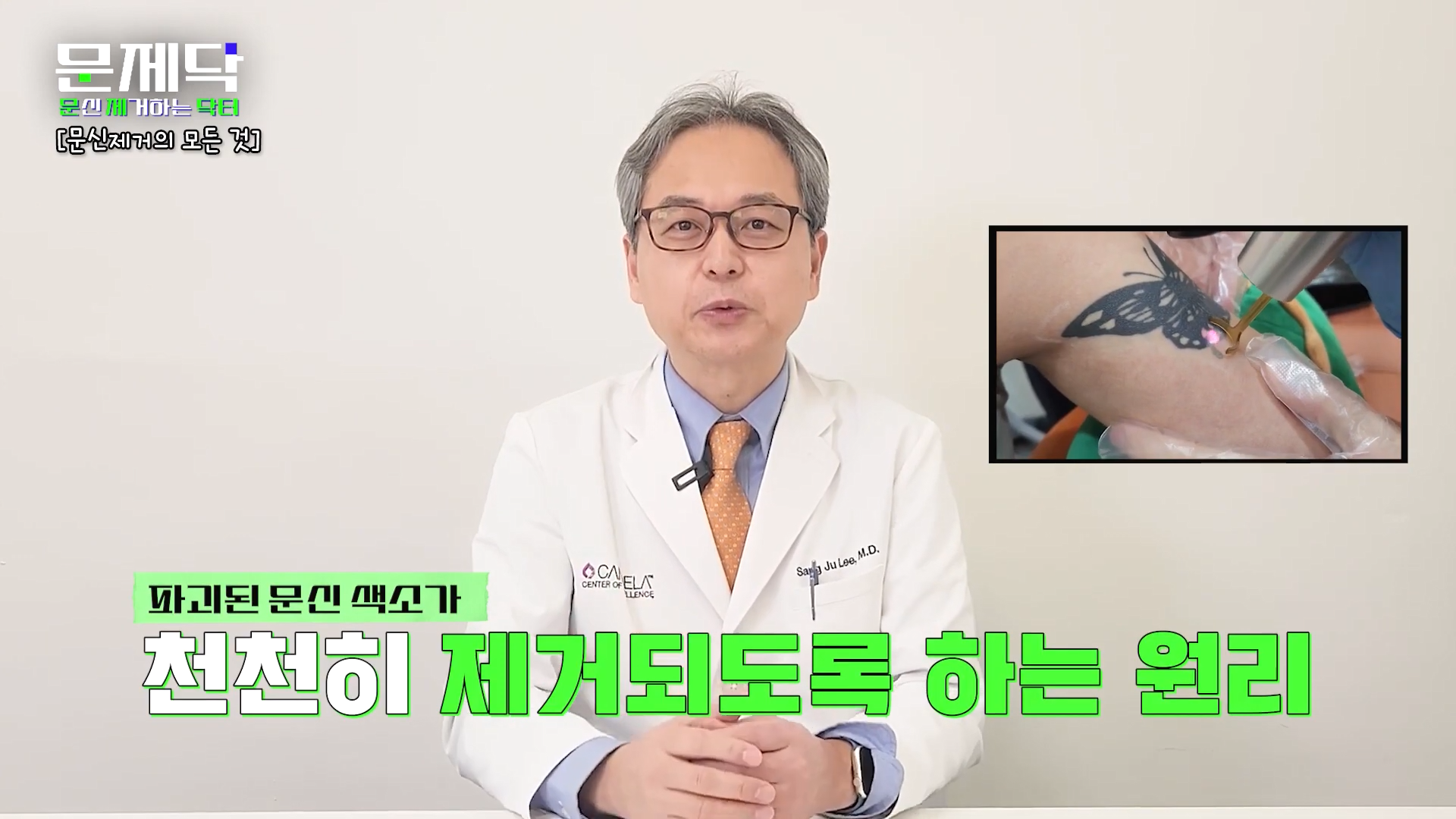
Laser tattoo removal works by destroying the tattoo pigment and helping the body slowly expel the fragmented pigment. It doesn't disappear all at once, like erasing with an eraser; the body needs time to expel the fragments.
Various lasers are used depending on the tattoo's color, size, and other factors. A single device does not handle all tattoos; rather, they are used selectively based on the conditions. The equipment configurations are detailed in R-Zero Pico-Frectat Tattoo Removal and Nd:YAG Tattoo Removal.
Why it's difficult to set a fixed duration in advance
Several factors interact in laser tattoo removal treatment. Therefore, it is actually not easy to provide an exact duration in advance.
However, it is common that multiple treatments are generally required.
You can expect that some tattoos may take as little as one or two months, while others may take up to one to two years.


Recovery period and post-treatment reactions
The skin's recovery period after laser tattoo removal varies depending on the individual's skin condition and the removal method used. Generally, the treated area may heal within 3 to 4 days, or up to a week, but in some cases, a recovery period of 1 to 2 weeks may be necessary.
Laser tattoo removal is a relatively safe method. Nevertheless, after the procedure, the skin may swell or experience pain, and in severe cases, scarring may occur. If a picosecond laser is used, blisters may form in that area, which is considered a normal reaction.
If blister or scar management is needed, you can refer to the Pinhole for Burn & Surgical Scar guide.



Color and number determine the difficulty
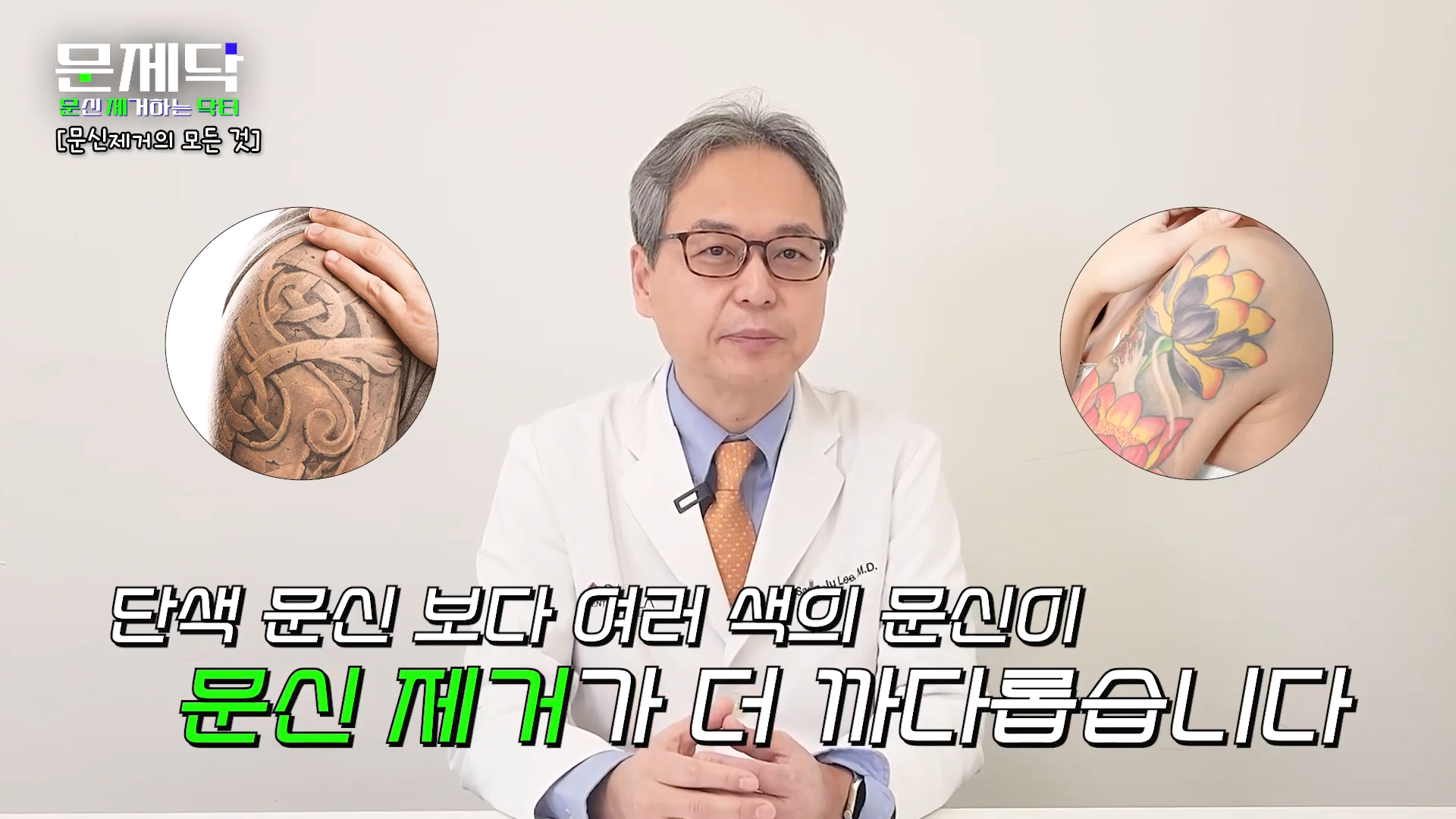
Even for tattoos of the same size, the treatment conditions vary depending on the color used.
| Tattoo Condition | Removal Difficulty |
|---|---|
| Black or blue monochrome | Relatively easy to remove |
| Red or yellow | Even monochrome can be challenging to treat |
| Tattoos with multiple colors | More challenging than monochrome tattoos |

What determines the cost
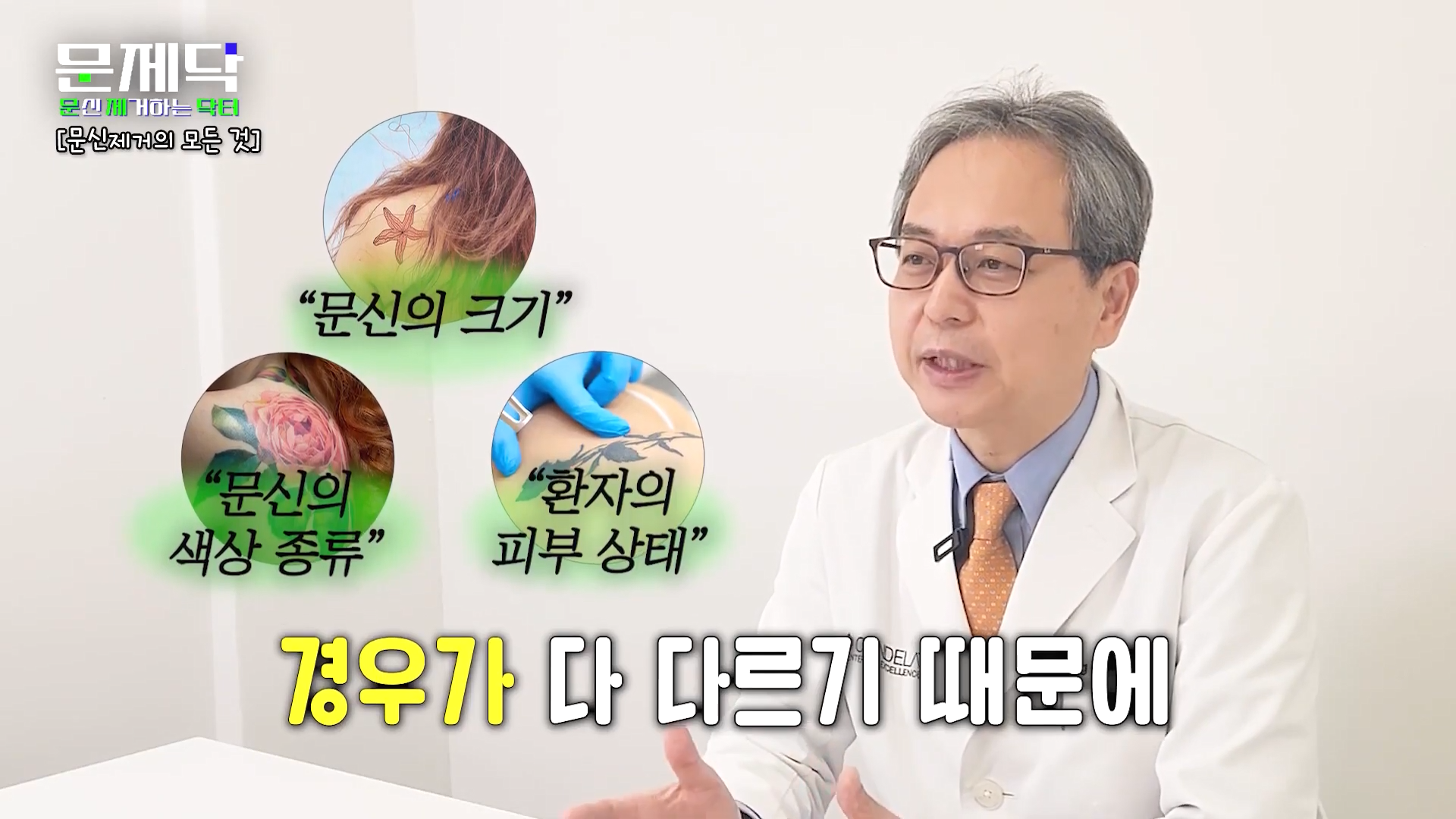
The cost of tattoo removal treatment varies depending on the size of the tattoo, whether it's a single color or multiple colors, and the patient's skin condition. Therefore, the exact cost is determined through consultation.
Contacting a clinic specializing in tattoo treatment directly is the most accurate way to find out the price. You can check the overall treatment flow in Tattoo Removal Treatment Guide, and if you have questions about the conditions, feel free to inquire via chat now.
We do not recommend attempting to remove tattoos at home
Several methods for self-tattoo removal at home are known. In the past, methods using battery acid were also used.
The basic principle of this method is to corrode the skin. This inevitably leads to scarring. We do not recommend attempting to remove tattoos at home.


What to check before starting
The first consideration in tattoo removal is professional consultation. Because tattoos are deep within the skin, choosing the wrong treatment method can immediately lead to scarring.
Once a scar forms, it lasts a lifetime.
Therefore, instead of attempting self-treatment, it is important to seek help from a dermatologist and have realistic expectations about the treatment progress and recovery.
Post-procedure care also influences the results. After laser tattoo removal, it is advisable to avoid sun exposure, and consistent application of antibiotic cream or regenerative cream is also necessary.




Authored and medically reviewed by Dr. Jin-Moon Kang, Chief Director (Dermatologist) Graduated from Yonsei University College of Medicine · Severance Hospital Dermatology Resident Former Professor at Bundang CHA Hospital · Current Adjunct Professor, Department of Dermatology, Yonsei University College of Medicine View Medical Team Profile
First published 2024-06-27 · Last reviewed 2026-07-29
This article contains general medical information and is not a substitute for individual diagnosis and treatment. Results and recovery progress may vary by individual.