
There are various methods for laser tattoo removal in dermatology. The method chosen by Yonsei Star Dermatology Tattoo Removal Center is the R-Zero Technique, which allows up to four laser irradiations per session.
Before we discuss that, let's look at how tattoo removal has evolved.
Method that allowed only one irradiation
In general tattoo removal, when a laser is irradiated onto the tattooed area, the tattoo particles break, and white bubbles rise to the surface of the treated area. These bubbles interfere with laser penetration, making additional laser treatment impossible.
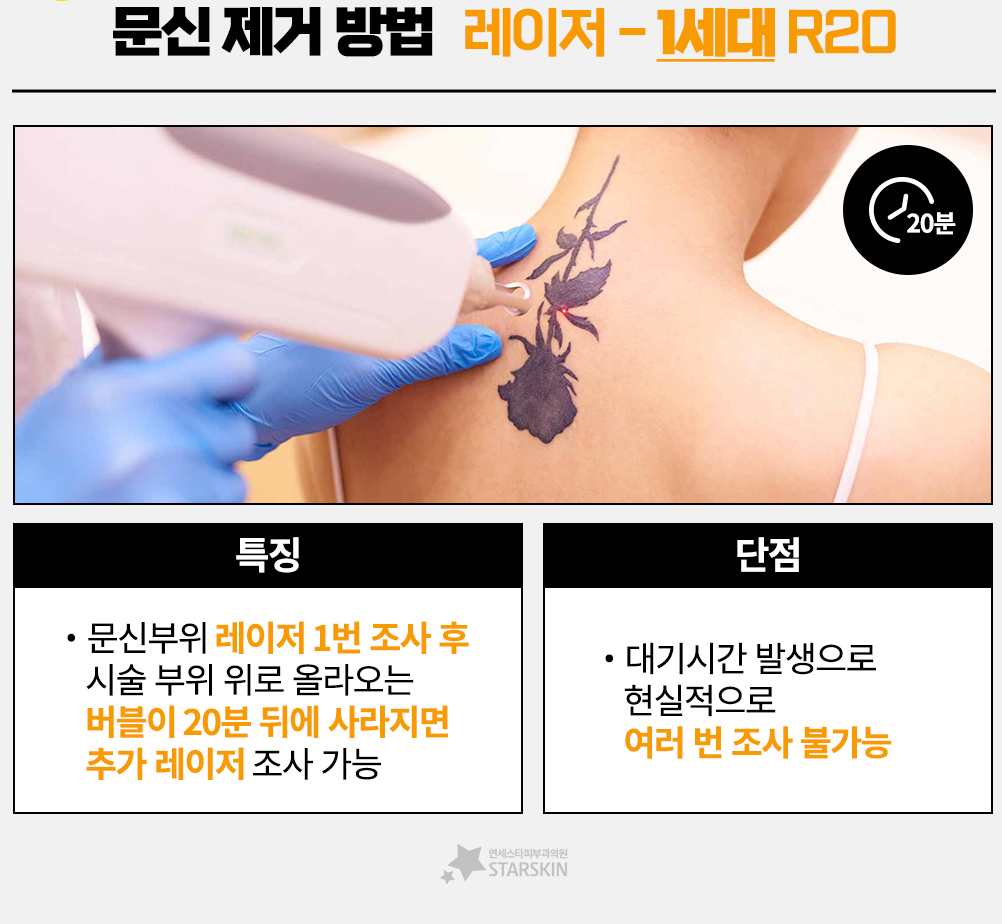
R20 Technique: Waiting 20 minutes
The next method developed was the R20 Technique. This method involves waiting 20 minutes for the white bubbles that appear after laser irradiation to disappear, then repeating the treatment.
In theory, up to four repeated irradiations are possible in a single session. However, this is difficult in practice. Four repetitions would significantly increase the waiting time, and for large tattoos, the total time required would become unmanageable.
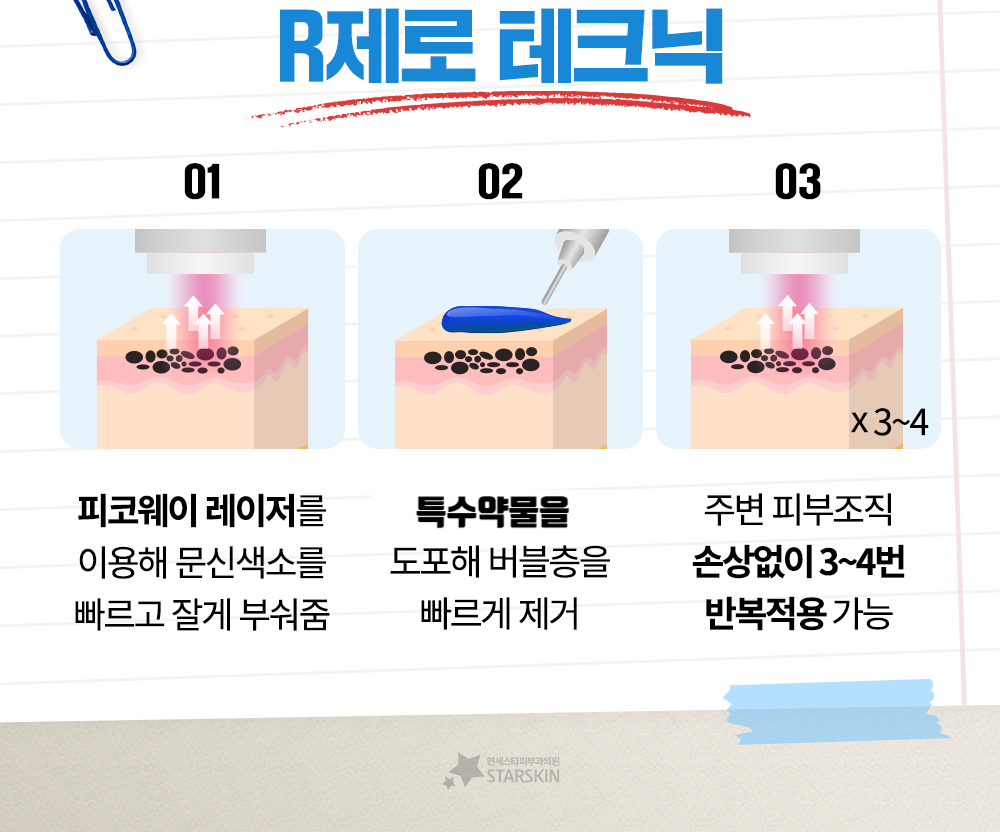
R-Zero Technique born from practical challenges
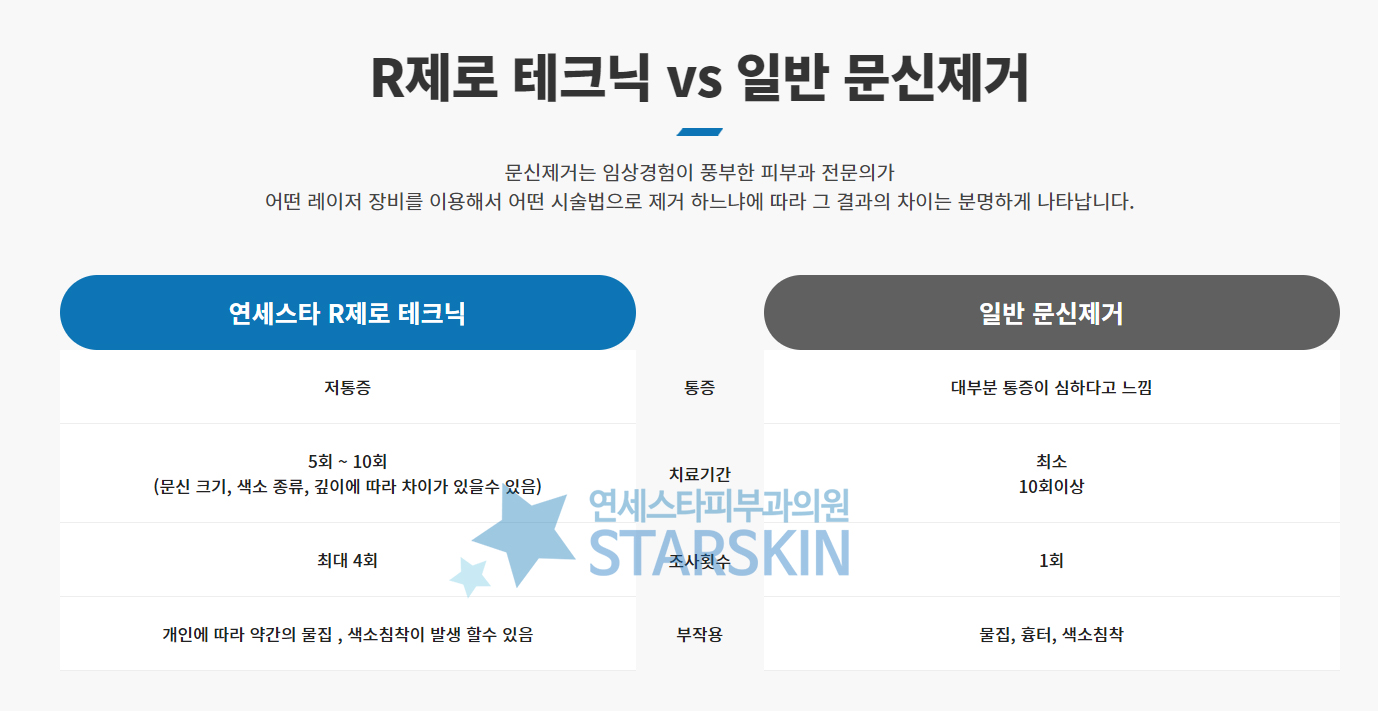
The R-Zero Technique involves applying a specialized medication to remove the white bubbles that appear, allowing for immediate repeated treatment up to four times.
| Category | R20 Technique | R-Zero Technique |
|---|---|---|
| Bubble management | Wait 20 minutes for bubbles to disappear | Apply specialized medication to remove |
| Irradiations per visit | Theoretically 4, difficult in practice | Up to 4 without waiting |
| Large tattoos | Significantly increased time required | Aims to reduce treatment time |
This allows for reduced treatment time, increased effectiveness, and safer procedures. Details on the R-Zero Technique are available in the R-Zero Pico-Frectat Tattoo Removal guide, and other methods are summarized in Nd:YAG Tattoo Removal.
Will four irradiations damage the skin?
Some people believe that repeatedly applying laser to the same area will damage the skin.
Scarring is not caused by repeated irradiation, but by applying excessively strong output without considering the amount and depth of tattoo ink.
There are other conditions that can cause scarring:
- The area where the tattoo is located
- The patient's constitution
- The color of the tattoo
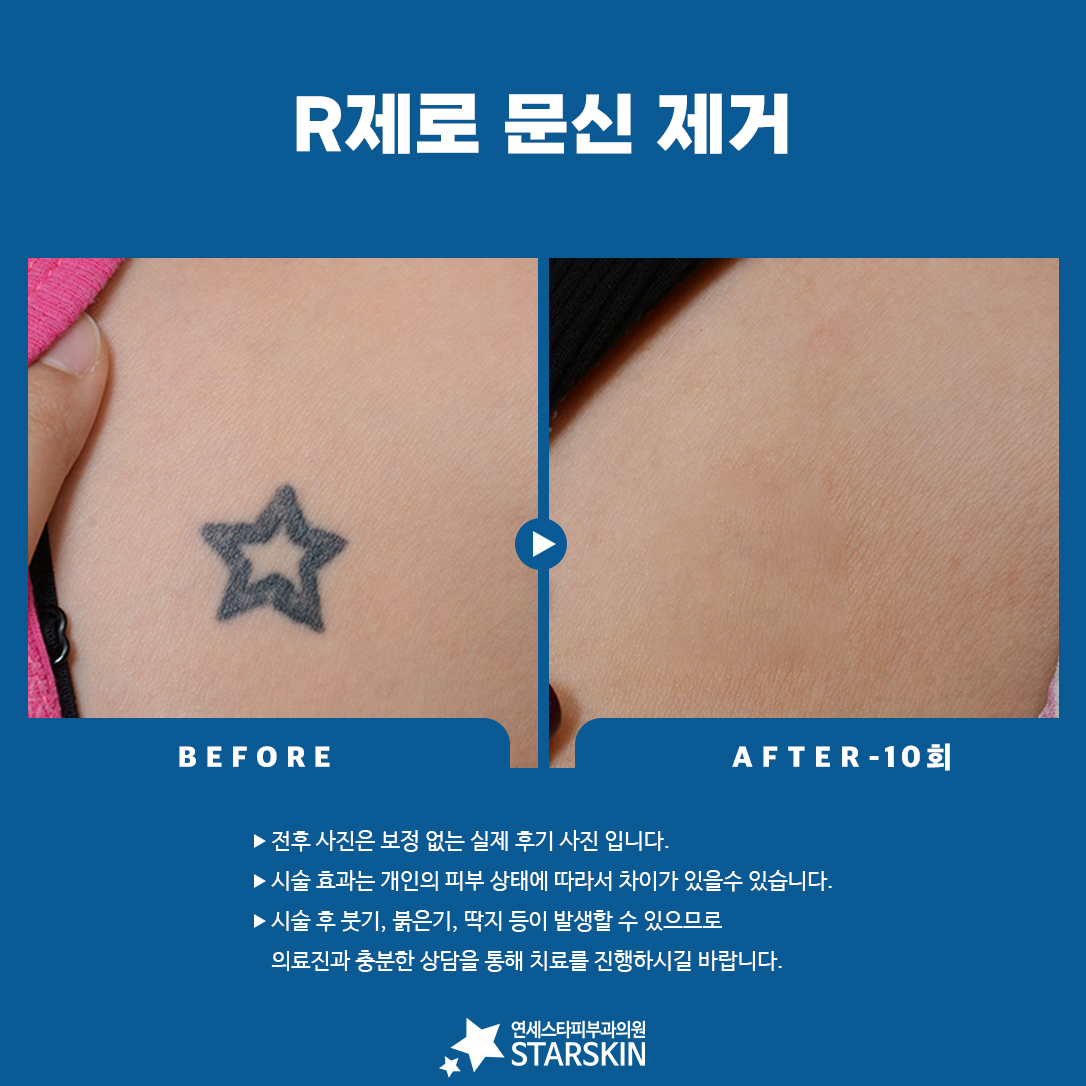
Why we prioritize scar prevention
As a dermatology clinic with extensive experience in scar treatment, Yonsei Star Dermatology Sinchon adheres to the principle of scar-free tattoo removal. After removal, we also provide Pinhole for Burn & Surgical Scar treatment for scar prevention. Individual results may vary.

If you need a consultation
You can find the overall treatment flow in the Tattoo Removal Treatment Guide. If you have more questions about the R-Zero Technique, please contact us via chat now.
Authored and medically reviewed by Dr. Sang-Joo Lee, Chief Director (Dermatologist) Graduated from Yonsei University College of Medicine · Doctor of Medicine Former Resident in Dermatology at Severance Hospital · Former Advisor for Amorepacific IOPE View Medical Staff Profile
First published 2023-09-06 · Last reviewed 2026-07-29
This article contains general medical information and is not a substitute for individual diagnosis and treatment. Results and recovery may vary by individual.