
The clavicle is a frequently exposed area. Therefore, tattoos in this area can affect first impressions, and many people consider removal before employment, marriage, military enlistment, or an image change.
This article summarizes the process by which clavicle tattoos fade, and why the number of sessions and intervals are set as they are.
The reasons for removing clavicle tattoos are generally similar
The most common reason is discomfort due to the area being highly exposed and drawing attention. This is because tattoos are easily visible when wearing sleeveless tops, off-the-shoulder outfits, or swimsuits in the summer.
The same applies when you desire a clean image for employment or interviews. Some professions may also have regulations regarding tattoos.
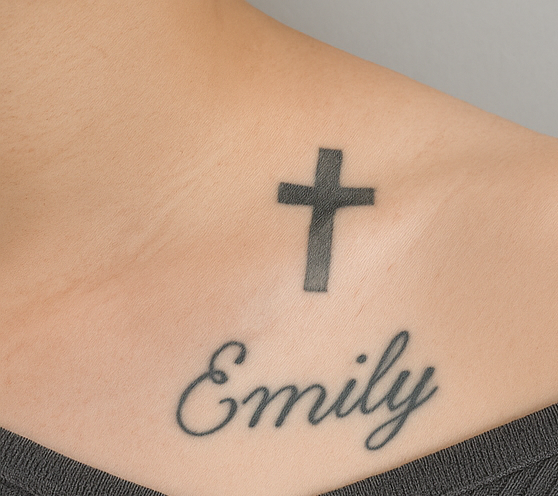
Ink is broken down and then processed by the body
The most common method for clavicle tattoos is laser tattoo removal. The process involves the laser breaking down the pigment, followed by macrophages engulfing the ink, and then skin regeneration being induced.
The laser's job is to break down the ink; the body's job is to carry it away.
This is why intervals are necessary. The body needs time to process the broken-down pigment.

Equipment varies by color
The type of laser used may vary depending on the color of the tattoo. Recently, PicoWay Laser has been widely utilized.
- You can check the PicoWay Laser equipment configuration in the R-Zero Pico-Frectat Tattoo Removal guide.
- A different approach using varying wavelengths is summarized in Nd:YAG Tattoo Removal.
Summary of Sessions and Intervals
| Item | Content |
|---|---|
| Removal Method | Laser breaks down pigment, then induces skin regeneration |
| Equipment Used | Varies by color; PicoWay Laser is commonly used recently |
| Required Sessions | Generally 5 to 10 or more sessions |
| Treatment Interval | Typically 1 to 2 months |
| Reason for Intervals | To aid skin recovery |
The number of sessions may vary for each individual.
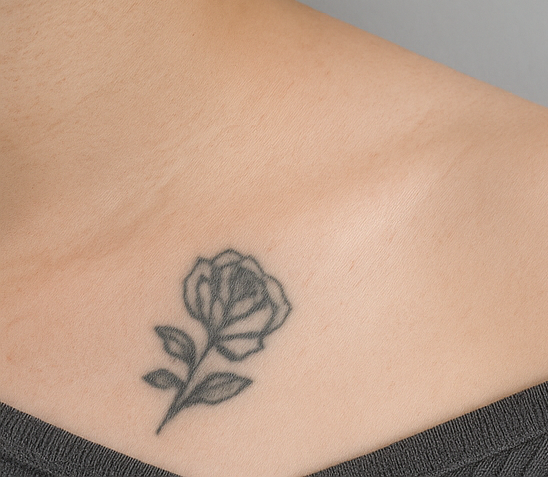
Finishing is crucial for highly visible areas
Due to its location, clavicle tattoos attract more attention than tattoos on other areas. Therefore, the expectation for a refined appearance after removal is also high.
If you are experiencing limitations in your clothing or activities due to a tattoo, we recommend consulting with a dermatologist specializing in tattoo removal to plan your treatment. You can find information on the treatment process in the Tattoo Removal Treatment Guide, and ask questions via Chat Now.

Authored and Medically Reviewed by Chief Director Lee Sang-joo (Dermatologist) Dermatologist · Ph.D. in Medicine, Yonsei University College of Medicine Graduate School · Resident in Dermatology, Severance Hospital Former Professor of Dermatology, Yeongdong Severance Hospital · Current Adjunct Professor, Department of Dermatology, Yonsei University College of Medicine View Medical Staff Profile
First Published 2025-08-13 · Last Reviewed 2026-07-29
This article contains general medical information and is not a substitute for individual diagnosis and treatment. Results and recovery may vary for each individual.