

Deeply pitted acne scars are a concern that cannot be hidden with makeup, making one's heart heavy every time they look in the mirror. If you've undergone various treatments and your scars remain, laser dermabrasion often comes to mind as the final step. The most common question we hear is, "Will dermabrasion really give me smooth skin?" To answer directly, the scar area is reported to improve by filling up to a height similar to the surrounding healthy skin. However, this treatment requires a dedicated recovery process and management.
Who is laser dermabrasion recommended for?
Laser dermabrasion is a treatment considered for acne scars, especially those that are deep and severely pitted. It is often recommended as a next step for those who have undergone multiple scar treatments but have not been satisfied with the results.
However, not everyone can receive it. Due to the long downtime required for recovery, the ability to sufficiently clear one's daily and work schedule is an important deciding factor. If the pitting is not severe, other methods may be considered first in the depressed acne scar treatment stage.

Will dermabrasion cause my skin to become pitted or thinner?
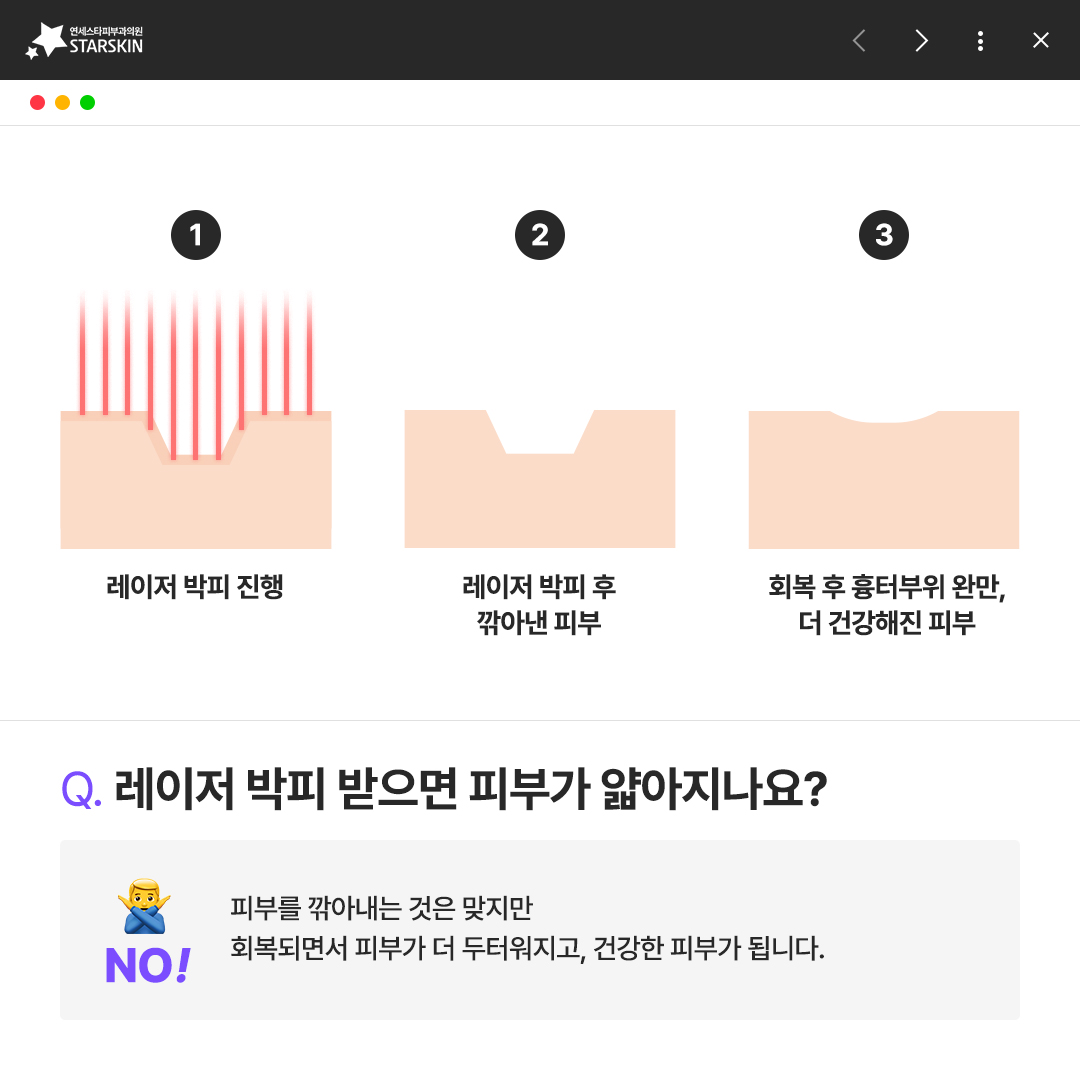
One of the biggest concerns is, "If skin is shaved off, won't it become even more pitted?" The answer is no.
Laser dermabrasion does not leave the skin in a shaved state like planing; rather, the treated skin undergoes a recovery process. Healthy skin returns to its original height, and the scarred areas heal, becoming similar in height to the surrounding skin. During this process, the skin is reported to become thicker and healthier.
The essence of dermabrasion is not to remove skin, but to utilize the skin's healing power to refill the scarred areas.
Is the procedure very painful?
Pain can vary from person to person, but generally, many individuals feel discomfort during this treatment. Therefore, at Yonsei Star Dermatology Sinchon, topical anesthetic cream is sufficiently applied to the skin surface before the procedure, and the treatment proceeds after about 2 hours.
The reason for allowing ample time for anesthesia application is to reduce discomfort during the procedure by numbing surface sensations. If you have significant concerns about pain, it helps to mention it in advance during the consultation phase.
If you have any questions, inquire via chat consultation regarding laser dermabrasion pain and anesthesia

When do the effects appear, and how long do they take?
After the procedure, as the skin recovers, you will gradually notice changes as the scars fill in. However, the changes do not happen overnight.
Complete recovery can take about a year. During this time, the skin is in the process of normalizing and may feel more sensitive than usual. In the examination room, we observe that those who fully understand and wait through this recovery period tend to have higher satisfaction.
Immediately after the procedure, washing, daily life, and makeup are possible, but avoiding chemical and physical irritation as much as possible helps with skin normalization.

How should I manage my skin during the recovery period?
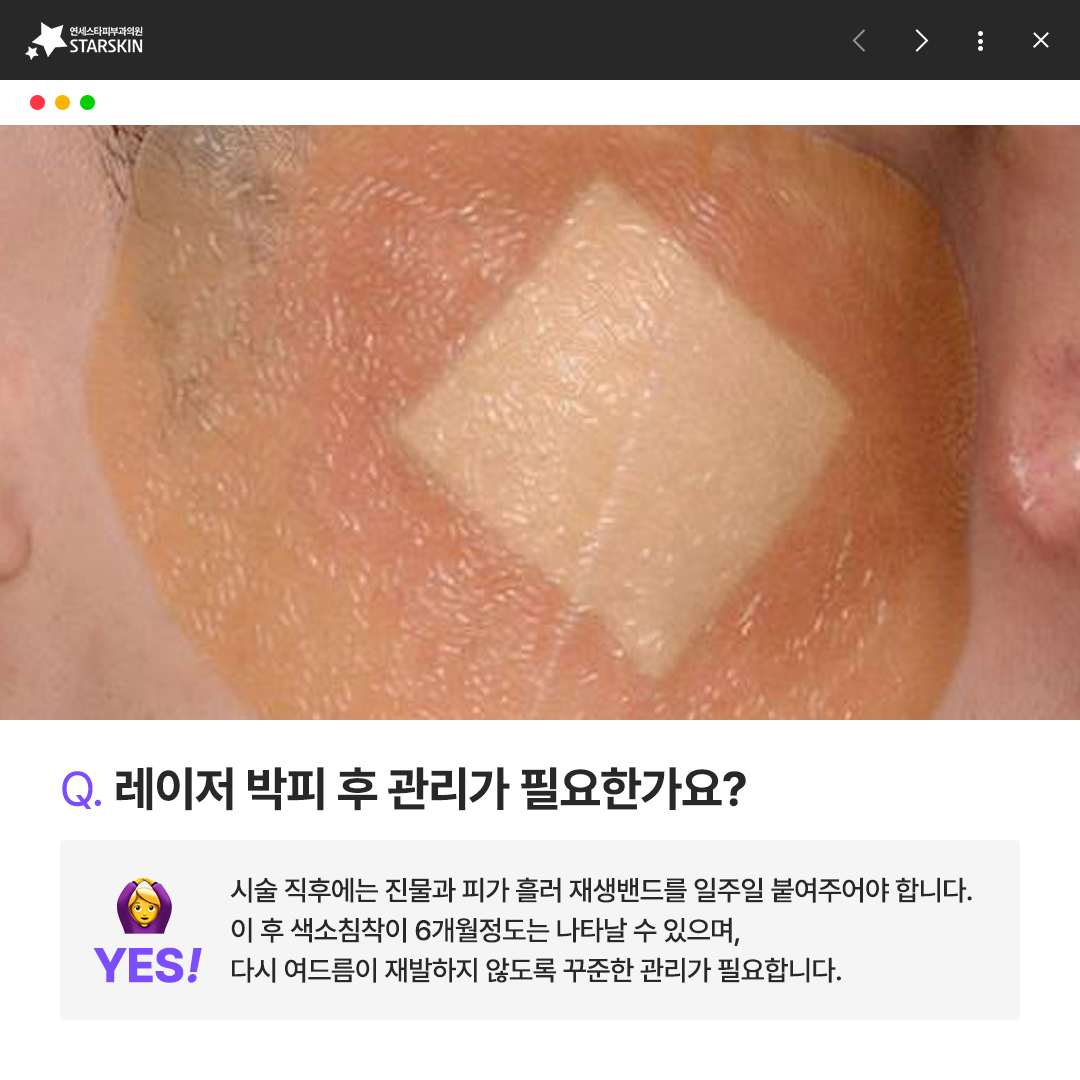
After dermabrasion, there will be oozing and some bleeding, so the entire skin is protected with a regenerative bandage. The regenerative bandage can usually be removed after about a week, once the skin has healed.
Post-bandage removal care is crucial for the results, so it's good to remember the following:
- Do not remove the regenerative bandage arbitrarily; keep it on until the skin heals.
- Brownish pigmentation may appear for about 6 months, so pay attention to UV protection.
- During the recovery period, avoid physical irritants like scrubs and products with strong chemical ingredients.
- Continue consistent skin care to prevent acne from recurring.
- If you are concerned about sensitivity or changes, consult with the medical staff rather than self-diagnosing.
What other scar treatment options are there besides dermabrasion?
Laser dermabrasion is a method considered for very severe scars, and there are also treatments that can be explored before that stage. Depending on the depth and shape of the scar and skin condition, we may recommend combining various methods, such as Premium Customized Acne Scar Care, or for specific types, Surgical Scar Revision may be considered.
Furthermore, in addition to scar treatment, managing acne itself to prevent recurrence is important in the long term. The most accurate way to determine which method is right for you is to have your skin condition directly assessed.
If you are wondering if laser dermabrasion is suitable for you, inquire via chat consultation for scar treatment tailored to your skin condition


Dr. Lee Sang-joo, Chief Director (MD, PhD, Yonsei University College of Medicine and Graduate School, Completed Dermatology Residency at Severance Hospital, President of the Korean Dermatological Association) Dr. Lee Sang-joo's Profile First published 2023-10-16 / Last reviewed 2026-06-16
This article is for general information purposes only, and treatment effects and recovery patterns may vary by individual. Therefore, please confirm an accurate diagnosis and treatment plan through consultation with medical staff.