


Many people decide to remove a tattoo but wonder about the treatment cycle for their specific tattoo.
We've put together a simple self-diagnosis method to estimate the cycle and expected number of sessions before you visit the clinic.
Self-Diagnosis Before Your Visit
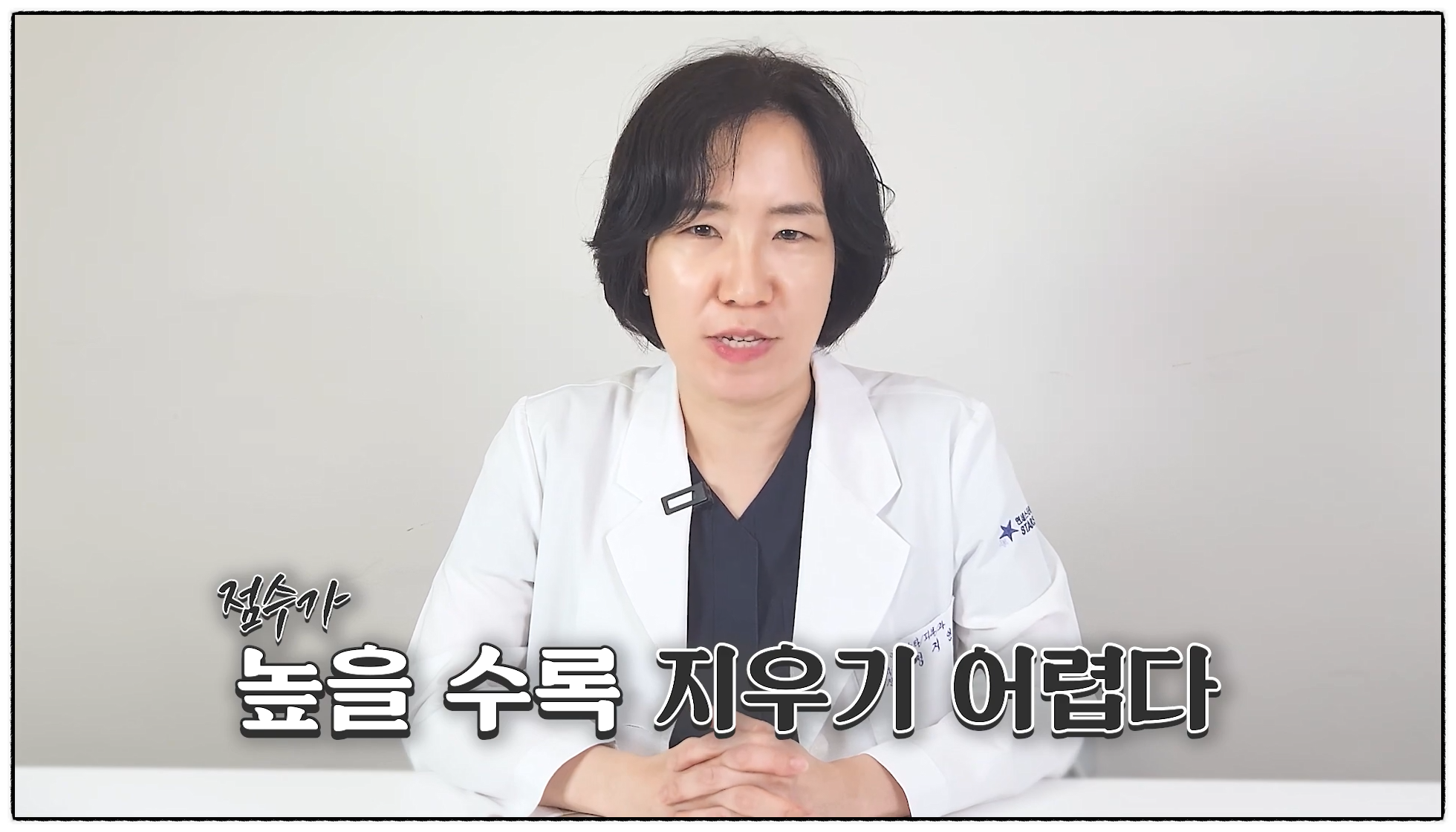
Score each item and then sum them up to apply to the estimated number of sessions. The higher the score, the more difficult the tattoo is to remove.

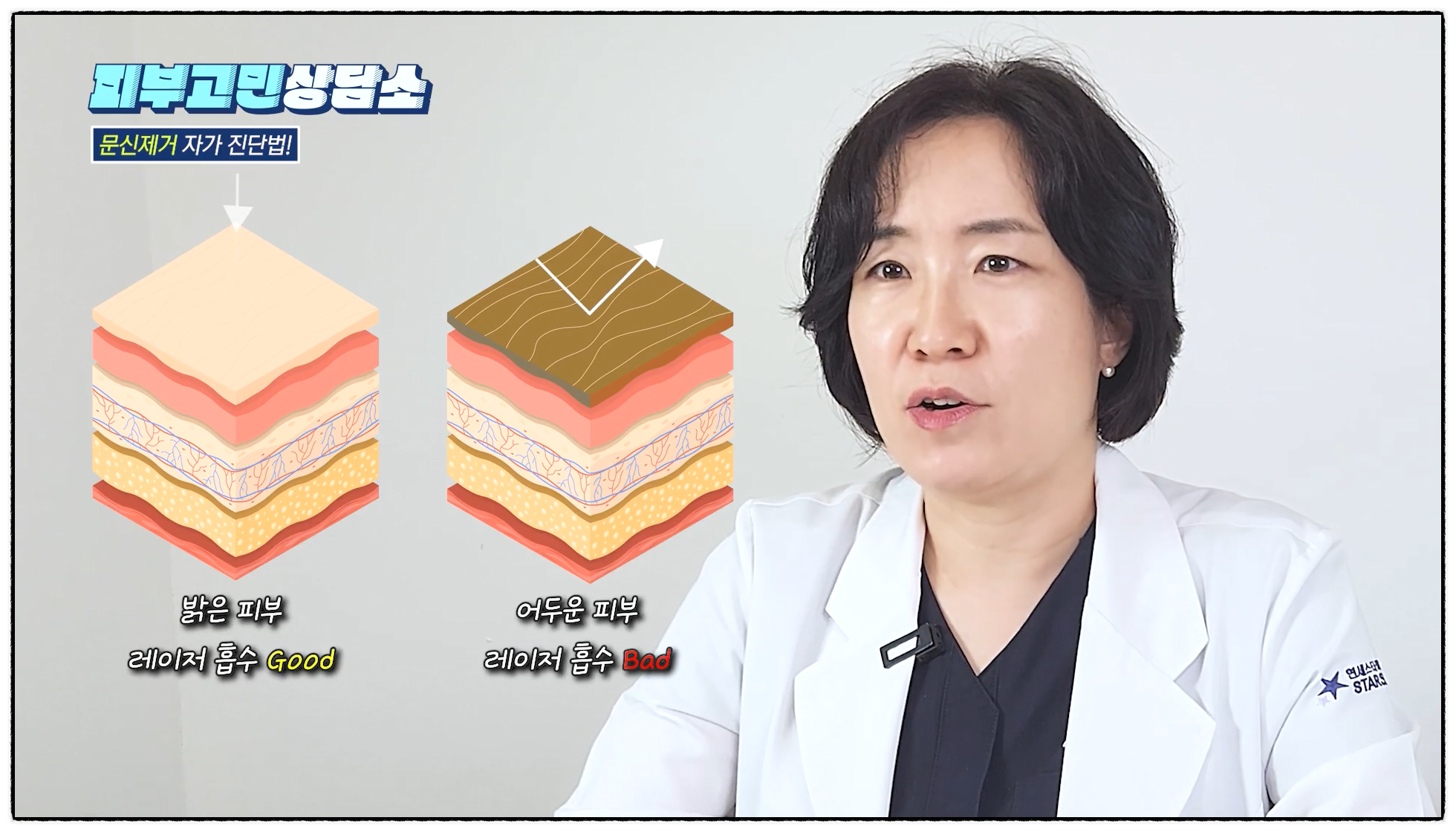
How Skin Color Obstructs Lasers
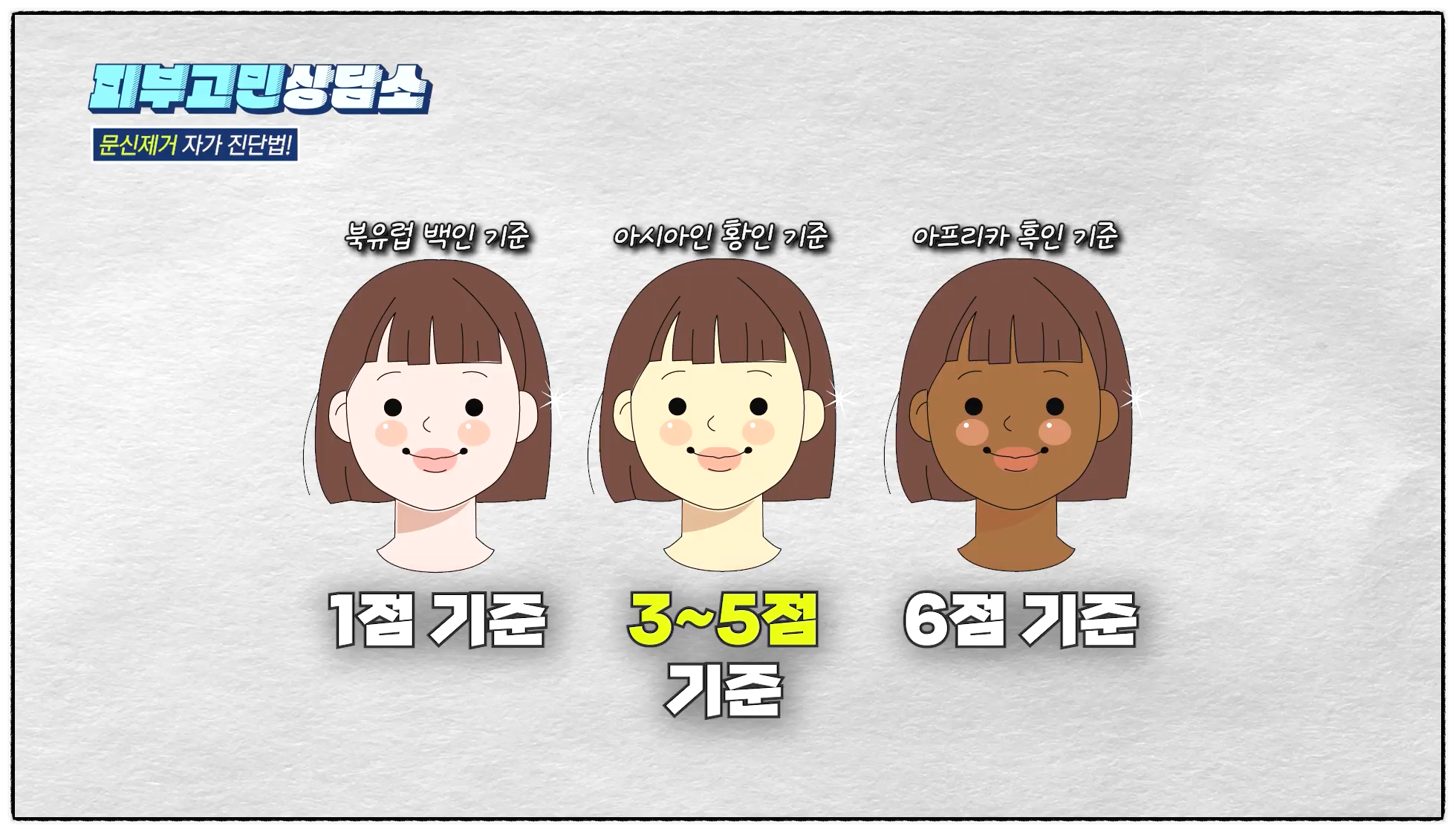
The first factor is skin color. While ink color is important, your skin color is also a crucial element in removal.
Darker skin tones have more melanin particles that can interfere with laser penetration. Therefore, the removal effect may be somewhat reduced, and the treatment cycle may be longer compared to individuals with lighter skin.

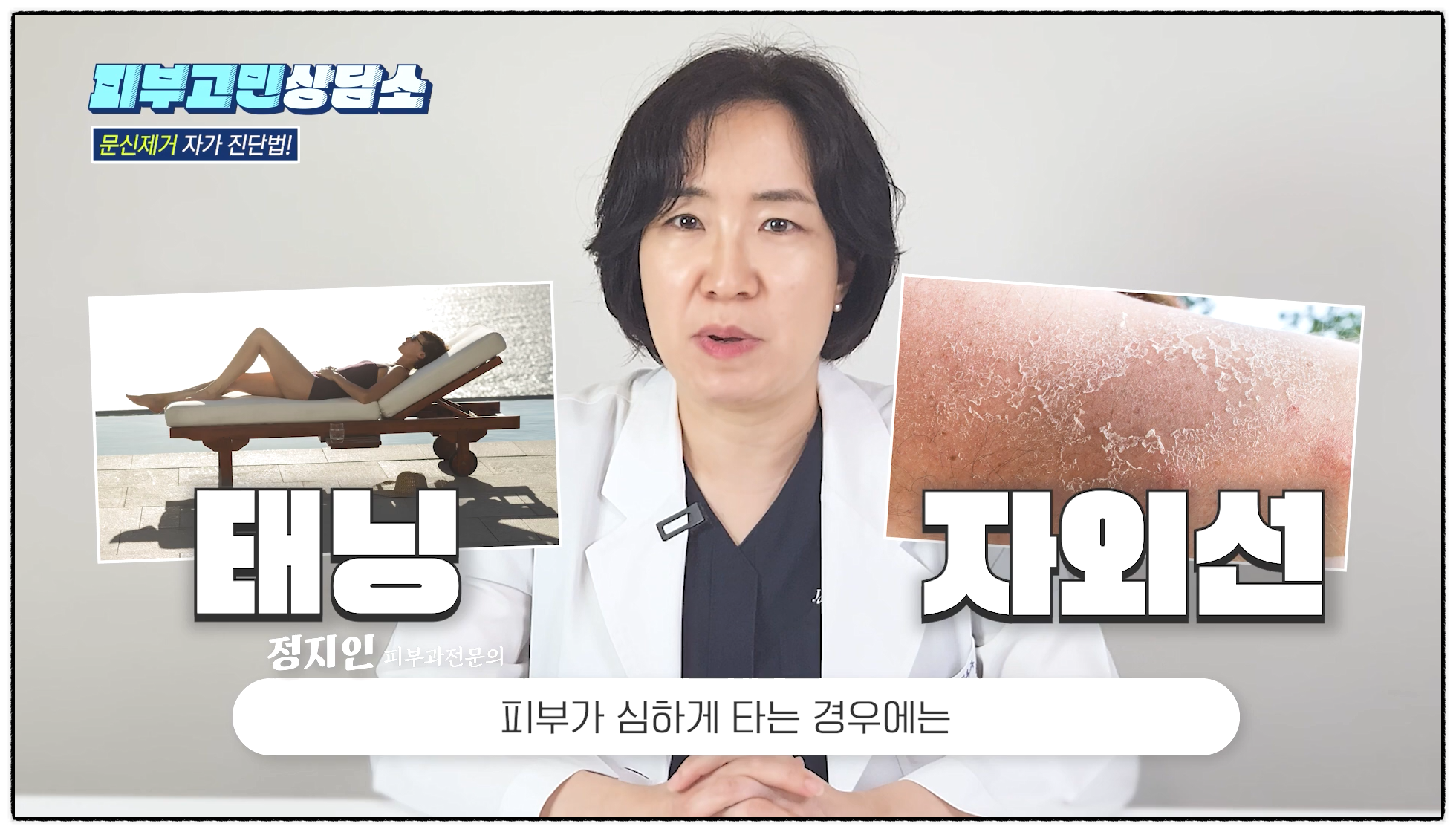
If you tan or expose your skin to strong UV rays during the removal period, not only will the cycle lengthen, but removal will also become more difficult.
The method of classifying skin types by score is called the Fitzpatrick Skin Type. Caucasians from Northern Europe with light skin would be 1 point, African Americans would be 6 points, and Koreans would generally fall between 3 and 5 points.
If you consider your skin to be lighter than others, you can give it 3 points; if you consider it to be much darker, you can give it 5 points.

Different Excretion Rates by Location
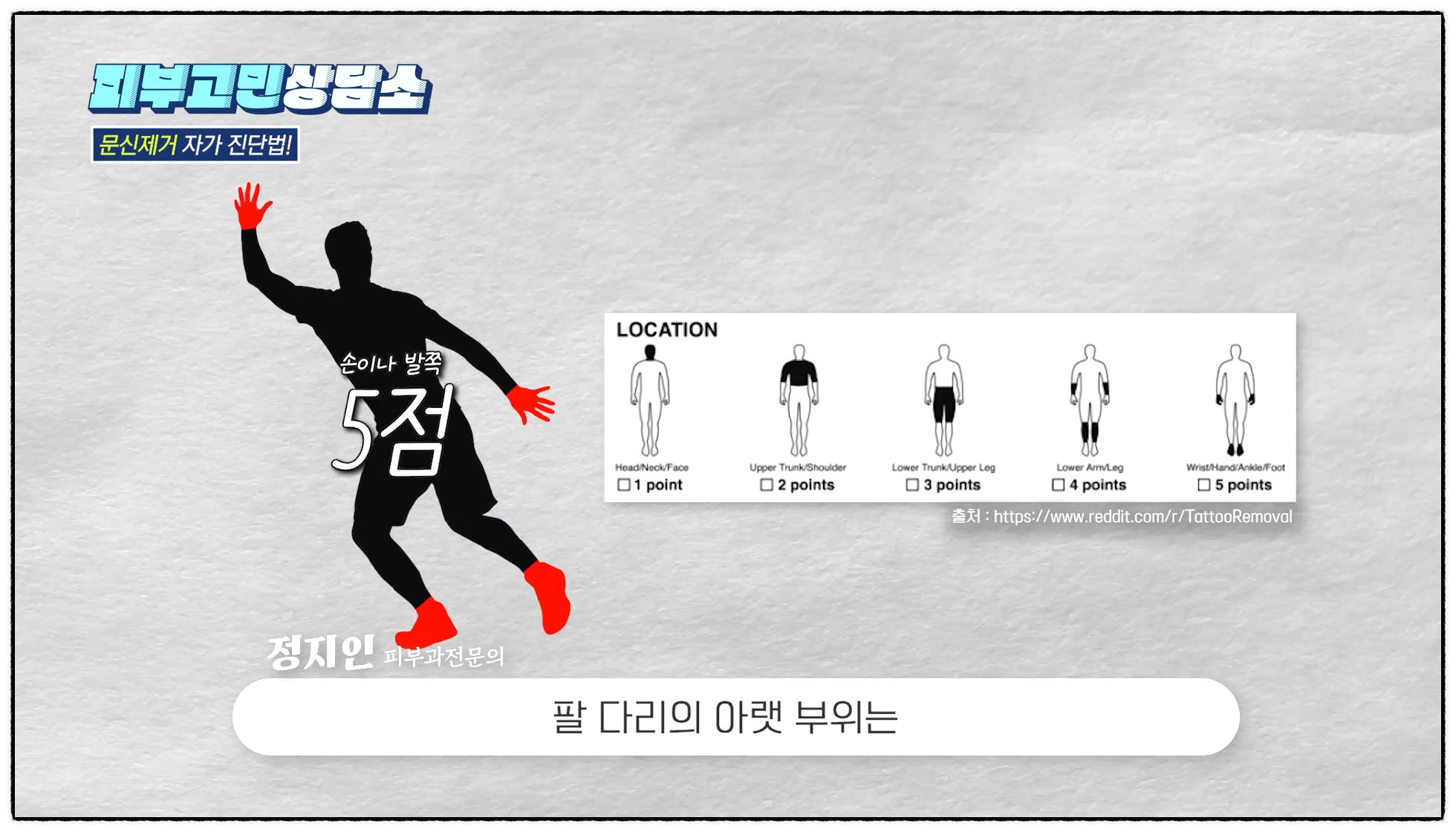
The second factor is the location where the tattoo is engraved. The cycle or number of sessions may vary depending on the location.
Broken tattoo ink is excreted through the lymphatic vessels. Blood vessels and lymphatic vessels are more developed in the face and upper body, which leads to different scores by location.
| Area | Score |
|---|---|
| Face, Neck | 1 point |
| Navel, Upper Body | 2 points |
| Arms and Legs | 4 points |
| Lower Arms and Legs | 5 points |

Estimating Ink Volume by Eye
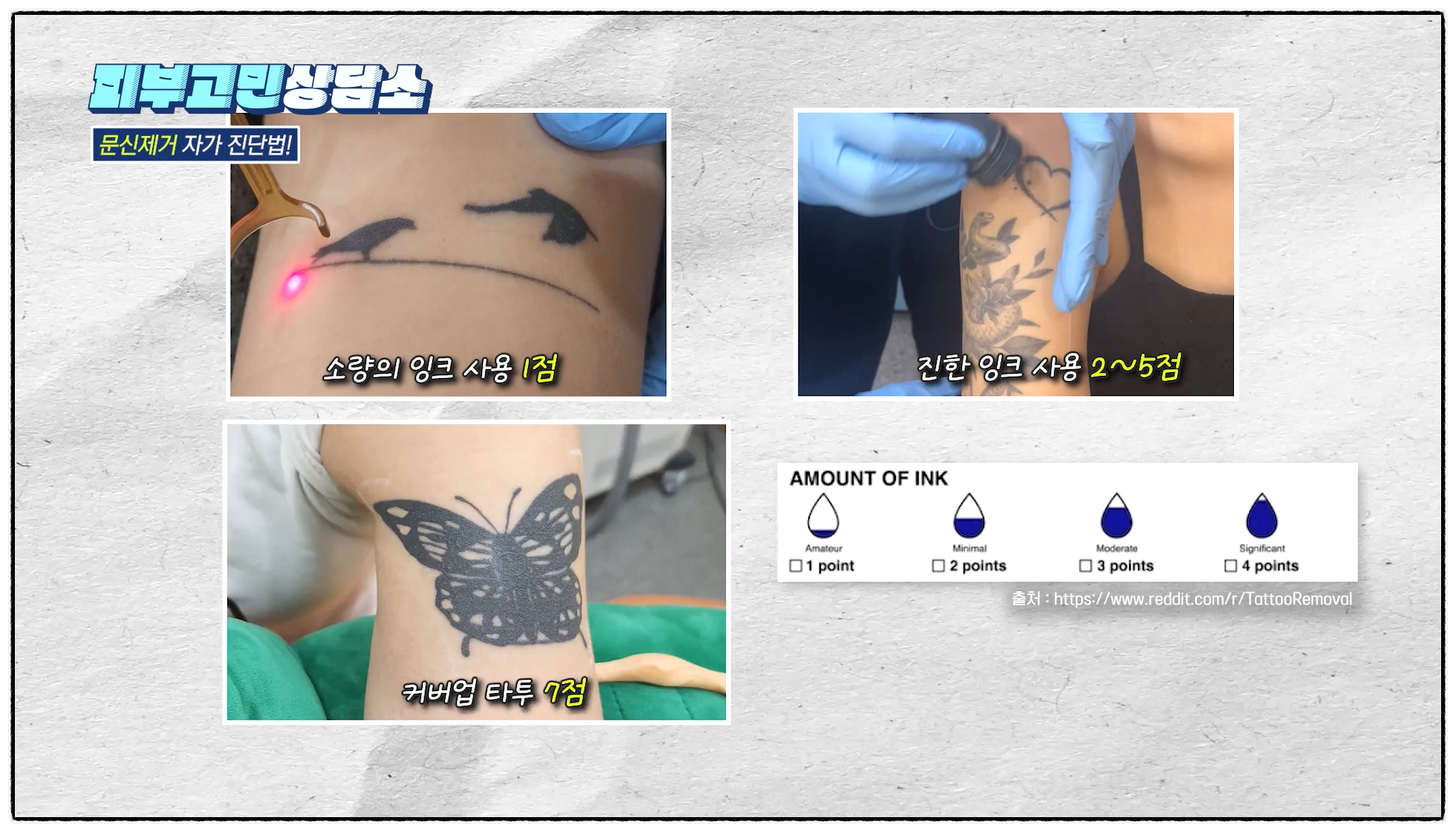
The third factor is the amount of ink in the tattoo. Since it's difficult to know the exact amount injected into the dermis, you can estimate it based on what's visible on the epidermis.
- If the ink volume appears small to anyone, 1 point
- If it was designed and engraved with a dense feel, 2 to 5 points
- If a cover-up tattoo was applied over it, add 7 points


Scars Hinder Penetration
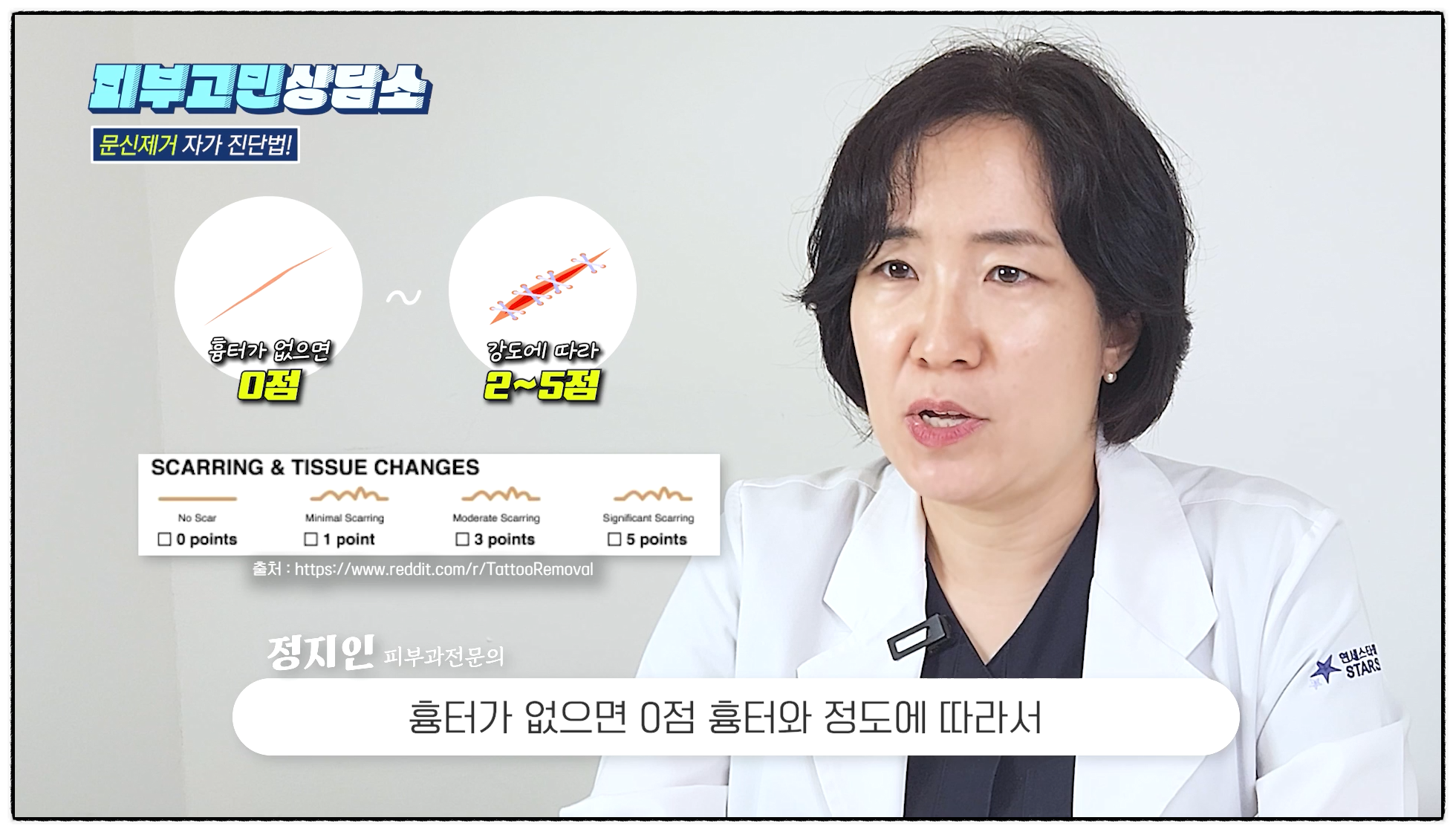
The fourth factor is whether there are scars in the tattoo area. Sometimes tattoos are used to cover scars, or scars may have already formed during the tattooing process.
Scars can hinder laser penetration, increasing the cycle and number of sessions. If there are no scars, give 0 points; if there are, give 1 to 5 points depending on the severity. You can score based on what you see and feel about the skin texture.
Procedures that also address scars are summarized in the Pinhole for Burn & Surgical Scar procedure guide.


Different Wavelengths for Each Color
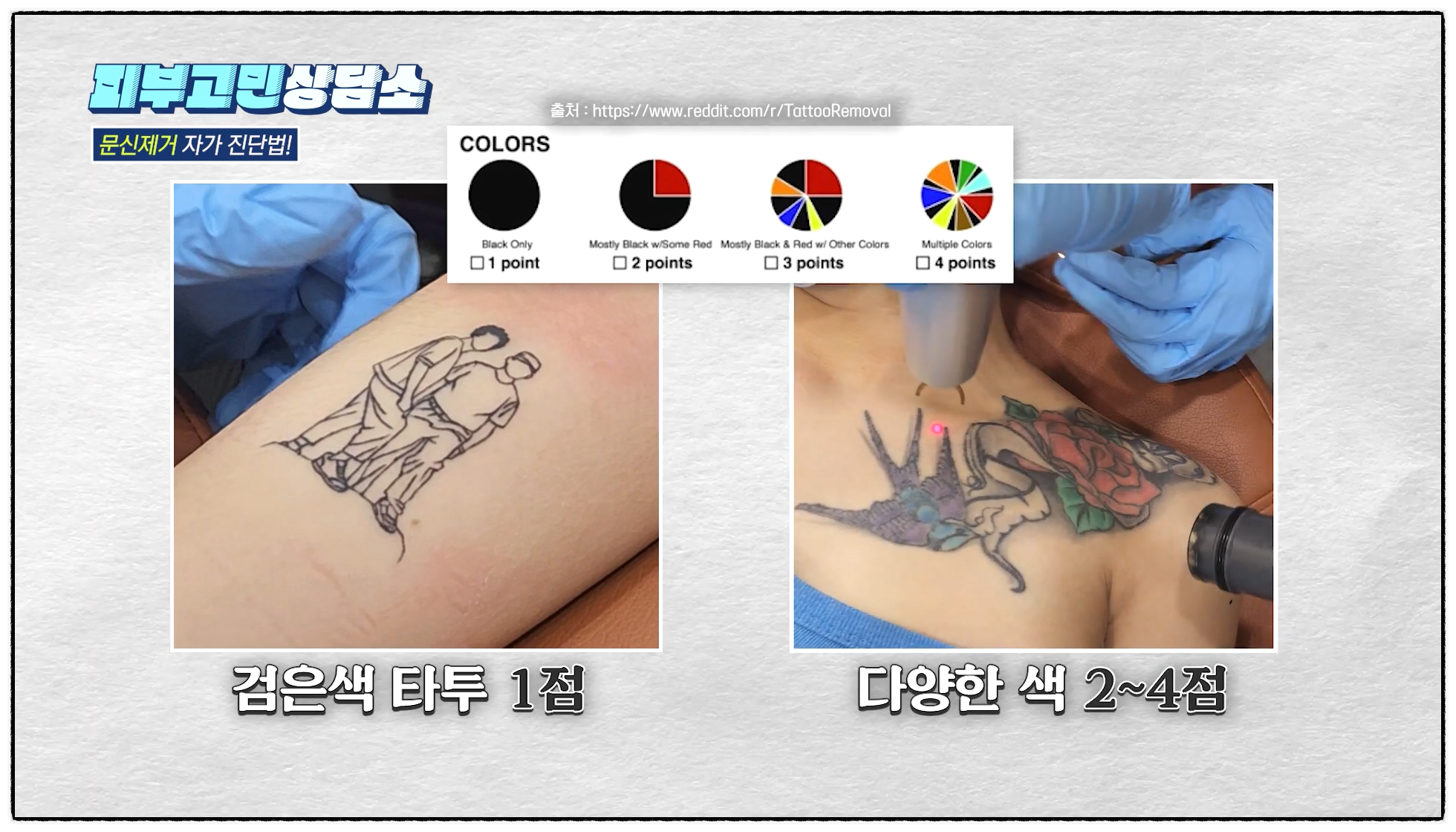
The last factor is the color of the tattoo. Colors can vary depending on the design.
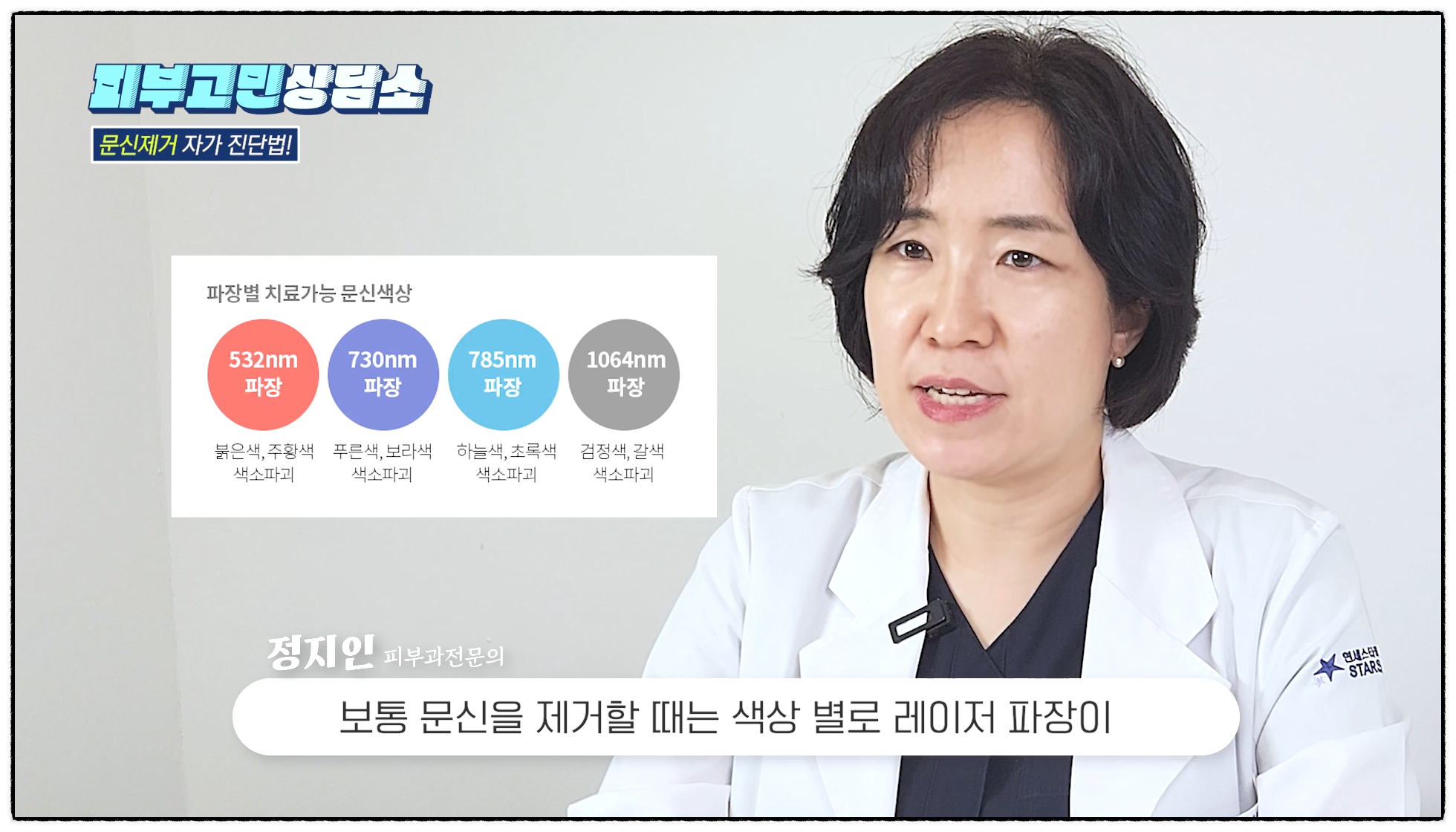
Different laser wavelengths are used for each color during removal. Black absorbs laser wavelengths well and is generally easy to remove, but tattoos with various colors often do not penetrate well.
Especially yellow, white, and flesh-colored tattoos are difficult to remove. Black is 1 point, while tattoos with many colors are 2 to 4 points; the more types of colors, the harder it is to remove.
Methods of using different wavelengths can be found in the R-Zero Pico-Frectat Tattoo Removal guide and Nd:YAG Tattoo Removal.
Summing the Scores
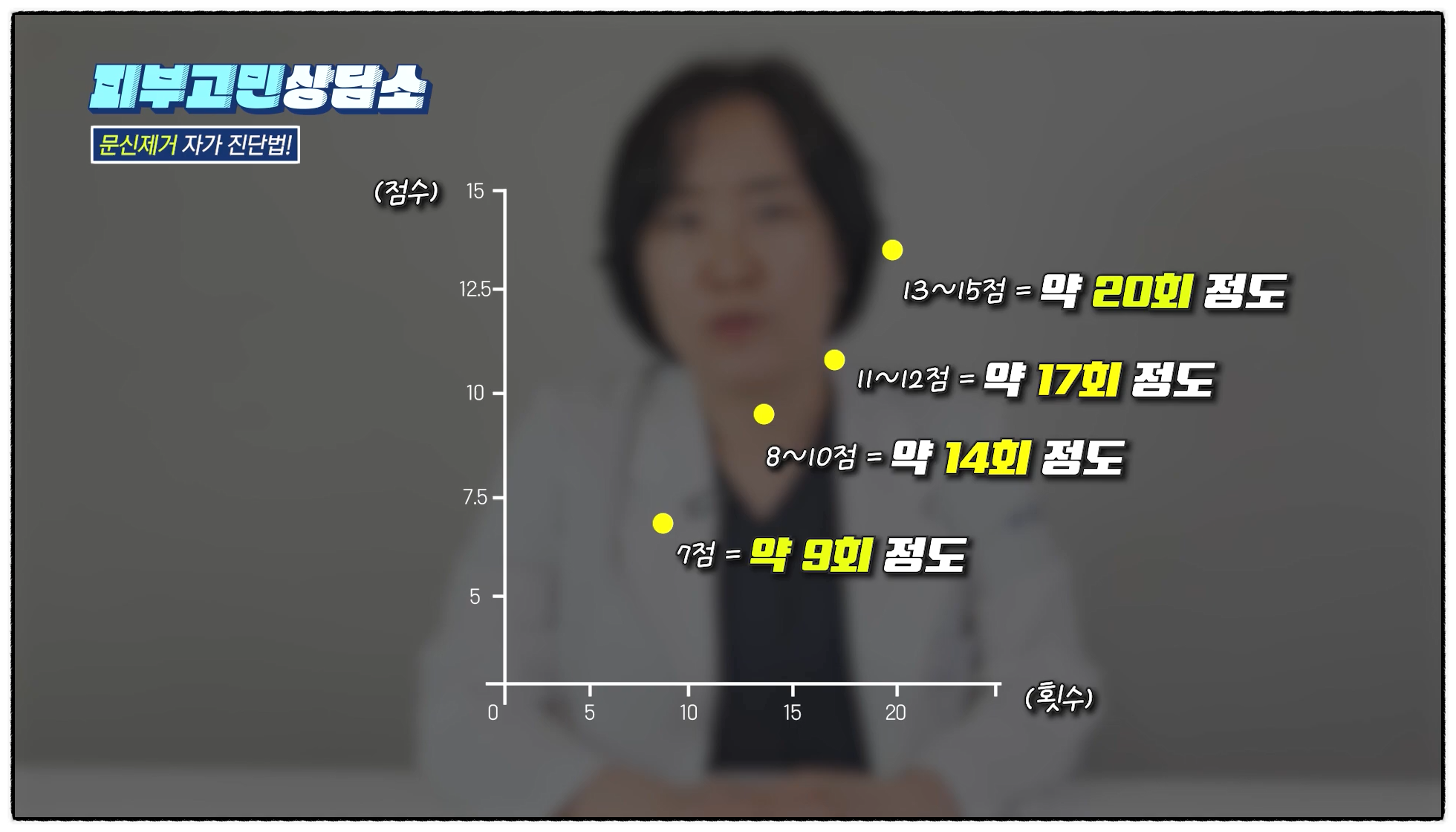
Add the scores from each category and apply them to get an approximate estimated number of sessions.
| Total Score | Estimated Sessions |
|---|---|
| 7 points | Approx. 9 sessions |
| 8 to 10 points | Approx. 14 sessions |
| 11 to 12 points | Approx. 17 sessions |

A Reference Indicator
Tattoo removal has many variables depending on skin condition and various factors. This indicator is not absolute and should be considered for reference only.
If you would like to know the exact cycle and number of sessions, please refer to the Tattoo Removal Treatment guide and then contact us via chat now. The actual number of sessions required may vary for each individual.


Authored and Medically Reviewed by Dr. Kang Jin-moon, Chief Director (Dermatologist) Graduated from Yonsei University College of Medicine · Severance Hospital Dermatology Resident Member of the Korean Dermatological Association · Korean Medical Laser Association · Author of Medical Body Care View Medical Staff Profile
First published 2024-12-05 · Last reviewed 2026-07-29
This article contains general medical information and does not substitute for individual diagnosis and treatment. Results and recovery progress may vary for each individual.