
![[Yonsei Star Dermatology Sinchon] Why 'Suture-Free Punch' is Effective for Deep Acne Scars](/_next/image?url=https%3A%2F%2Fagqdgbuateknhwpocrgu.supabase.co%2Fstorage%2Fv1%2Fobject%2Fpublic%2Fsources%2Fbbf3bebe-45b6-4415-bd04-bda18b2cac0f%2Fblog-images%2F223368056060_00_9a2fda5d8766.jpg%3Ftype%3Dw966&w=3840&q=75)
Even after acne subsides, scars that leave the skin surface uneven and shadowed are often a concern, as they are difficult to conceal with makeup. The first question that usually comes to mind is, "Can such deep scars really improve?" To answer directly, if you choose a method appropriate for the scar's shape and depth, you can expect improvement for deeply depressed scars.
Hello. We are Yonsei Star Dermatology Sinchon, your skin doctor.
Why Different Acne Scars Require Different Treatments
Acne scars do not have a single appearance. The appropriate treatment method varies depending on their shape, depth, and area. If shallow, wavy scars and narrow, deep, icepick-like scars are treated in the same way, it is difficult to achieve satisfactory results.
Especially for deeply depressed scars, if the correct approach is not taken, there are cases where repeated treatments do not show significant change. This leads many people to give up on scar treatment midway.
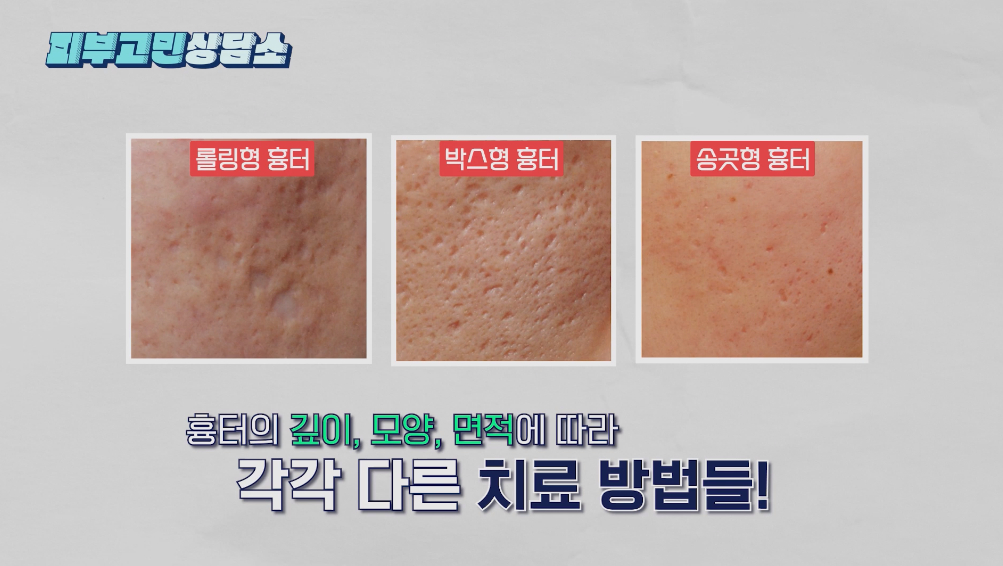
Understanding the nature of the scar first and combining methods accordingly is the starting point for treating deeply depressed scars.
Understanding the causes and management of depressed acne scars first will naturally explain why different tools are needed for different scars.
Punch Technique for Deeply Depressed Scars
For deeply depressed scars, a method using a long, rod-shaped instrument called a punch is employed. The principle is to raise the depressed scar area to the level of normal skin.

The punch technique is particularly well-suited for the following scar types:
- Deep, rectangular boxcar scars
- Narrow, deep icepick scars, as if pricked by an awl
- Deep, distinct single scars in one area
- Scars whose bases did not rise well with laser treatment alone
For these types of scars, noticeable changes are reported even with a single treatment. However, individual results may vary.
| Category | Shallow Scars | Deeply Depressed Scars |
|---|---|---|
| Typical Appearance | Surface irregularities, large area | Boxcar type, Icepick type |
| Main Approach | Laser-focused regeneration | Punch technique to raise the base |
| Change Seen in One Session | Gradual | Relatively distinct |
If you have shallow and wide scars, we recommend also looking at treatment directions by acne scar type.
The Clear Disadvantage of the Punch Technique
While the punch technique is effective for deep scars, it has one clear disadvantage: since the raised skin must be sutured to fix it, suture marks remain after the procedure.
This means creating another mark to fill a depressed scar, which made many people hesitate to undergo the procedure.
If you have any questions, you can easily ask them through chat consultation regarding depressed scar treatment.
Suture-Free Punch Technique to Reduce Suture Marks
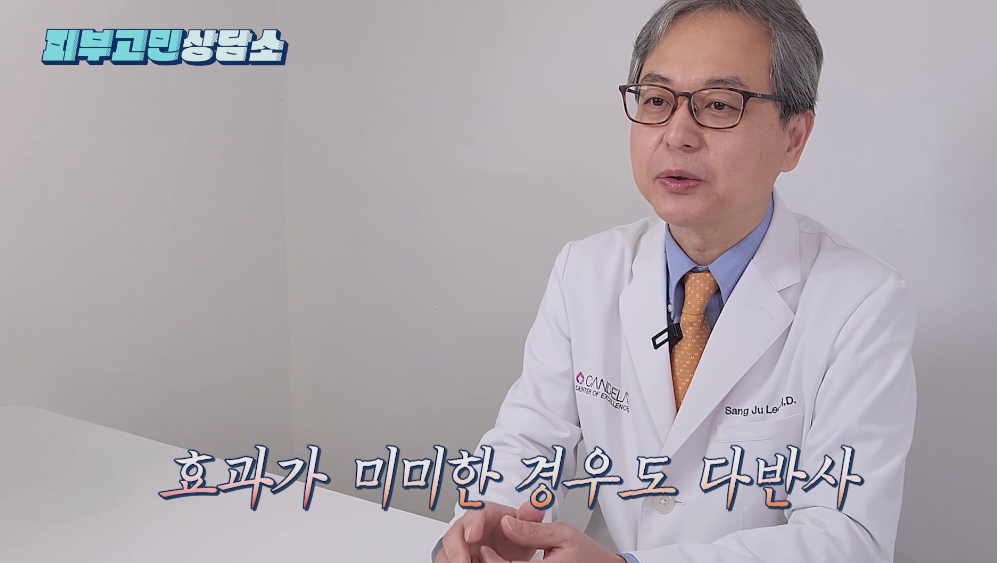
To compensate for this disadvantage, Yonsei Star Dermatology Sinchon reported to the dermatology community a suture-free punch technique that fixes the raised skin with a specialized medication instead of sutures.
Suture-free punch retains the advantages of the punch technique, which is effective for deeply depressed scars, while reducing the disadvantage of suture marks after the procedure. After the procedure, a regenerative tape only needs to be applied for about 3 days, allowing for light daily activities immediately after treatment. Good results for deeply depressed scars are consistently reported.
In the clinic, we often see that surprisingly many people have delayed treatment not because of the scar itself, but because they are "worried about another mark being left." Reducing the burden of sutures often gives them the courage to start treatment.
When such surgical scar revision for deep scars is designed in conjunction with laser-focused care, more natural results can be expected.
Why the Practitioner's Skill is Important

The practitioner's manual skill significantly influences the outcome of the punch technique. The final result varies depending on the depth and angle at which the scar is raised. There are not many medical professionals in Korea who are familiar with the punch technique.
If you are considering suture-free punch for deeply depressed acne scars, we recommend consulting with a dermatologist who has sufficient experience with the punch technique.
We have summarized important points to check before the procedure:
- Confirm whether your scar is boxcar or icepick type
- Identify the number and location of scars to be treated in one session
- Know in advance the duration of regenerative tape application after the procedure
- Receive guidance on the recovery process, including redness or pigmentation
- Discuss whether combination with other procedures is necessary depending on the scar depth
If acne is still active, addressing the causes and management of acne first forms the foundation for scar treatment.
Scar Treatment: Design Before Haste
Deeply depressed acne scars cannot all be resolved with a single method. The process of first understanding the scar's shape and depth, then designing how to combine the punch technique and laser, determines the outcome. If various scars are mixed, customized scar care combining multiple methods can be considered.
If you're curious about which combination is right for your skin condition, 💬 Consult Now
Representative Director Lee Sang-joo (MD, PhD, Yonsei University College of Medicine and Graduate School; completed dermatology residency at Severance Hospital; President of the Korean Dermatological Association) Representative Director Lee Sang-joo's Profile First published 2024-02-28 / Last reviewed 2026-06-16
Treatment results and recovery processes vary from person to person, and an accurate scar diagnosis and treatment plan are determined through face-to-face consultation with medical staff.