
![[Yonsei Star Dermatology Sinchon] Understanding Stretch Mark Treatment Timing and Recommended Lasers](/_next/image?url=https%3A%2F%2Fagqdgbuateknhwpocrgu.supabase.co%2Fstorage%2Fv1%2Fobject%2Fpublic%2Fsources%2Fbbf3bebe-45b6-4415-bd04-bda18b2cac0f%2Fblog-images%2F224143822870_00_51f0463af0e4.jpg%3Ftype%3Dw966&w=3840&q=75)
There are moments when you look in the mirror at red or white streaks and your heart sinks. The first question that usually comes to mind is, "Can stretch marks really get better?" To answer directly, stretch marks are not simply marks from skin stretching due to weight gain, but a type of atrophic scar where the collagen fibers in the dermis could not withstand physical force and tore. Therefore, choosing the correct timing and method is the starting point for improvement.

Why Don't Stretch Marks Disappear on Their Own?
Stretch marks are a type of scar formed when collagen fibers in the dermis break. Since it's not a minor epidermal change but damage to the deep structure of the skin, there are limitations to the satisfaction that can be achieved through natural recovery alone. In other words, once the dermis is torn, it is difficult for it to return to its original state over time.
Stretch marks are classified as atrophic scars where dermal collagen has torn, not just marks from stretched skin.


Do Stretch Mark Creams Really Work?
Among those concerned about stretch marks, pregnant women approaching childbirth are particularly numerous. Many search for and compare stretch mark creams during this period, and there are experimental records regarding the effectiveness of creams.

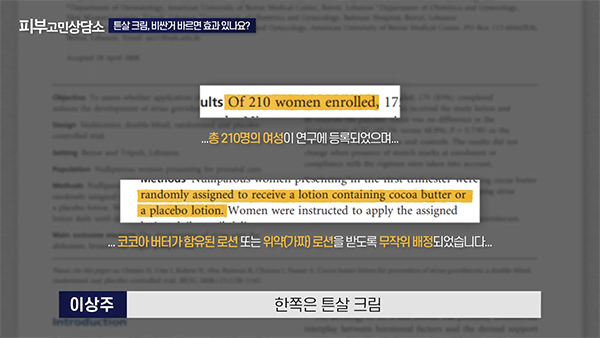
In a 2008 paper published in an obstetrics and gynecology journal, 210 pregnant women were divided into two groups: one applied stretch mark cream, and the other applied a regular cream, and their changes were compared. The results were as follows:
| Group | Percentage who reported developing stretch marks |
|---|---|
| Group that applied stretch mark cream | 45% |
| Group that did not apply cream | 48% |

The difference between the two groups was not significant. It is difficult to say that a specialized cream showed a dramatic difference, and it may be challenging to achieve the expected change relative to the cost. It's also good to remember that individual results may vary.

What Role Does Moisturizing Play?
Creams primarily focus on 'moisturizing'. This is based on the idea that maintaining good hydration can reduce the likelihood of stretch marks forming. This is because dry skin tears more easily, and scars can remain more distinct.
However, this moisturizing effect can be sufficiently expected from general products. Here are some points to consider for daily care:
- Maintain hydration with petroleum jelly or body lotion to prevent dryness.
- Increase moisturizing frequency during periods of rapid skin stretching.
- Use ointments or creams as supplementary measures rather than expecting significant improvement from them alone.
- In the early stages when marks appear red, consider a medical consultation before self-diagnosing.
- Avoid harsh peels or friction.
In the clinic, we often see that patients who expect good stretch mark improvement results from creams alone are not as satisfied with the outcome as they had hoped.


If you have any questions, feel free to leave them via chat consultation for stretch mark treatment direction.
Red Stretch Marks: Why Now is the Golden Time
Stretch marks often begin as red marks in their early stages. While they may appear severe and difficult to resolve, this period is actually considered the golden time for red stretch marks treatment.
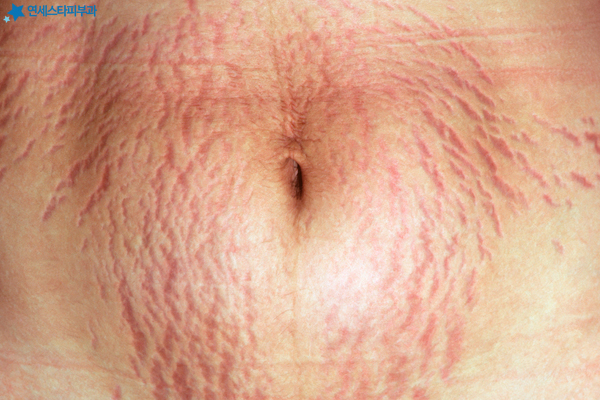

At this stage, blood vessels are still active, and the scar has not fully hardened. If vascular lasers like Vbeam Prima are used to reduce the dilated blood vessels and induce dermal regeneration during this period, it may prevent stretch marks from progressing to white and significantly speed up recovery time.



What About Stretch Marks That Have Already Turned White?
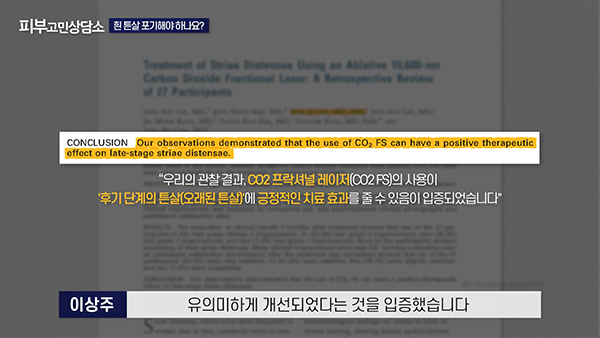
Many people are most concerned about cases where stretch marks have already turned into white stretch marks. Even if the stretch marks are old, using CO2 fractional lasers can gradually reduce their appearance and improve texture.

Representative devices include lasers like Ultrapulse Alpha. Clinical studies have reported changes in texture and color improvement as skin collagen regenerates through treatment. The appropriate device for each stage varies depending on the age and depth of the marks, so it's best to determine the stretch mark treatment direction after assessing the condition.

What Changes When Pinhole Technique is Added?
By utilizing the Mild Pinhole method, a scar treatment that helps new skin grow smoothly, even hardened white stretch marks can be gradually and naturally improved to be less noticeable. This can be understood as a combined approach that differentiates between the red and white stages and adds methods to aid regeneration.
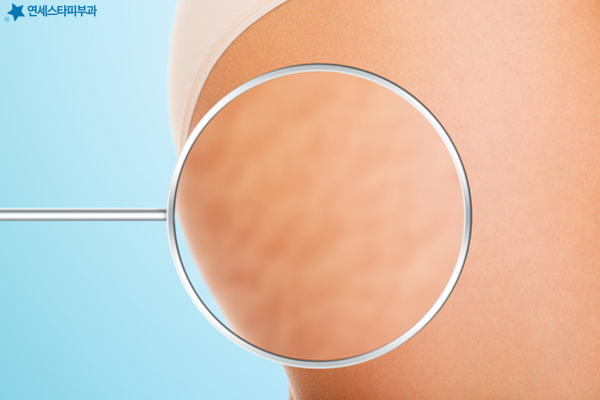
While they can be covered by clothing, instead of feeling stressed by the lingering marks, why not consider a treatment that, even if it takes a little time, helps you feel confident in any situation? Like similar atrophic acne scars, timely intervention is crucial for atrophic scars.

In Conclusion
If you have red stretch marks, consider vascular laser treatment before it's too late. If you have white stretch marks, think about combining lasers that aid collagen regeneration with the Pinhole Technique. The key is to determine which stage your stretch marks are in. Yonsei Star Dermatology Sinchon will continue to provide information on scars, stretch marks, and skin troubles that many people are curious about, contributing to clear skin.
💬 Consult Now
Chief Director Lee Sang-joo (MD, PhD, Yonsei University College of Medicine and Graduate School, Completed Dermatology Residency at Severance Hospital, President of the Korean Dermatological Association) Chief Director Lee Sang-joo's Profile First Published 2026-01-12 / Last Reviewed 2026-06-16
This article contains general information about stretch marks, and individual results may vary. For an accurate diagnosis and treatment plan, please consult with medical staff.