
![[Yonsei Star Dermatology Sinchon] Red Acne Scar Treatment and Management Guide](/_next/image?url=https%3A%2F%2Fagqdgbuateknhwpocrgu.supabase.co%2Fstorage%2Fv1%2Fobject%2Fpublic%2Fsources%2Fbbf3bebe-45b6-4415-bd04-bda18b2cac0f%2Fblog-images%2F222707375178_00_799cc550afd4.jpg%3Ftype%3Dw1&w=3840&q=75)
It's often frustrating when acne finally calms down, but stubborn red marks remain for a long time. The condition where the skin remains red in areas where acne occurred is commonly referred to as red acne marks or red acne scars. The first question that usually comes to mind is: Will this redness disappear on its own if left alone?
What are Red Acne Scars?
Red acne scars are a phenomenon that occurs when some inflammation and dilated blood vessels remain in the areas where acne was present. You can understand it as a state where the surface acne has subsided, but the inflammatory reaction within the skin has not completely resolved.
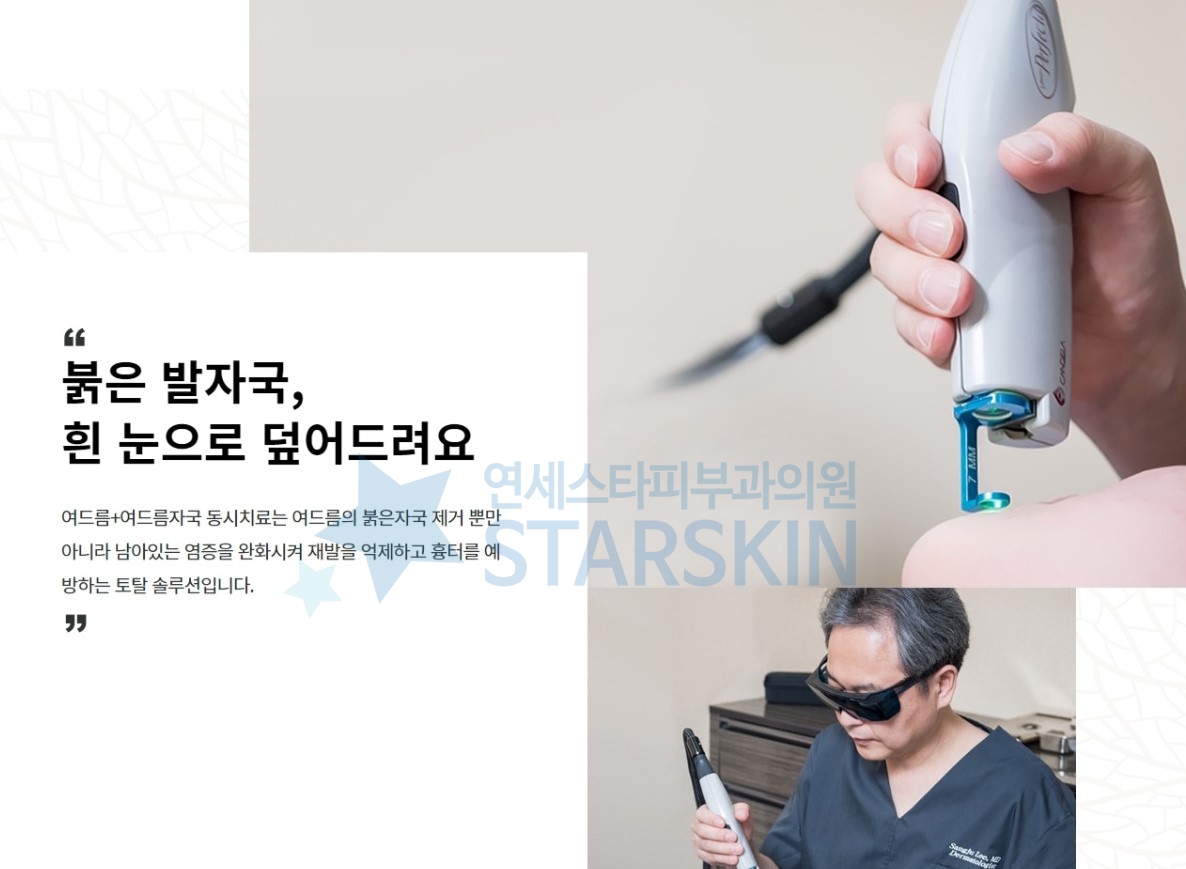
In the clinic, we observe that some individuals' marks fade lightly over time, while others retain redness for a long period, even with the same type of acne. The factors that make a difference are generally as follows:
- If acne was squeezed or frequently touched with hands
- If inflammation was deep and severe
- If sunscreen was not adequately applied
- If the skin is sensitive or recovery is slow
If any of the above apply, you may be more prone to developing persistent red marks.
Will They Disappear on Their Own if Left Alone?
If the inflammation is not severe, the redness may lighten over time. However, if deep inflammation remains, red marks can persist for a long time and eventually settle into depressed scars.
If red marks do not diminish for nearly 6 months, it's important to consider the possibility that it's not just simple hyperpigmentation, but also involves residual inflammation and vascular issues.
In other words, red acne scars are difficult to view solely as a pigment problem; an approach that addresses both residual inflammation and dilated blood vessels is necessary. Missing this stage can lead to depressed acne scars, so managing the redness when it first appears is easier.
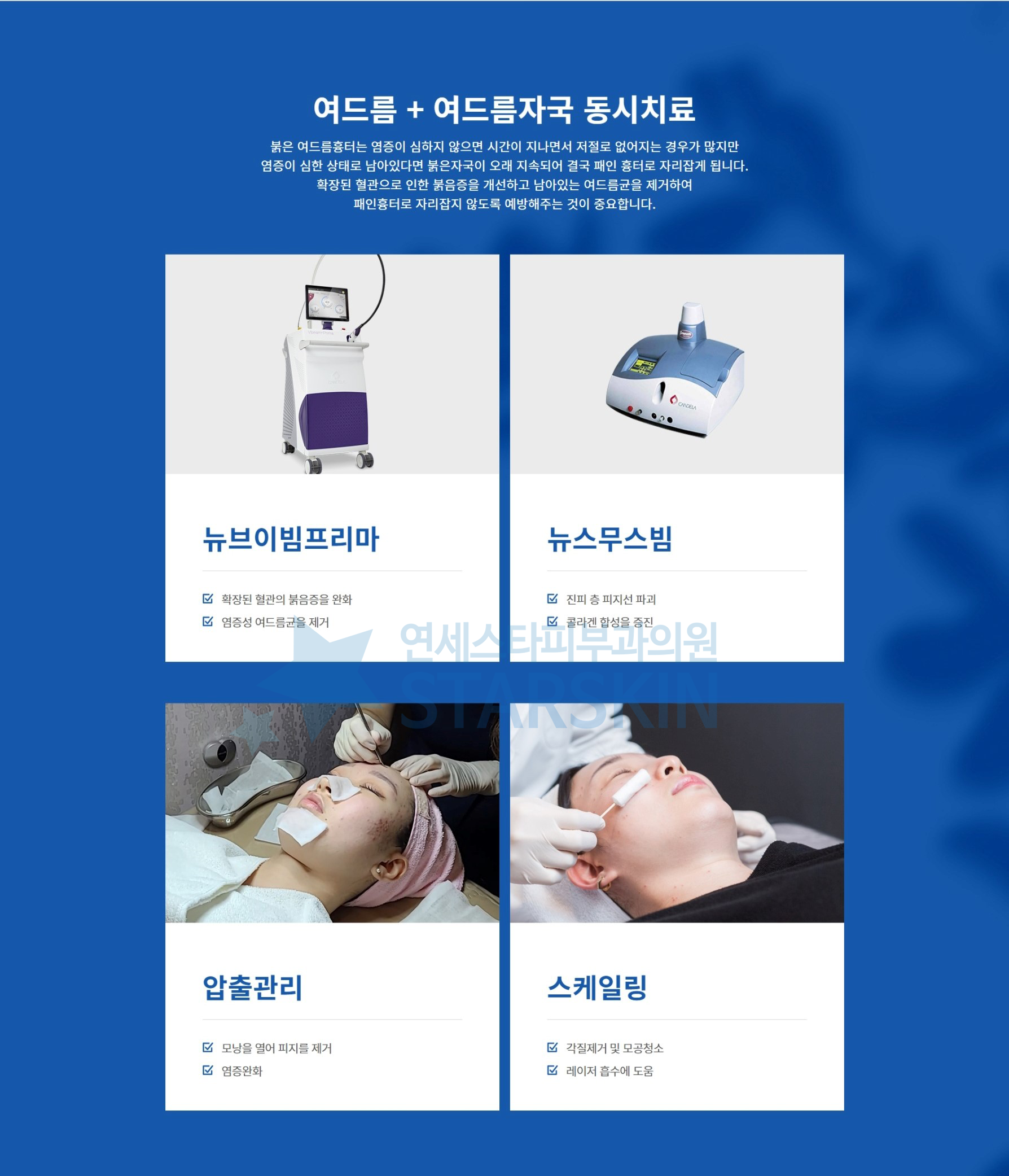
Why We Address Both Acne and Marks Together
Yonsei Star Dermatology Sinchon operates a total solution for red acne scars that simultaneously examines both acne and acne marks to determine the treatment direction. The focus is not just on treating red marks, but also on alleviating residual inflammation to reduce recurrence and prevent the progression to scarring.

If there is ongoing acne inflammation, we check it from the acne stage. If marks have already formed, we categorize the depth and type of the marks from the perspective of acne scars. Even for the same red mark, the treatment approach may differ depending on its origin.
If you are curious about your skin's stage, you can find out by contacting us for a red acne mark consultation.
How Do Red Marks and Depressed Scars Differ?
Red marks and depressed scars differ in their appearance and treatment approach. They are summarized in the table below.
| Category | Red Acne Marks | Depressed Acne Scars |
|---|---|---|
| Main Cause | Residual inflammation and dilated blood vessels | Tissue depression due to dermal damage |
| Skin Surface | Flat but with redness | Indented contours |
| Management Timing | Relatively easier when redness is present | Longer management period once established |
The stage where redness remains is a relatively early sign. Addressing inflammation and blood vessels at this point can help reduce the progression to depressed scars.

The Direction of Treatment
Yonsei Star Dermatology Sinchon's red acne scar management aims to improve redness caused by dilated blood vessels and eliminate residual acne bacteria to prevent the formation of depressed scars. The core is to simultaneously lighten the red marks themselves and calm the remaining inflammation.
When redness is prominent, it can sometimes resemble facial redness. Therefore, we don't just view it as a mark, but also examine the vascular condition to determine the direction. Treatment effects and responses may vary individually, so it is best to determine a plan suitable for your condition through a consultation.
Good Management Habits to Maintain at Home
Along with clinic treatment, maintaining the following habits in daily life can help reduce the persistence of redness:
- Do not squeeze or touch acne or marks with your hands
- Consistently apply sunscreen when going out
- Avoid irritating exfoliation or harsh cleansing
- Moisturize sufficiently to protect the skin barrier
- If redness persists for a long time, seek consultation early
These are small habits, but they make a difference in the recovery process.
If you are concerned about how to manage red acne marks, 💬 Consult Now
Conclusion
Red acne scars are not just a pigment issue; they require an approach that considers residual inflammation and blood vessels. By addressing acne and marks in the same context when redness is present, we can further examine the pathway leading to depressed scars. If you are bothered by persistent red marks, we recommend starting by identifying your skin's stage rather than self-diagnosing.

Dr. Sang-Joo Lee, Chief Director (MD, PhD, Yonsei University College of Medicine and Graduate School; Completed Dermatology Residency at Severance Hospital; President of the Korean Dermatological Association) Dr. Sang-Joo Lee's Profile First Published 2022-04-21 / Last Reviewed 2026-06-16 Skin condition and recovery speed vary from person to person, so please ensure an accurate diagnosis and treatment plan through consultation with medical staff.