
![[Yonsei Star Dermatology Sinchon] Pitted Acne Scars, Redness Laser Treatment Know-how Presented at 'IMCAS, One of the World's Top 3 Aesthetic Medicine Congresses' / Sinchon Station Dermatology](/_next/image?url=https%3A%2F%2Fagqdgbuateknhwpocrgu.supabase.co%2Fstorage%2Fv1%2Fobject%2Fpublic%2Fsources%2Fbbf3bebe-45b6-4415-bd04-bda18b2cac0f%2Fblog-images%2F223003251594_00_e49ec040b709.jpg%3Ftype%3Dw966&w=3840&q=75)
Facial redness, red scars, and deeply pitted acne scars are persistent skin concerns that are not easily covered by makeup. The questions patients ask first are generally similar: "Can this scar really get better?" To answer directly, scars and vascular lesions are areas where improvement is reported when their nature is accurately distinguished and appropriate lasers are applied in stages.
Dr. Sang-Joo Lee, Chief Director of Yonsei Star Dermatology Sinchon, presented his clinical experience in treating pitted acne scars and redness and red scars at the 2023 IMCAS World Congress, considered one of the world's top three aesthetic medicine congresses. This article summarizes, from the patient's perspective, the two main topics that formed the basis of the presentation: vascular lesion laser treatment and a staged approach to pitted scars.
What topics were covered at the IMCAS Congress?
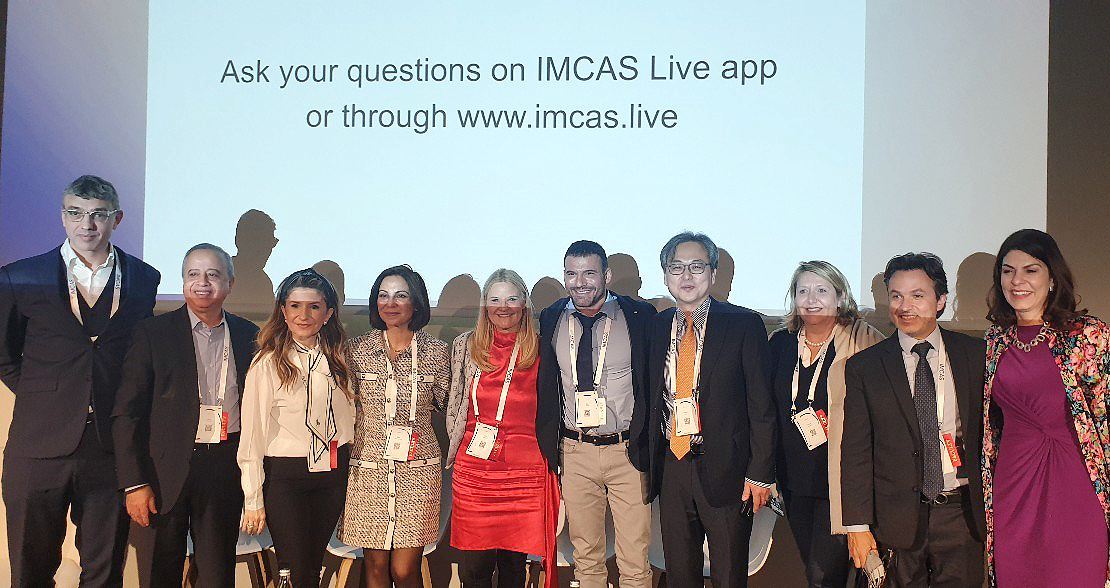
Chief Director Sang-Joo Lee introduced approaches to vascular lasers for facial redness, erythema, red scars, and stretch marks, and laser peeling treatments for severely pitted acne scars. He noted that the section on pitted acne scar treatment, in particular, generated many questions.
Scars and redness vary in type and depth, so it is reported that the key is to design treatment according to the nature of the lesion, rather than trying to solve everything with a single device.
Such presentation activities are not merely events; they are also a process of organizing experiences gained in clinical practice and reflecting them back into treatment.
Why does redness not disappear easily?
The redness seen in facial redness or red acne scars often originates not from pigment on the skin surface, but from fine, dilated blood vessels in the dermal layer. This is why it does not respond well to general pigment lasers or whitening care.
Lasers that target blood vessels are designed to selectively act on dilated blood vessels, and are used to address redness while minimizing burden on surrounding tissue. However, since the depth and distribution of vascular lesions vary from person to person, individual differences may occur.
Pitted acne scars are approached in stages
In the clinic, one of the most frustrating aspects for those with pitted scars is that they "do not flatten all at once." Pitted acne scars are depressions caused by the loss of dermal collagen, so simply resurfacing the surface has limitations.
Therefore, we consider a combined approach of resurfacing the surface with laser peeling and lifting the depressed base. The approach varies depending on the shape of the scar.
| Scar Type | Characteristics | Treatment Direction |
|---|---|---|
| Icepick | Narrow and deep | Localized peeling and base stimulation |
| Boxcar | Depressions with distinct borders | Surface peeling to soften borders |
| Rolling | Wide and undulating | Dermal stimulation to enhance volume |
Since multiple forms are often mixed, it is helpful to design a Premium Customized Acne Scar Care that combines treatments while observing the scars together.
For questions, inquire via chat consultation about scar and redness treatment
How to manage before and after treatment
The results of laser treatment are influenced not only by the procedure itself but also by pre- and post-care. Here are some important points to follow in daily life:
- Minimize sun exposure for a certain period after the procedure and consistently use sunscreen.
- Focus on soothing and moisturizing to restore the skin barrier.
- Do not forcibly remove scabs or dead skin cells, even if they form.
- Avoid activities that generate heat, such as drinking alcohol or using saunas, during the initial recovery period.
- Recovery speed and response vary by individual, so follow your medical team's guidance.
Why it doesn't end in one session
Scars and vascular lesions involve changes in the deeper layers of the skin, so they are generally approached gradually over several sessions. Rather than expecting all changes from a single procedure, it is safer to proceed with intervals aligned with the skin's recovery cycle.
In cases where both pigment and vascular elements are present, such as red acne scars, the decision of which to address first affects the outcome. Therefore, accurately identifying the nature of the lesion during the initial consultation is crucial.
Why academic presentations lead to clinical practice
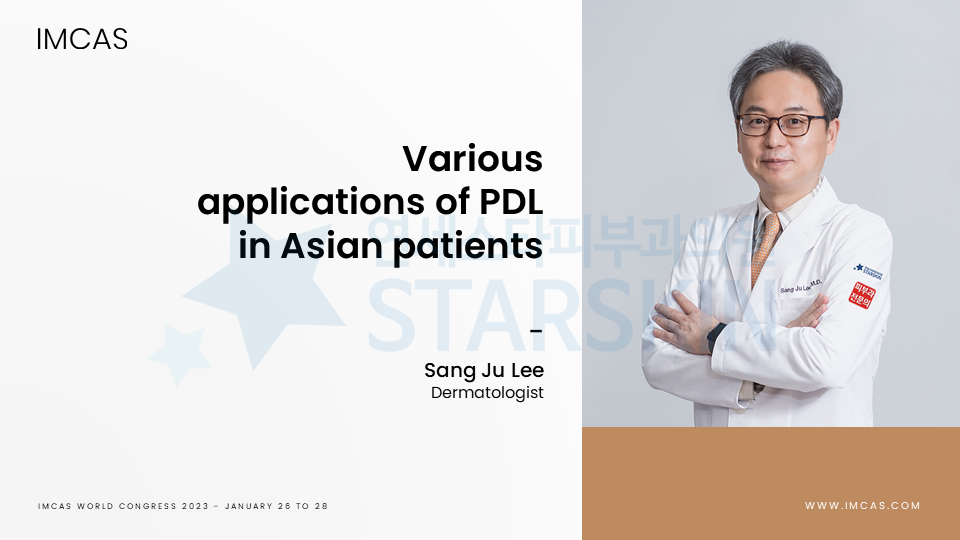
Yonsei Star Dermatology Sinchon continues its academic and publication activities, extending beyond Korea. This academic exchange serves as a basis for reviewing new approaches and refining treatment standards.
If you have been concerned about scars or redness for a long time, we recommend starting by first identifying the nature of your lesion.
💬 Chat for a consultation nowChief Director Sang-Joo Lee (MD, PhD, Yonsei University College of Medicine and Graduate School; completed dermatology residency at Severance Hospital; President of the Korean Dermatological Association) Chief Director Sang-Joo Lee's Profile First published 2023-02-02 / Last reviewed 2026-06-16
This content is for general information purposes only, and treatment responses may vary by individual. Accurate diagnosis and treatment plans should be determined through consultation with medical professionals.