
![[Yonsei Star Dermatology Sinchon] Low-Pain Keloid Treatment Methods and Process Guide](/_next/image?url=https%3A%2F%2Fagqdgbuateknhwpocrgu.supabase.co%2Fstorage%2Fv1%2Fobject%2Fpublic%2Fsources%2Fbbf3bebe-45b6-4415-bd04-bda18b2cac0f%2Fblog-images%2F222631694496_00_f46ee55328de.jpg%3Ftype%3Dw966&w=3840&q=75)
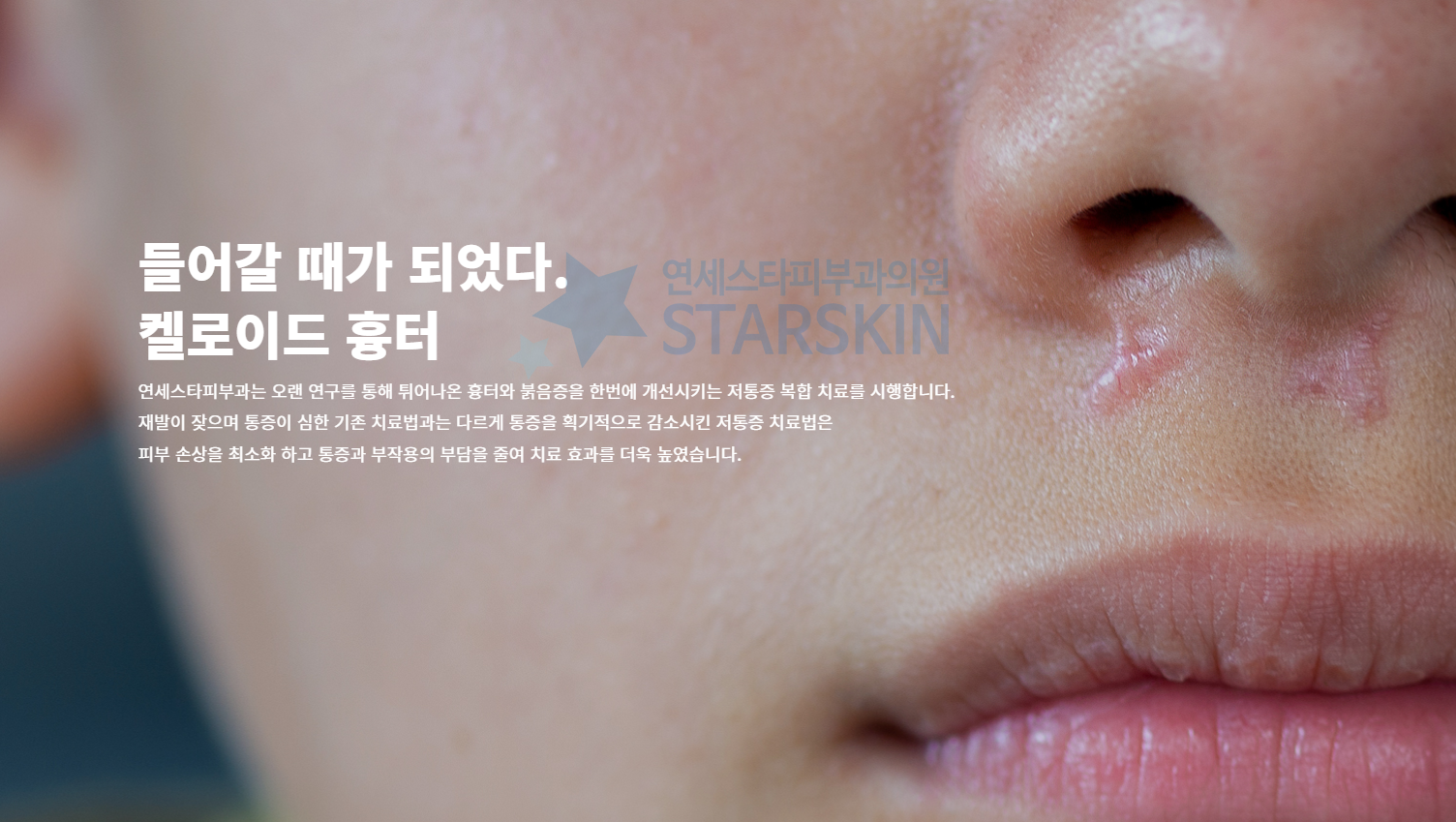
Keloids are scars that form when a wound heals, extending beyond the original wound boundary and becoming firm and raised. If you've experienced a piercing site, surgical area, or even a small acne mark gradually growing larger and redder, accompanied by itching or stinging, your first question is likely similar: "Will this go down on its own if I leave it?" To answer directly, keloids rarely shrink naturally and are known to expand in area over time, so it is generally advantageous to start management relatively early.
Keloids: How Are They Different from Regular Scars?
When collagen is excessively produced during the wound healing process, scars become prominent. Hypertrophic scars and keloids are often confused, but they have different progression patterns.
| Classification | Hypertrophic Scar | Keloid |
|---|---|---|
| Extent | Remains within the original wound boundary | Extends beyond the wound boundary |
| Time Course | Tends to flatten after a certain period | Continuously grows |
| Recurrence | Relatively low | Reported as high |
Keloids are not merely scars that are visually prominent; they are classified as scars that exhibit abnormal tissue proliferation.
Due to these differences, keloids are difficult to treat with simple excision alone. Both the stage of addressing the raised tissue and the stage of suppressing recurrence must be considered. If you are unsure about the nature of your scar, we recommend first reviewing Characteristics and Management of Keloid Scars.

Where Do They Commonly Occur?
Keloids are observed more frequently in specific areas. This is because areas with repeated irritation and tension create an environment where tissue is prone to overgrowth.
- Ears: Ear keloids caused by piercing or earring irritation
- Center of the chest and shoulders: Areas with high skin tension
- Arms, back, and abdomen: Cases where small wounds or surgical scars become the starting point
- Acne marks: Cases where post-inflammatory scars progress into keloids
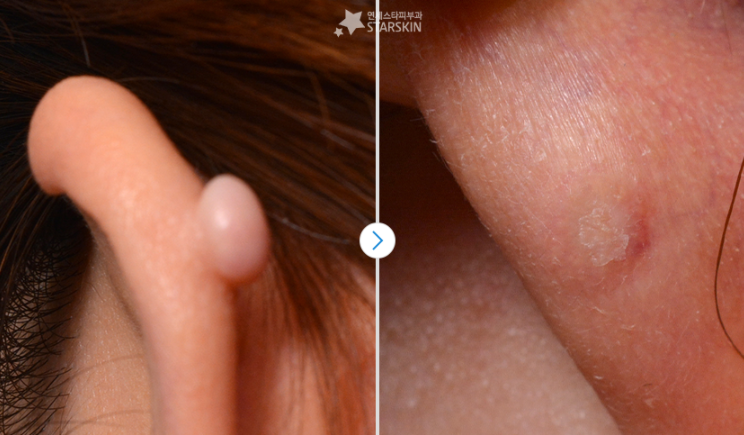
Since the locations and patterns vary, the approach to treatment differs even for the same keloid. For distinct raised forms like ear keloids, and widely spread areas on the chest, the focus of the treatment plan will be different.
If You're Worried About Pain During Treatment
Many people worry about pain first when they think of keloid injection treatment. This is because the process of injecting medication into firm tissue can feel burdensome.

Yonsei Star Dermatology Sinchon has, through extensive research, developed and applied a low-pain keloid treatment method that addresses keloid tissue while reducing the burden of pain during the procedure. This can be an option for those who have delayed starting treatment due to concerns about pain.
If treatment feels daunting, it helps to prepare a list of your biggest concerns before your consultation. For any questions, please inquire via chat consultation about the keloid treatment process.
Reducing Recurrence is Key
The most challenging aspect of keloid treatment is recurrence. Managing the process to prevent regrowth is as important as reducing the immediately raised scar.

Sinchon's combined keloid treatment involves both low-pain laser and injection therapy. The focus is on suppressing the re-formation of excessive scar tissue. By combining the laser stage, which addresses the raised areas, and the injection stage, which suppresses abnormal vascular proliferation, both the scar and its recurrence are managed together. More details on the medication and concentration adjustment for injection treatment can be found in Triamcinolone Scar Injection.

In the clinic, the location, shape, and size of scars vary from person to person, so even with the same medication, the amount and injection points often need to be adjusted. Precisely targeting only the scar area and appropriately adjusting the concentration of corticosteroid hormones is a step to minimize potential post-treatment changes.
Ear Keloids Are Managed in Stages


Ear keloids caused by piercing or earring irritation are managed by dividing them into an intensive treatment period and a prevention period to avoid recurrence. This approach involves setting stage-by-stage plans according to the treatment progress.
- Stage for addressing the raised part with a laser
- Low-pain injection stage to suppress abnormal vascular proliferation
- Prevention stage to monitor for recurrence based on progress
- Process of adjusting the plan according to the area and response
Approaching it in these distinct stages creates a flow where, rather than trying to finish with a single procedure, the progress is monitored and refined over time. If scar revision is also needed, Surgical Scar Revision may also be considered depending on the situation.

Not Delaying Determines the Outcome
Keloids are known to expand in area the longer they are delayed. Starting management when they are small reduces the scope to be addressed, and the plan becomes simpler. After the scar has grown larger over time, more stages may be required to achieve the same results.
If you are also concerned about surgical scars or post-cosmetic surgery scars, reviewing Management of Cosmetic Surgery Scars may be helpful.
If you have questions about the right time to start treatment or the best approach for your scar, please feel free to ask.
💬 Chat for a consultation now
After treatment, temporary swelling, redness, scabs, or flaking may occur depending on individual characteristics, so we recommend proceeding after sufficient consultation with medical staff.
Chief Director Lee Sang-Joo (MD, PhD, Yonsei University College of Medicine and Graduate School, completed dermatology residency at Severance Hospital, President of the Korean Dermatological Association) Chief Director Lee Sang-Joo's Profile First Published 2022-01-26 / Last Reviewed 2026-06-16
This article is for general information purposes only, and since scar patterns and treatment responses vary by individual, please consult with medical staff for an accurate diagnosis and treatment plan.