
![[ Yonsei Star Dermatology Sinchon ] Laser Lesion Removal 'Up to 4 Removals at Once' - R-Zero Technique](/_next/image?url=https%3A%2F%2Fagqdgbuateknhwpocrgu.supabase.co%2Fstorage%2Fv1%2Fobject%2Fpublic%2Fsources%2Fbbf3bebe-45b6-4415-bd04-bda18b2cac0f%2Fblog-images%2F222625838587_00_f46ee55328de.jpg%3Ftype%3Dw966&w=3840&q=75)
Many people hesitate to remove tattoos because they've heard laser treatment takes a long time. Tattoo removal is a procedure that isn't completed in one session but rather over several, so the most common question we hear in the initial consultation is, "How many sessions do I need?" To put it simply, the number of laser passes possible in one session varies depending on the treatment method, and this, in turn, affects the overall treatment duration.

Why general laser tattoo removal can feel slow
When removing tattoos with a laser, the principle is to irradiate the pigment with light to break it into tiny fragments. The problem is that as soon as the laser hits the pigment, white bubbles form on the skin's surface. This white bubble layer acts as a gas barrier, scattering or blocking subsequent laser light.
Therefore, general laser tattoo removal requires waiting for the bubbles to subside, and as a result, only about one pass can be performed per visit. Since the same area must be treated repeatedly over several days, the overall schedule becomes longer.
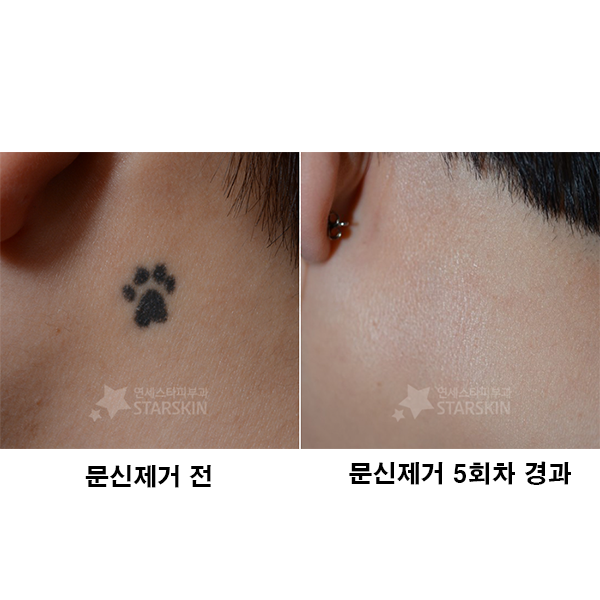
What makes the R-Zero Technique different?
The method used by Yonsei Star Dermatology Sinchon is the R-Zero Technique. The core of this technique is the application of a special medication called PFD immediately after the white bubbles form.

Perfluorodecalin (PFD) helps to quickly subside the bubble layer. Once the bubbles disappear, the laser can reach the pigment again, allowing multiple laser passes in a single session. Through this principle, the R-Zero Technique is designed to allow up to 4 laser passes per visit. It is also reported that quickly clearing the bubbles helps reduce the potential for skin damage.

You can also see the actual principle of the R-Zero Technique in this video.
What is the difference between general laser and the R-Zero Technique?
Even with the same laser tattoo removal, the number of passes per session and the schedule can vary depending on the method. In the clinic, patients often notice this difference in the number of visits first.
| Category | General Laser Tattoo Removal | R-Zero Technique |
|---|---|---|
| Passes per visit | About 1 pass | Up to 4 passes |
| Bubble management | Wait for natural subsidence | Quickly cleared with PFD medication |
| Potential for skin damage | Burden with repeated passes | Burden reported to be alleviated with medication |
How the bubble layer is managed determines the number of laser passes possible in one session.
If you are considering tattoo removal, it is advisable to first review the principles and recovery process of tattoo removal and then check if laser tattoo removal is suitable for your tattoo condition.
For questions, inquire via chat consultation regarding tattoo removal sessions and schedule

The type of laser used also matters
The results of the R-Zero Technique are also influenced by the equipment used. Yonsei Star Dermatology Sinchon uses the PicoWay Laser in conjunction with R-Zero tattoo removal.
PicoWay is a device that breaks down tattoo pigments into tiny fragments with picosecond-unit short light pulses. It is equipped with four different wavelengths, designed to widely address various tattoo colors. The synergy between the pigment fragmentation stage and the R-Zero method of quickly clearing bubbles enhances efficiency per session.
If you are concerned about pain
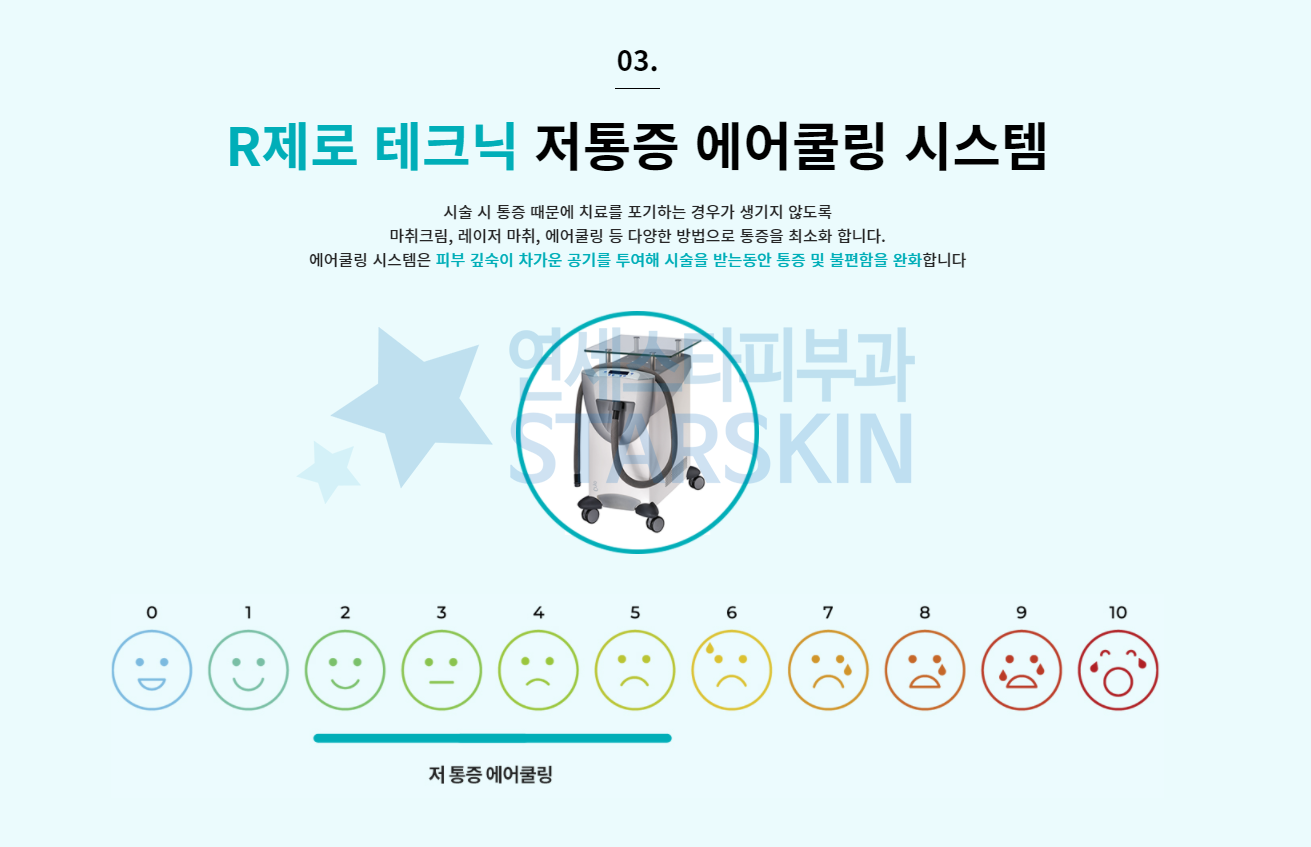
Another reason for hesitation regarding tattoo removal is pain. Yonsei Star Dermatology Sinchon also operates a low-pain air cooling system. This method sends cold air deep into the skin to help alleviate the pain and discomfort experienced during the procedure. Since the perception of pain can vary from person to person, it is advisable to fully discuss your condition during the pre-procedure consultation.

What tattoos can be treated?
R-Zero tattoo removal is widely applicable depending on the tattoo's shape or color. However, the number of sessions required and the results may vary individually depending on the depth and color composition of the pigment, as well as skin condition.
- Monochromatic tattoos with a single color
- Multi-colored tattoos with various hues
- Large tattoos with extensive areas
- Various skin types
What to know after the procedure
After tattoo removal, several reactions may occur as the skin heals. Knowing the following in advance can make the recovery period more comfortable.
- Temporary swelling or redness may appear.
- Scabs or exfoliation may occur at the treatment site.
- Do not forcibly remove scabs; let them fall off naturally.
- Recovery speed and reactions may vary individually.
Most of these reactions are part of the healing process, but their intensity and duration differ from person to person. If you have any concerning symptoms, we recommend consulting with medical staff to check your progress.
For questions, inquire via chat consultation about treatment direction by tattoo condition

Chief Director Lee Sang-joo (MD, PhD, Yonsei University College of Medicine and Graduate School, completed dermatology residency at Severance Hospital, President of the Korean Dermatological Association) Chief Director Lee Sang-joo's Profile First published 2022-01-19 / Last reviewed 2026-06-16
The content above is a general explanation of tattoo removal, and the number of sessions required and the results may vary from person to person. Please confirm an accurate diagnosis and treatment plan through consultation with medical staff.