
![[Yonsei Star Dermatology Sinchon] Importance of Injection Treatment and Combined Laser Management for Keloid Scars](/_next/image?url=https%3A%2F%2Fagqdgbuateknhwpocrgu.supabase.co%2Fstorage%2Fv1%2Fobject%2Fpublic%2Fsources%2Fbbf3bebe-45b6-4415-bd04-bda18b2cac0f%2Fblog-images%2F224235980360_00_4af5a47ebe47.jpg%3Ftype%3Dw966&w=3840&q=75)
Why Keloids Remain Unchanged Even After Steroid Injections
If you've already had several steroid injections and haven't noticed much difference, your frustration is completely understandable. This is because keloids differ in nature from simple scars, and the most common question is usually, "Why do they remain the same even after injections?"
To get straight to the point, keloids are characterized by continuous, unchecked collagen production, making a single treatment method insufficient. This is why combined management, using both injections and lasers, is gaining attention.
How Keloids Differ from Ordinary Scars
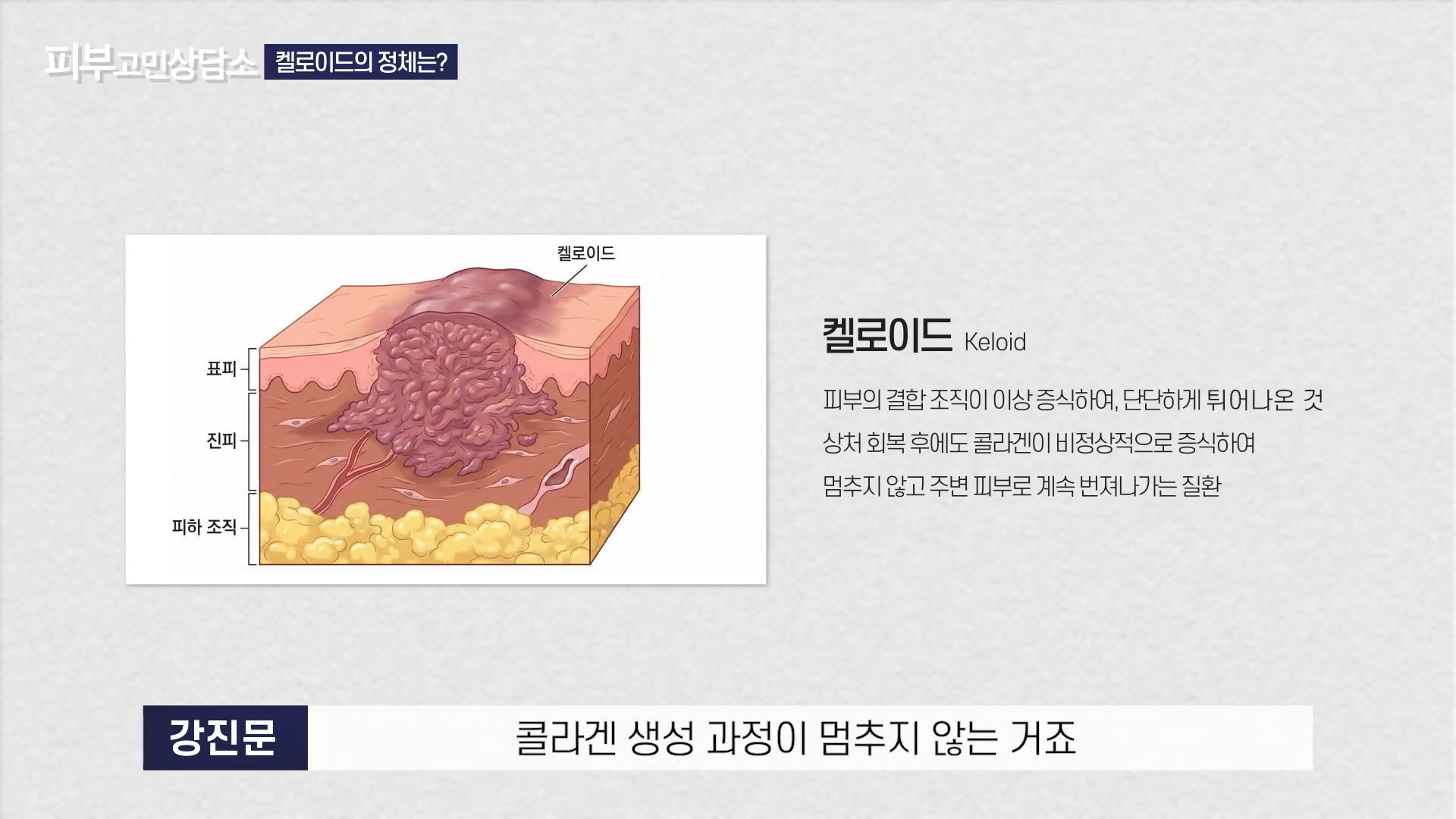
Keloids are a condition where collagen is excessively produced during the wound healing process, causing it to protrude above the skin. Unlike typical scars, they tend to spread beyond the original wound boundaries into the surrounding skin. As the skin thickens and hardens, it often comes with discomforts such as itching or stinging pain.
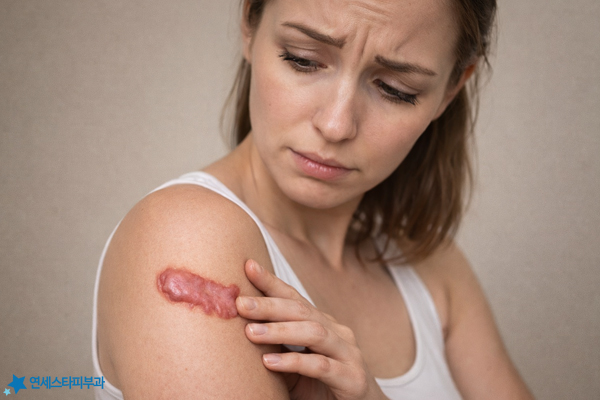
If left untreated, they tend to grow larger, and the discomfort experienced in daily life often increases accordingly. If you're unsure whether it's a regular scar or a keloid, we recommend checking the characteristics of keloid scar progression first.
Keloids are reported to be more amenable to treatment when they are small and in their early stages. Therefore, a precise diagnostic process is crucial.
What to Expect from Steroid Injections
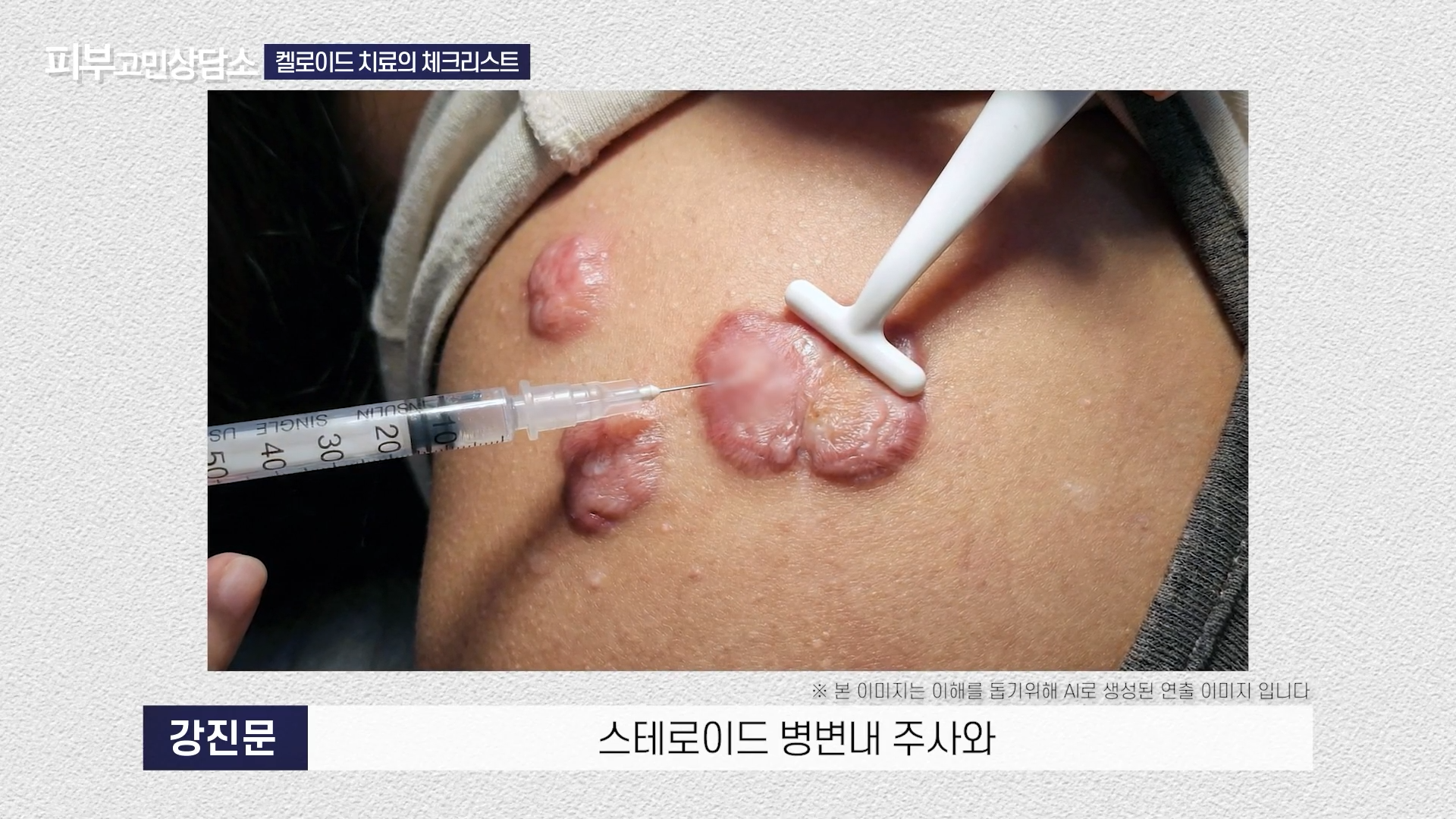
When thinking of keloid treatment, the first method that often comes to mind is Triamcinolone Scar Injection. Triamcinolone helps to relatively quickly shrink keloid tissue and reduce itching or pain, making it a consistently utilized treatment method.
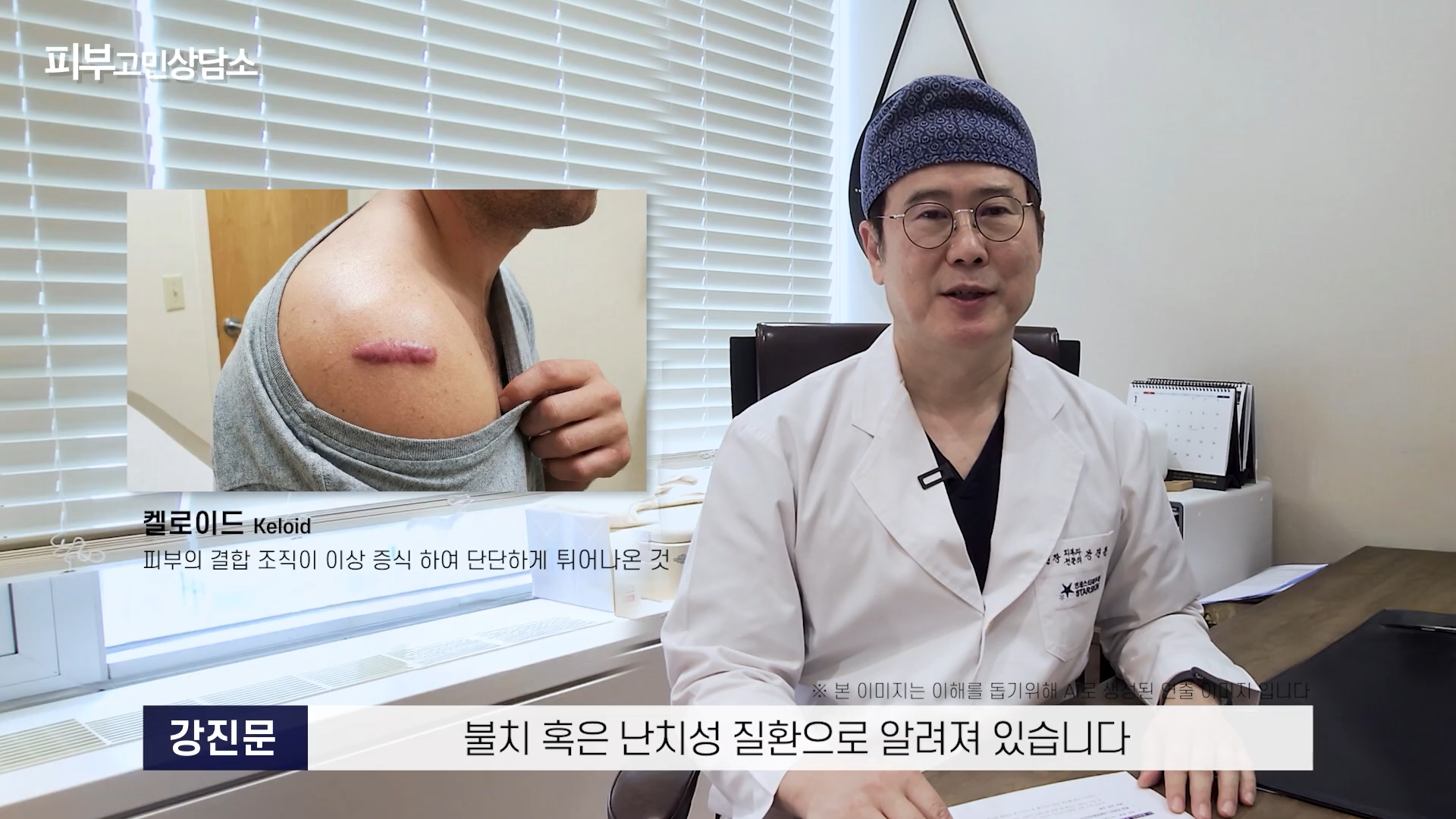
However, injections alone often leave something to be desired. The limitations are as follows:
- It can be difficult to maintain the effect for a long time.
- Keloids themselves have a high probability of recurrence.
- The medication needs to penetrate hardened scar tissue, which can cause pain.
- Many people delay starting treatment due to pain.
To alleviate these difficulties, we recommend low-pain injection methods or combined management that includes laser treatment.
Why Use Vascular Lasers Together
Vascular lasers are frequently used in keloid treatment. Keloids are richly supplied with blood vessels, and blood vessels are one of the main factors that stimulate collagen production. When blood vessels are excessively developed, the skin can become red and act as a factor that enlarges the scar, so it is necessary to return them to a normal range.

Selectively treating blood vessels with a laser helps suppress inflammatory reactions and prevent further keloid growth. Combining injection treatment, which reduces the size of already enlarged keloids, with laser treatment, which inhibits scar growth, can create a synergy that fills in each other's gaps.
| Category | Injection Treatment | Vascular Laser |
|---|---|---|
| Main Role | Keloid tissue atrophy | Inhibits blood vessels to block growth |
| Strengths | Reduces raised areas | Alleviates redness and inflammatory reactions |
| Limitations | Risk of recurrence, pain | Limited volume reduction alone |
In clinical practice, we often observe that patient satisfaction with changes is more stable when injections and lasers are planned together.
For inquiries, please contact us via chat for keloid combination treatment

Treatment That Doesn't End in One Session: What to Consider
As with all scar treatments, keloid treatment is rarely completed in one or two sessions. Especially given the high likelihood of recurrence, regular management and meticulous monitoring of progress are crucial. When choosing a place for treatment, it's good to consider the following:
- Do they sufficiently explain how the treatment will proceed?
- Is follow-up and subsequent management handled well?
- Do they plan treatment methods and durations differently based on the scar condition?
- Do the medical staff have sufficient dermatological knowledge and clinical experience?
Even for the same scar, treatment methods and duration can vary depending on its condition. Accurate diagnosis is essential for establishing a treatment plan tailored to you. Not only raised scars like keloids but also scars remaining after surgery or cosmetic surgery scars require different approaches depending on their state, so it can be helpful to assess your scar type together.
The Most Important Thing is Not to Delay Treatment
Keloids are reported to be more amenable to treatment when they are smaller and in their early stages. If you suspect symptoms, we recommend seeking specific consultation without delay. When the appearance of a raised scar is a concern, a wide range of options, such as Surgical Scar Revision, can be considered.
If you want to easily check the condition of your scar or what combination of management might be right for you, feel free to ask below.
💬 Consult Now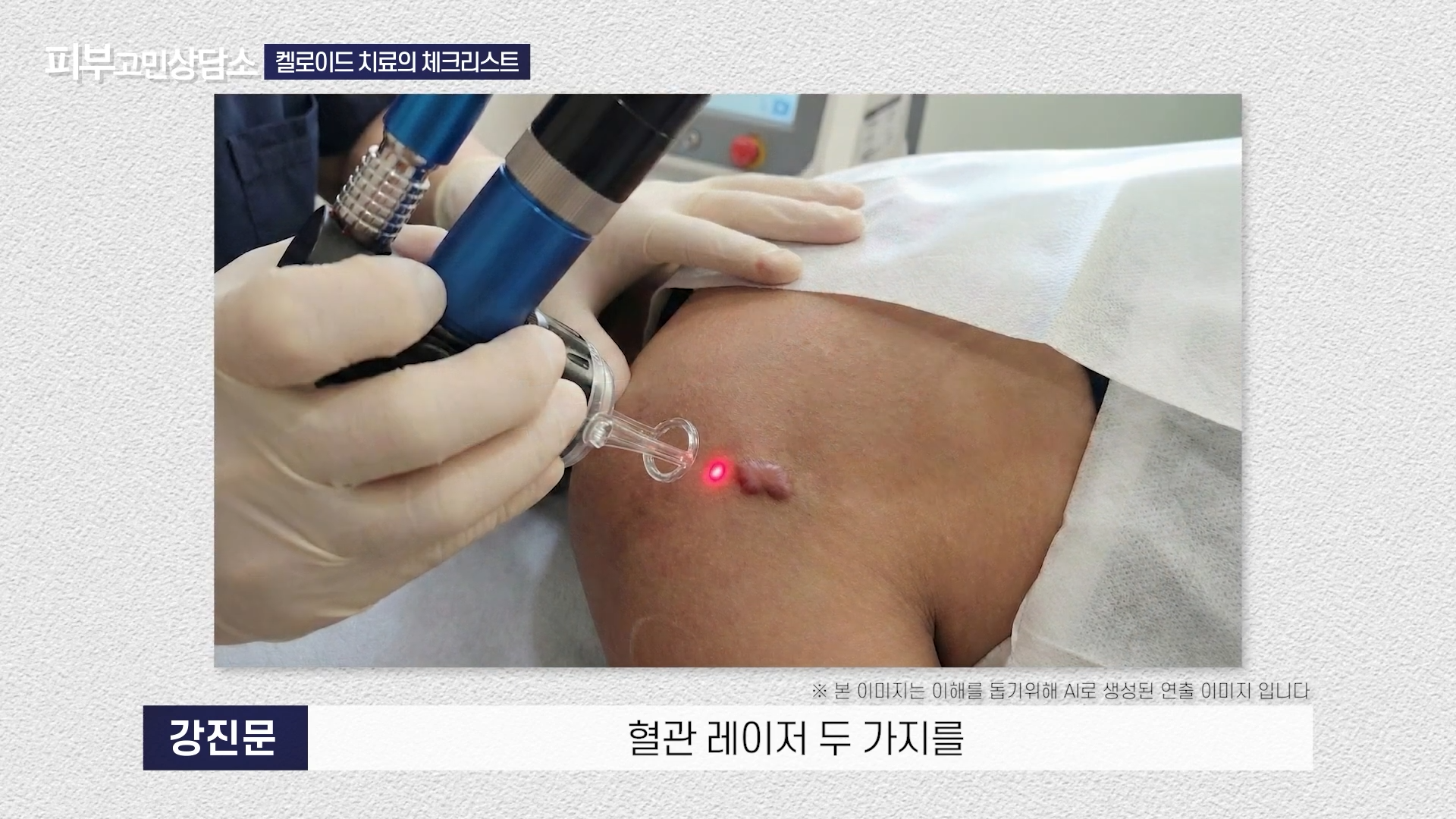
Chief Director Dr. Sang-Joo Lee (Yonsei University College of Medicine & Graduate School, Doctor of Medicine, Completed Dermatology Residency at Severance Hospital, President of the Korean Dermatological Association) Chief Director Dr. Sang-Joo Lee's Profile First published 2026-03-31 / Last reviewed 2026-06-16
This content is for general information purposes only, and treatment results may vary depending on individual skin condition and scar type. Accurate diagnosis and treatment direction should be determined through consultation with medical staff.