
![[ Yonsei Star Dermatology Sinchon ] How to Remove Keratosis Pilaris Without a Trace with Laser](/_next/image?url=https%3A%2F%2Fagqdgbuateknhwpocrgu.supabase.co%2Fstorage%2Fv1%2Fobject%2Fpublic%2Fsources%2Fbbf3bebe-45b6-4415-bd04-bda18b2cac0f%2Fblog-images%2F222687188490_00_799cc550afd4.jpg%3Ftype%3Dw1&w=3840&q=75)
When you feel red, bumpy chicken skin on your arms, thighs, back, and calves, you naturally become conscious of your clothing. Keratosis pilaris, commonly called chicken skin, is a symptom where keratin builds up in the pores, making the skin appear rough. It is a common skin condition that is especially prominent in dry seasons. The most frequently asked question is one: whether it's okay to scratch and peel it off. To put it simply, irritation tends to worsen the symptoms.
Why shouldn't you keep touching chicken skin?
If you scratch or squeeze out keratin with your hands, inflammation often occurs in that spot, and after the inflammation subsides, post-inflammatory hyperpigmentation remains. At first, only the bumpy texture was bothersome, but over time, red and brown marks remain together, making it more noticeable. Therefore, it is safer to get a diagnosis from a dermatologist rather than self-treating keratosis pilaris.
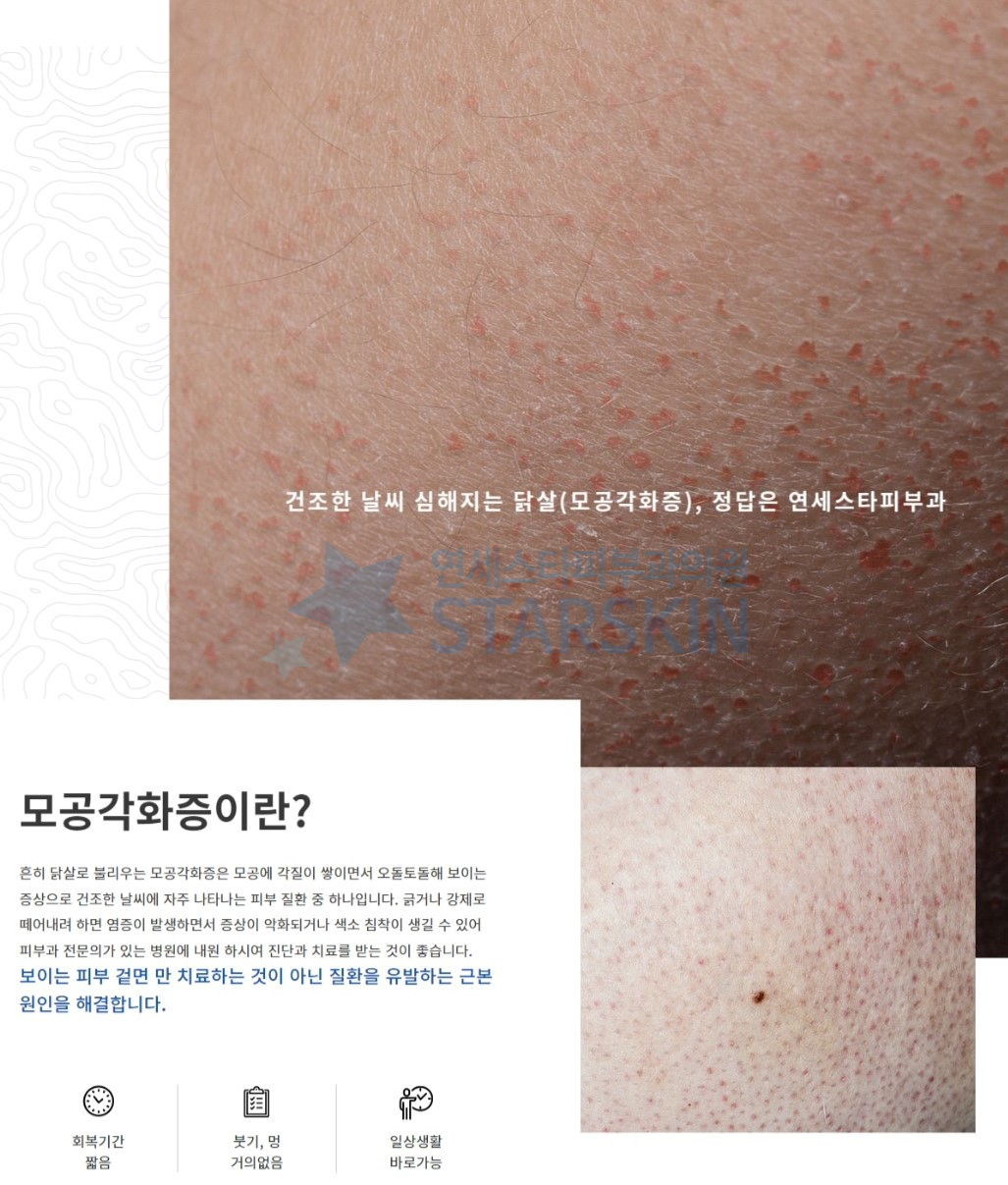
Keratosis pilaris often appears when the skin is dry, and an approach that examines the underlying causes of the symptoms, rather than just treating the surface keratin, is recommended.
Why does it reappear if only the surface is peeled off?

Methods that only peel off the surface keratin with peeling have limitations. This is because the problems that cause chicken skin are not just one layer of surface keratin but span multiple layers. In the examination room, even in the same area, keratin clumps, red marks, and hyperpigmentation are often mixed. Therefore, it is necessary to examine each cause separately rather than relying on a single stimulus.
The main factors causing keratosis pilaris are summarized as follows:
- Sebum and keratin deeply embedded inside the pores
- Tangled hair that causes keratin clumps to form
- Red chicken skin remaining as hyperpigmentation around the pores
- Black melanin pigment in the hair follicles
Since these four factors act together, if only one is addressed, the others will cause the symptoms to reappear.

Treatment Directions Divided by Cause
Each cause requires a different approach. The table below makes it easy to understand.
| Cause | Approach |
|---|---|
| Embedded sebum and keratin | First-stage clearing with Scaling and regenerative peeling |
| Tangled hair and hair follicles | Addressing melanin pigment in hair follicles to induce follicular shrinkage |
| Red hyperpigmentation | Improving redness with lasers that react to blood vessels |
| Rough skin texture | Restoring smooth texture with regenerative stimulation |
If redness is also prominent, an approach that reacts to the blood vessels themselves, like for facial redness, may be combined. The appropriate combination varies depending on the skin condition, so it is important to have a thorough consultation about Keratosis Pilaris Treatment before starting.
If you have any questions, inquire via chat about whether keratosis pilaris treatment is right for your skin

Step-by-Step Treatment Process
Yonsei Star Dermatology Sinchon does not conclude keratosis pilaris treatment with a single stimulus but proceeds in stages according to the cause.

Stage 1 Scaling and regenerative peeling. Dead cells and sebum are initially cleared with a peeling agent containing natural ingredients, and mineral micro-needles are penetrated into the dermal epidermal layer to aid skin regeneration and alleviate inflammation.
Stage 2 Erythema-inducing Vbeam Prima treatment. After temporarily inducing erythema, a vascular laser that reacts to red blood vessels is used to clear the red chicken skin around the pores.
Stage 3 GentleMax PRO laser treatment. This addresses the black melanin pigment in the hair follicles, performing whitening, hair removal, and follicular shrinkage simultaneously. Shrinking the hair follicles at the end helps reduce the burden of recurrence by creating synergy with the previous stages. If you are curious about the follicular stage, understanding the principles of GentleMax Pro Permanent Hair Removal can help.
Home Care to Complement Treatment
Daily care is as important as clinic treatment for the results. Check the following items:
- Shower briefly with lukewarm water and avoid scrubbing with a washcloth
- Apply moisturizer immediately after showering while skin is still damp
- Do not pick or squeeze keratin with your hands
- Increase moisturizing frequency during dry seasons
- Avoid harsh scrub products
While such care may not eliminate chicken skin immediately, it can help slow down the process of skin drying out.

Possible Reactions After Treatment
After laser treatment, temporary swelling, redness, scabs, or peeling may occur depending on individual characteristics. These reactions are reported as part of the recovery process, and their extent and duration may vary from person to person. Reducing irritation and focusing on moisturizing and sun protection can make the recovery process more comfortable. If you experience any uncomfortable symptoms, it is better to inform the medical staff rather than making your own judgment.
Before summer arrives, take the time to address your long-deferred chicken skin concerns.
If you have any questions, inquire via chat about keratosis pilaris treatment consultation

Chief Director Lee Sang-joo (MD, PhD, Yonsei University College of Medicine and Graduate School, completed dermatology residency at Severance Hospital, President of the Korean Dermatological Association) Chief Director Lee Sang-joo's Profile First published 2022-03-30 / Last reviewed 2026-06-16
This article is for general information purposes only, and symptoms and treatment responses may vary individually. Please confirm an accurate diagnosis through consultation with medical staff.