
![[Yonsei Star Dermatology Sinchon] How to Effectively Remove Calf Stretch Marks / Sinchon Station Dermatology](/_next/image?url=https%3A%2F%2Fagqdgbuateknhwpocrgu.supabase.co%2Fstorage%2Fv1%2Fobject%2Fpublic%2Fsources%2Fbbf3bebe-45b6-4415-bd04-bda18b2cac0f%2Fblog-images%2F222975860585_00_0d42899e57ed.png%3Ftype%3Dw966&w=3840&q=75)
Calf stretch marks are a common skin change that occurs when collagen and elastic fibers in the dermis break due to rapid skin expansion. When first discovered, most people ask, "Will these just disappear if I leave them alone?" However, stretch marks often remain like scars rather than disappearing on their own over time, so approaching them from a skin regeneration perspective is key.
Why Stretch Marks Don't Disappear Easily
When weight increases or decreases rapidly, or when the skin expands suddenly during growth spurts or pregnancy, the fibrous structure within the dermis cannot withstand the tension and breaks. These damaged fibers cannot be restored by simply tidying up the surface keratin; improvement can only be expected when regeneration deep within the dermis also occurs.
Stretch marks can be seen as a type of scar caused by the destruction of dermal fibers, not just a simple discoloration of the skin.
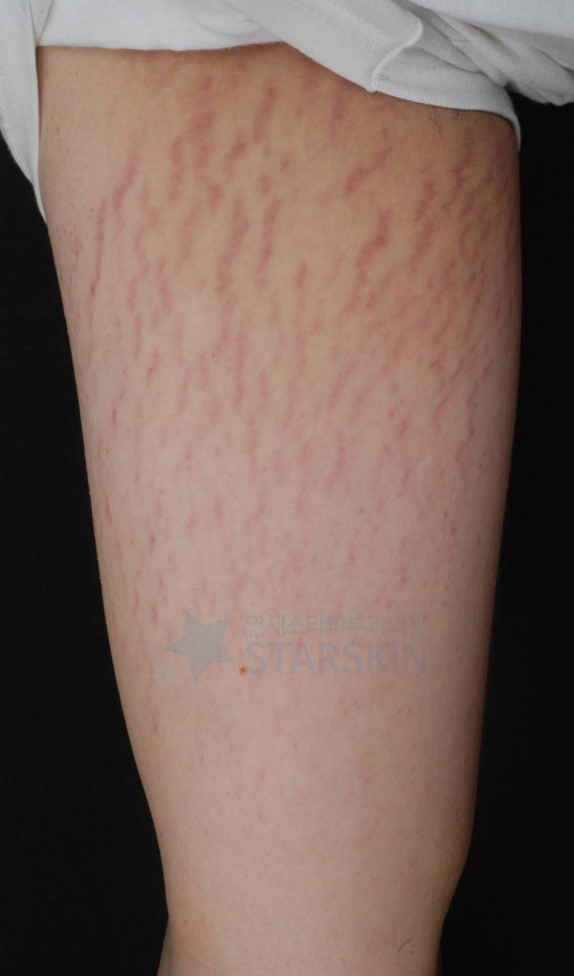
Therefore, the approach to stretch marks differs depending on whether they are white stretch marks or red stretch marks. This is because the condition of the skin's interior differs between the early stage with a reddish tint and the stage where the color has faded and hardened into white.
Why Calf Stretch Marks Are Particularly Tricky
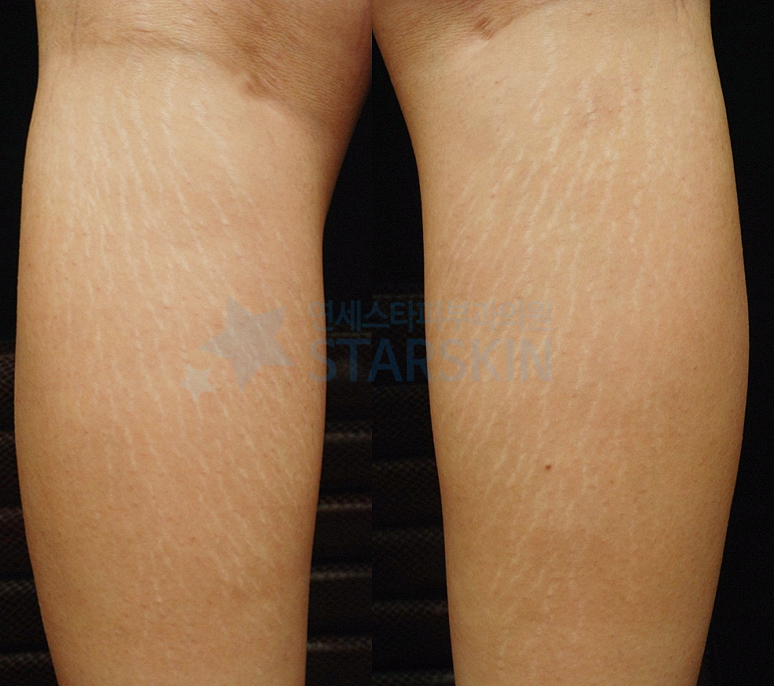
Calf stretch marks tend to appear thinner and more distinct compared to other areas. Unlike the abdomen or thighs, which have a large surface area, the texture appears to split thinly, meaning that even for the same type of stretch mark, the calves are considered an area that requires more dense and intense regenerative stimulation.
In the clinic, most people who come for calf stretch marks have the goal of "wanting to wear short clothes before summer." However, it's good to first understand that stretch mark improvement is not a one-time treatment but a process of gradually building up skin regeneration.
Pinhole Method for Boosting Regeneration
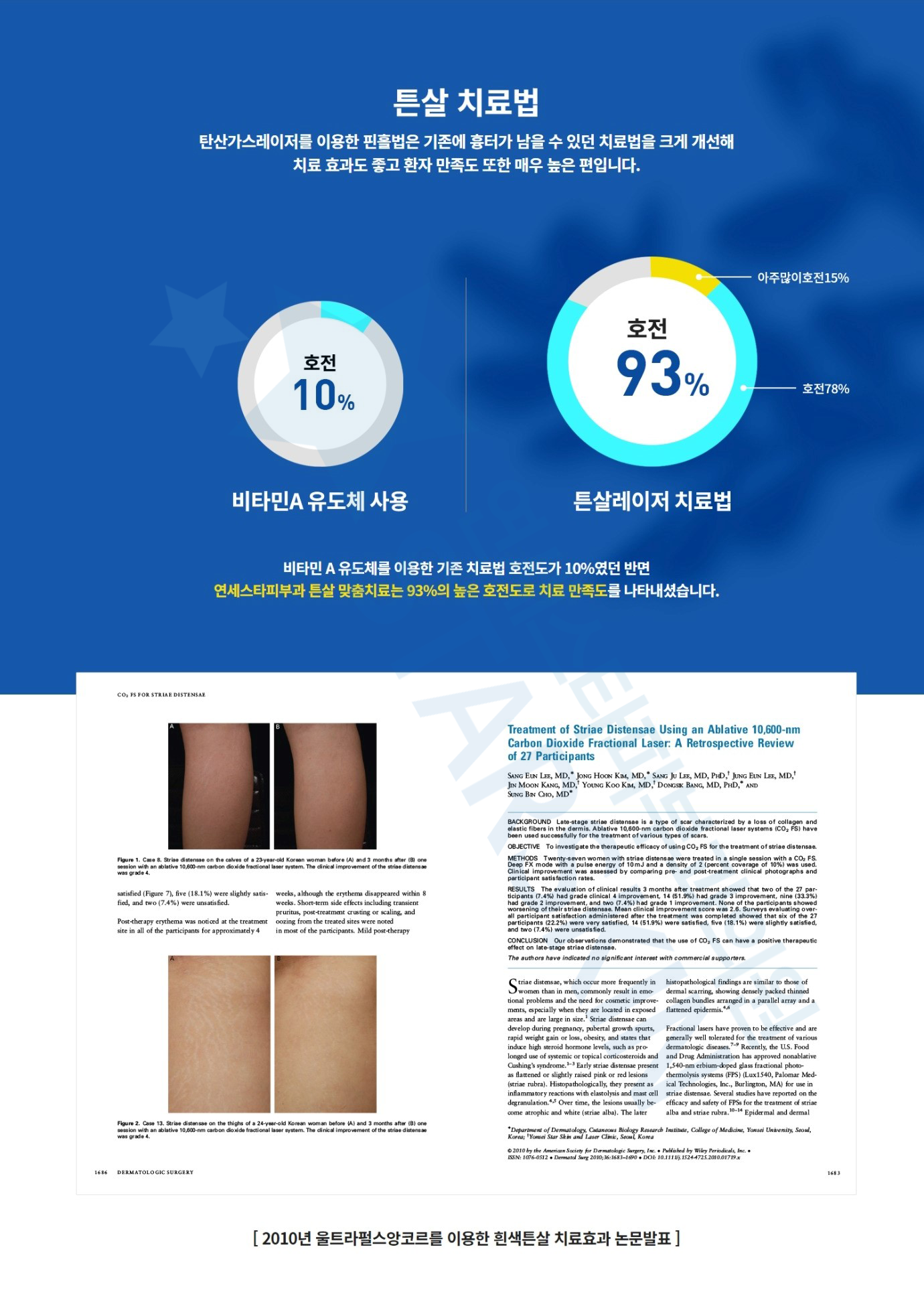
One method used at Yonsei Star Dermatology Sinchon for Stretch Mark Treatment on the calves is the Pinhole Technique using the Ultrapulse Encore laser. This principle involves precisely creating microscopic holes only in the stretch mark area to induce a regenerative response in the dermis, aligning with other Pinhole Technique treatments used for scar and stretch mark regeneration, such as Mild Pinhole or Pinhole Alpha.
An advantage of the Pinhole Technique is that it sends regenerative signals directly to the damaged dermal fibers. It approaches the problem by refilling the broken deep layers rather than just tidying the surface.
If you have any questions, inquire about calf stretch mark treatment methods via chat consultation
Adding Collagen with Skin Boosters
After opening regeneration pathways with the Pinhole Technique, skin boosters may also be used. This method involves applying a PLLA-component medication to the stretch mark area and assisting its absorption with LDM ultrasound to further stimulate collagen production.
Performing both steps together helps new collagen fill the areas where fibers have broken. However, the degree and speed of improvement may vary individually, and the treatment composition will differ depending on skin condition and stretch mark stage.
For White Stretch Marks, Session Count and Intervals Are Important
Unlike early stretch marks that still have a reddish tint, stretch marks that have faded and settled into a white color require a longer regeneration period.
For white stretch marks, it is generally recommended to have at least 5 sessions at 1-2 month intervals. Since skin regeneration occurs gradually over time, it is better to start with ample time if you are aiming for a period with more exposure, such as summer.
We've summarized important points to check before starting treatment:
- Confirm whether your stretch marks are in the red or white stage.
- Set a target time (summer, event, etc.) and calculate the session schedule backward.
- Maintain a regenerative environment after treatment with UV protection and moisturizing.
- Aim to complete the recommended number of sessions rather than trying to finish in one or two.
- Record and compare changes during the process with photos.
When Is the Best Time to Start Calf Stretch Mark Treatment?
Stretch marks tend to be easier to manage the sooner they are addressed. It is particularly reported that the approach is relatively easier when a reddish tint remains, and more sessions are needed once they have hardened into white. Whether it's white or red calf stretch marks, accurately identifying the current stage is the first step.
💬 Chat with us now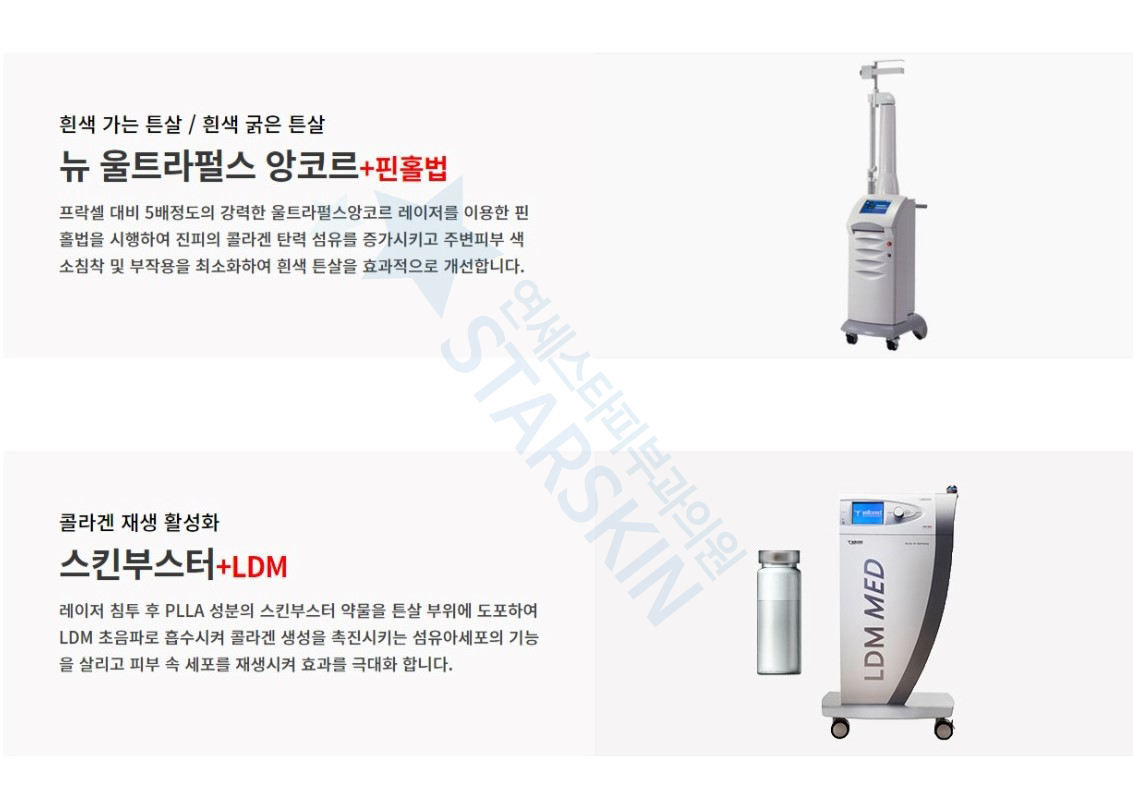
Chief Director Lee Sang-joo (MD, PhD, Yonsei University College of Medicine and Graduate School, completed dermatology residency at Severance Hospital, President of the Korean Dermatological Association) Chief Director Lee Sang-joo's Profile First published 2023-01-05 / Last reviewed 2026-06-16
The degree of stretch mark improvement may vary individually depending on skin condition and stage, and accurate diagnosis and treatment plans should be confirmed through consultation with medical staff.