
![[ Yonsei Star Dermatology Sinchon ] 'Erythema-Induced Prima' to Enhance Facial Redness Treatment Efficacy](/_next/image?url=https%3A%2F%2Fagqdgbuateknhwpocrgu.supabase.co%2Fstorage%2Fv1%2Fobject%2Fpublic%2Fsources%2Fbbf3bebe-45b6-4415-bd04-bda18b2cac0f%2Fblog-images%2F222637976346_00_f46ee55328de.jpg%3Ftype%3Dw966&w=3840&q=75)
Why Does Your Face Turn Red Only in Winter?
Many people experience their faces flushing red, especially when temperatures drop in winter. If your cheeks feel hot and turn red when you enter a warm indoor space, eat spicy food, or even in mildly stressful situations, it might not just be a reaction to the cold but could indicate facial redness.
The first question we receive is almost always the same: "Others also get red when it's cold, but why does mine last longer?" To get straight to the point, facial redness is a condition where blood vessels expand and then fail to constrict in time, leaving the redness prolonged.
Why Does Facial Redness Occur?
The blood vessels in the skin repeatedly expand and contract under the control of the autonomic nervous system. When the autonomic nervous system is stimulated by excitement or tension, capillaries dilate, and blood with an elevated temperature flows through them, causing the face to feel hot and turn red.
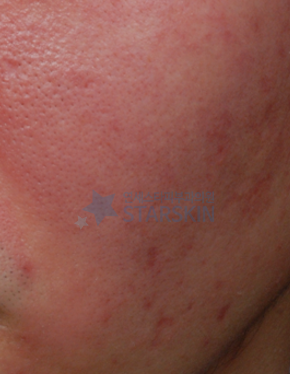
This process itself is a normal reaction that happens to everyone. However, if your face easily turns redder than others and the redness lasts longer, it is called facial redness. In the clinic, we often see people with thin skin or visible capillaries complaining more frequently about this pattern.
It is more accurate to understand facial redness not as a symptom that can be controlled by willpower, but as a vascular problem that requires direct intervention on the expanded blood vessels to expect improvement.
Daily Management Tips to Keep in Mind
Separate from treatment, daily habits influence the frequency and intensity of redness. We recommend reviewing the following items to reduce irritation:
- Reduce drastic temperature changes (be cautious when moving directly from a cold place to a hot indoor space)
- Reduce stimuli that expand blood vessels, such as spicy and hot foods, and excessive alcohol consumption
- Consistently use sunscreen to protect blood vessels and the skin barrier
- Use lukewarm water instead of very hot water when washing your face
- Minimize physical irritation such as exfoliation or strong massages
While these management steps alone may not completely eliminate redness, reducing irritating factors can help maintain the condition after treatment. Similarly, Acne Scars with Persistent Red Marks, which also leave reddish discoloration, require concurrent irritation management.
What is Erythema-Induced Prima?

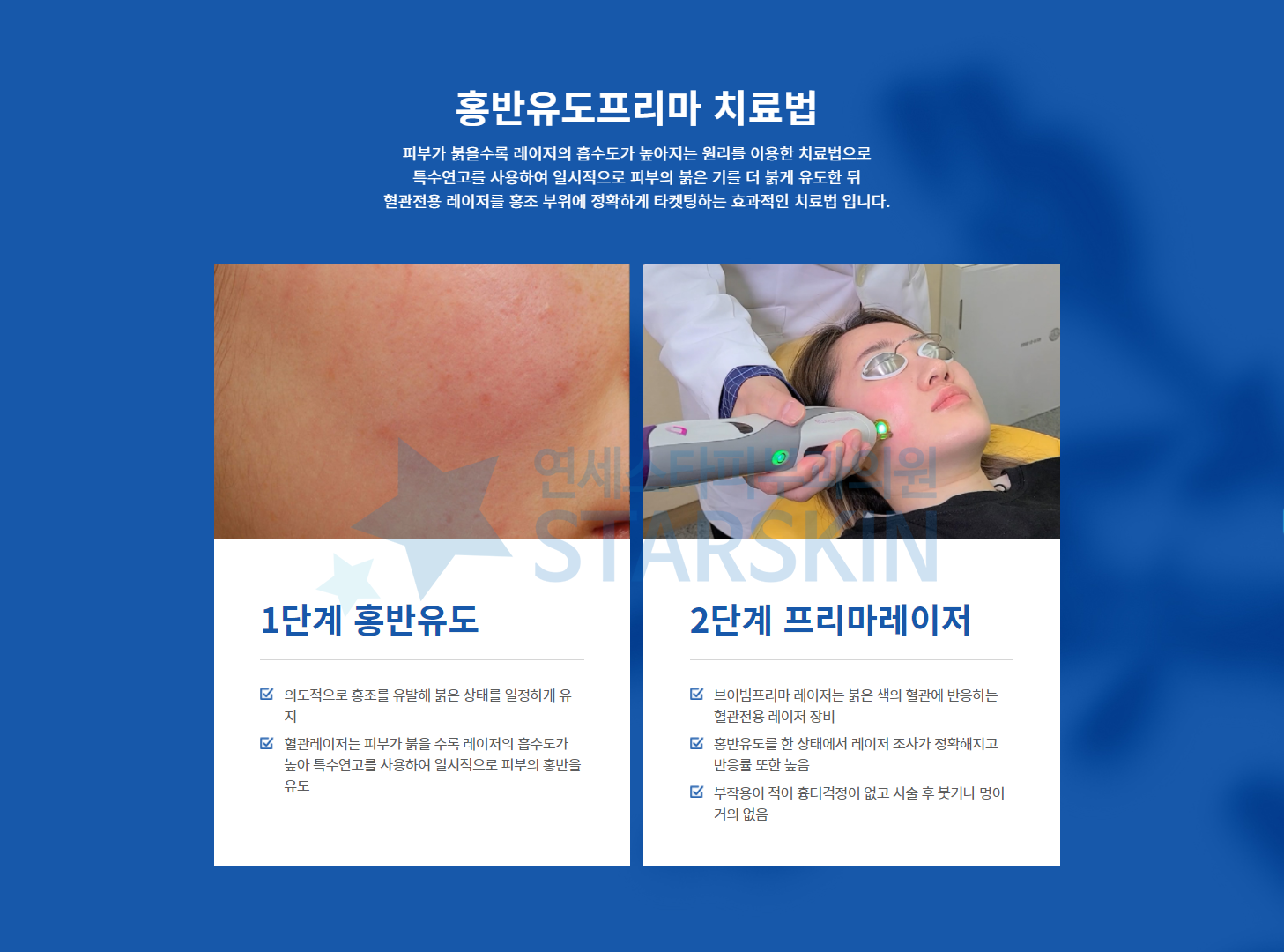
Yonsei Star Dermatology Sinchon treats facial redness with a method called Erythema-Induced Prima to complement the limitations of existing facial redness treatments. This method utilizes the principle that the Vbeam Prima laser, reported to be effective for redness, reacts to red color. It intentionally makes the red areas redder to increase the accuracy and response rate of laser treatment.
The principle is simple: the redder the skin, the higher the laser absorption. Therefore, a special ointment is used to temporarily enhance the redness, and then the Vbeam Prima laser, a vascular laser, is precisely applied for treatment.
If you are curious about the treatment approach, you can receive guidance tailored to your skin condition by inquiring about how facial redness treatment proceeds via chat consultation.
How Does the Vbeam Prima Laser Work?

The Vbeam Prima laser used in Erythema-Induced Prima is the latest model of the Vbeam laser, widely used for redness treatment. It is designed to deliver energy selectively to capillaries while minimizing damage to surrounding skin, allowing for relatively precise treatment.
In addition, it uses a DCD cooling system. This system continuously keeps the treated area cool, playing an auxiliary role in reducing pain and skin damage. The roles of these two elements are summarized in the table below.
| Component | Role |
|---|---|
| Vbeam Prima Laser | Selectively delivers energy to capillaries to treat red areas |
| Erythema Induction Phase | Temporarily enhances redness to increase laser response rate |
| DCD Cooling System | Auxiliary device that cools the treated area to reduce pain and skin irritation |
If you are also concerned about skin texture or elasticity in addition to red vascular issues, we may also recommend consulting about other approaches such as Water-Luminous Injection or Thermage FLX Tightening. However, which treatment to prioritize depends on your skin condition.
Important Precautions Before Treatment
Laser treatment, including Erythema-Induced Prima, may show different reactions depending on individual skin characteristics. The following changes are reported after the procedure:
- Temporary swelling or redness
- Localized scabs or peeling
- Temporary sensitivity to irritation
These reactions vary individually and are generally known to subside over time, but the recovery pattern differs from person to person. Therefore, thorough consultation with medical staff before and after the procedure is important.
Even for the same facial redness, the treatment plan varies depending on the depth and distribution of blood vessels and skin thickness. An accurate judgment is possible only after directly examining the skin.
Don't Worry About Redness Alone
If you have been concerned about facial redness or rosacea (strawberry nose) for a long time, it is better to first identify the cause rather than leaving it untreated with self-diagnosis. Even for the same redness, the approach differs depending on whether it is a vascular problem or if other skin changes are involved.
If you are curious about the right treatment for your skin, 💬 Consult Now

Chief Director Lee Sang-joo (MD, PhD, Yonsei University College of Medicine & Graduate School, Completed Dermatology Residency at Severance Hospital, President of the Korean Dermatological Association) Chief Director Lee Sang-joo's Profile First Published 2022-02-03 / Last Reviewed 2026-06-16
This article aims to provide general information about facial redness, and treatment responses and recovery processes may vary individually. Therefore, an accurate diagnosis and treatment plan should always be determined through consultation with medical staff.