
![[Yonsei Star Dermatology Sinchon] Causes and Treatment of Adult Acne Even After Growth Period | Gold PTT](/_next/image?url=https%3A%2F%2Fagqdgbuateknhwpocrgu.supabase.co%2Fstorage%2Fv1%2Fobject%2Fpublic%2Fsources%2Fbbf3bebe-45b6-4415-bd04-bda18b2cac0f%2Fblog-images%2F224252220903_00_25dd2bebf5e2.jpg%3Ftype%3Dw966&w=3840&q=75)
Why do adults still get acne?
Many people expected acne to disappear after their school years, only to find it worsened after starting their professional lives. Adult acne refers to acne that persists or newly develops after the age of 25. The first question that usually comes to mind is, "Why is it reappearing even though my growth period is over?" The answer is that the causes of onset are different from those in adolescence.
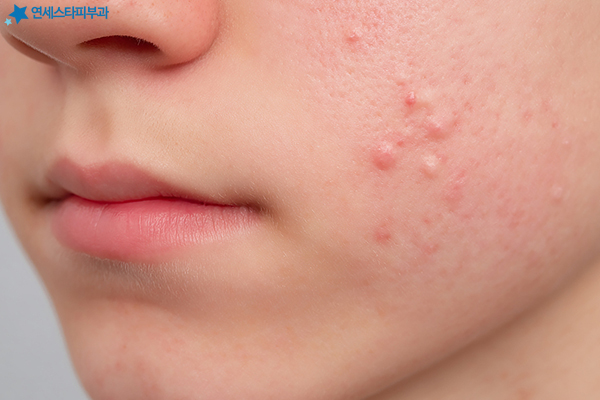
Unlike adolescent acne, which primarily occurs in the T-zone (forehead and nose), adult acne often concentrates in the U-zone (jawline, cheeks, around the mouth, and neck). Inflammatory lesions tend to be deep-seated, and recovery is slower, leading to a relatively higher risk of scarring.
What patterns does adult acne follow?
A characteristic of adult acne is that it appears repeatedly, one or two at a time. It's easy for it to become chronic as new lesions form next to one that hasn't fully subsided. In the clinic, many patients complain that it "comes back in the same spot whenever I forget about it" rather than appearing all at once. Therefore, consistent management from the early stages is crucial.


Complex causes of adult acne
The causes of adult acne are not as simple as in adolescence and involve multiple intertwined factors. The main factors are summarized as follows:
- Hormonal changes: Increased sebum secretion due to menstrual cycles, pregnancy, menopause, and elevated stress hormones (cortisol)
- Stress and lack of sleep: Chronic stress stimulates the sebaceous glands, acting as an aggravating factor
- Improper skincare habits: Excessive washing, thick makeup, and damage to the skin barrier can be causes
- Diet and gut health: Excessive intake of high-glycemic foods or dairy products can increase the likelihood of worsening
- Mask wearing: Prolonged enclosed environments and friction can also trigger acne
Even if the skin appears clean, these factors can accumulate internally and suddenly manifest as lesions one day. Therefore, simply "washing more thoroughly" has limitations, and understanding the causes and management of acne by looking at the underlying reasons together can be helpful.
| Category | Adolescent Acne | Adult Acne |
|---|---|---|
| Main Areas | T-zone (forehead, nose, etc.) | U-zone (jawline, cheeks, around mouth, neck, etc.) |
| Occurrence Pattern | Many at once | One or two repeatedly |
| Recovery Speed | Relatively fast | Slow, high risk of scarring |
| Main Background | Puberty hormones | Complex of hormones, stress, lifestyle habits |
What is Gold PTT treatment?
Adult acne treatment often involves laser or light procedures in addition to topical and oral medications. Among these, Gold PTT (Gold PTT) is a type of photodynamic therapy using gold nanoparticles, which selectively targets sebaceous glands to directly address the cause of acne.
The main features of Gold PTT treatment are as follows:
- It selectively targets sebaceous glands, minimizing irritation to surrounding tissues.
- It can help suppress acne-causing bacteria itself.
- It can address inflammatory acne and sebum control in a complex manner.
- Returning to daily life after the procedure is relatively easy.
- It can help alleviate the recurrence cycle.
The treatment effect and required number of sessions may vary depending on the individual's skin condition and acne type, and it is recommended to decide after consulting with a specialist.
Just as acne does not arise from a single cause, treatment often does not end with a single method. A combination tailored to one's condition is needed, similar to complex acne treatment packages that address inflammation, sebum, and scar risk together.
For questions, inquire via chat consultation about adult acne treatment
When should adult acne scars be managed?
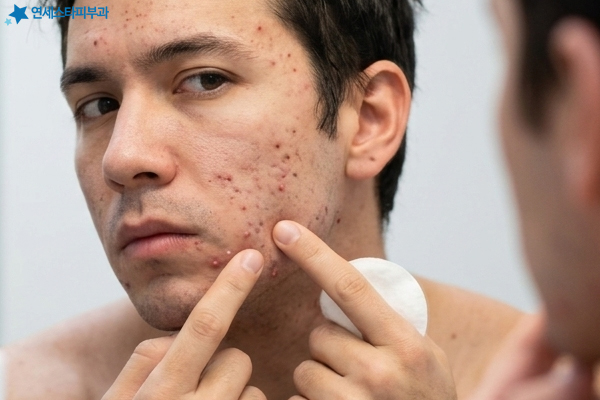
If acne is left untreated or repeatedly picked, it can damage the dermis, leaving depressed scars (atrophic scars) or red marks (erythema). Adult skin has a slower regeneration rate than adolescent skin, making scar recovery more challenging.
If adult acne recurs repeatedly or if red, firm nodular lesions develop, it is advisable to consult a specialist from the early inflammatory stage, before scars set in. If marks have already started to appear, it is important not to delay further.
From a management perspective, it is much more advantageous to address scars before they form than after.
If depressed marks are a concern, examining the characteristics of depressed acne scars and if red marks are an issue, looking at red acne scar management can help assess your condition.
Before scars develop, what should be checked?
Before visiting the clinic, checking the following items yourself can make the consultation much smoother:
- Whether acne repeatedly appears in the same area
- Whether lesions feel red and firm (nodular)
- Whether red marks or depressions have started to remain in subsided areas
- Whether there have been recent changes in washing, makeup, sleep, or eating habits
If these signs appear, it is safer to consult a specialist after understanding the progression and treatment direction of acne scars rather than continuing with self-care alone.

A cause-tailored approach is needed.
Adult acne is not just a simple skin problem. It is complexly intertwined with hormones, stress, and lifestyle habits, requiring a customized approach tailored to its causes. If it recurs persistently or if prominent marks begin to remain, please consult a dermatologist to establish a suitable treatment plan for you.
💬 Consult Now
Chief Director Lee Sang-ju (MD, PhD, Yonsei University College of Medicine and Graduate School, completed dermatology residency at Severance Hospital, President of the Korean Dermatological Association) Chief Director Lee Sang-ju's Profile First published 2026-04-14 / Last reviewed 2026-06-16
This content is for general information purposes only, and individual outcomes may vary depending on skin condition. Please confirm accurate diagnosis and treatment direction through medical consultation.