
![[Yonsei Star Dermatology Sinchon] Burn Scar Treatment: Surgery vs. Laser Pinhole Technique – A Master's Guide from Sinchon Station Dermatology Burn Scar Clinic](/_next/image?url=https%3A%2F%2Fagqdgbuateknhwpocrgu.supabase.co%2Fstorage%2Fv1%2Fobject%2Fpublic%2Fsources%2Fbbf3bebe-45b6-4415-bd04-bda18b2cac0f%2Fblog-images%2F223060102663_00_e65a58e4d1b0.png%3Ftype%3Dw966&w=3840&q=75)
Burn scars are traces left after skin tissue damage from second-degree or higher burns caused by boiling water, heating appliances, cooking utensils, etc. The damaged skin can clump or contract, making the surface uneven, and it may turn red or white compared to normal skin, making it a type of scar that causes significant aesthetic stress. Those who decide to remove burn scars often ask one question first: "Should I have surgery, or can it be done with a laser?"
Why are burn scars more challenging than other scars?
Damage from heat often reaches not only the epidermis but also deep layers of the dermis. Therefore, unlike typical wound scars, the skin may clump as if pulled in one direction, and contracture, where the surface area itself becomes insufficient, can occur. Color changes also diverge into two types: some remain red, while others lose pigment and appear whiter than normal skin.
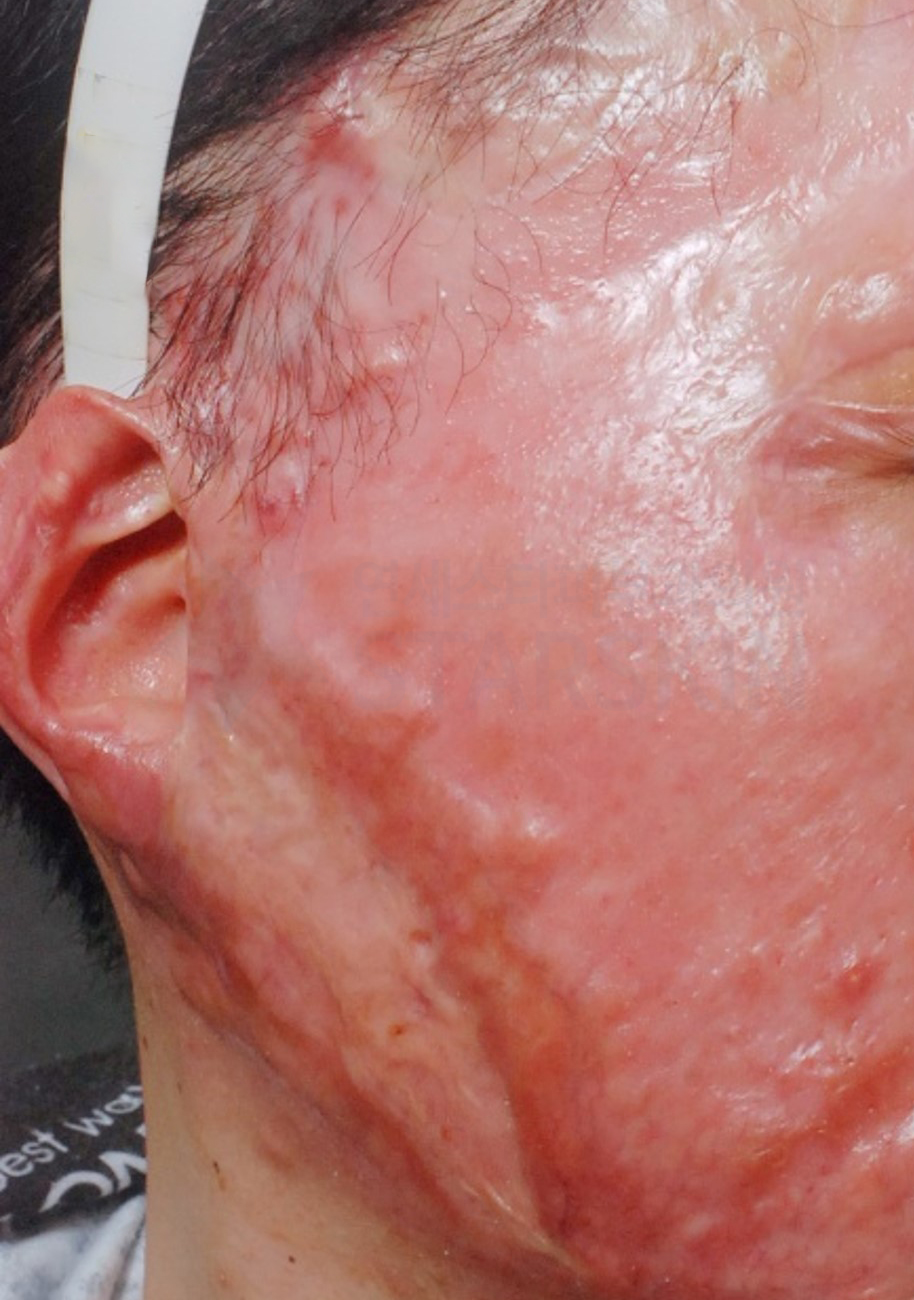
In the clinic, most patients who come for burn scar treatment believe that "scar removal means surgery." However, with the establishment of non-surgical treatments like the laser Pinhole Technique, more people are now deliberating between the two methods.
Surgical Treatment: What are its principles and limitations?
Surgical treatment for burn scars has been a long-standing method. Skin grafting to compensate for insufficient skin area or tissue expansion to stretch surrounding skin to fill the defect are representative examples.

While the principle seems rational, actual treatment satisfaction is reported to be not as high as expected. The burdens of surgical treatment for burn scars can be summarized as follows:
- New incision scars may form during the process of skin grafting or expansion.
- It can be difficult for the grafted skin to perfectly match the color and texture of the surrounding skin.
- Recovery periods can be long, and hospitalization or anesthesia may be required.
- Even if contracture is released, differences in surface texture and color may remain.

For these reasons, the practice of prioritizing surgery for burn scars is reportedly decreasing compared to the past.
How does the Laser Pinhole Technique address scars?
At the core of non-surgical treatment is the Pinhole Technique. This principle involves creating microscopic holes in the burn scar area with a high-output laser to induce the skin's own regenerative response. It works by simultaneously releasing clumped or contracted skin and promoting self-regeneration to restore the texture and color of the scar area closer to normal skin.
The strength of the Pinhole Technique is its ability to address contracture, color, and texture issues together without creating new incisions like surgery. This method is also applied to various depressed or clumped scars other than burn scars. Detailed information can be found in the Pinhole Alpha Treatment Guide and Mild Pinhole.
For inquiries, contact us via chat for burn scar treatment direction
Surgery vs. Laser Pinhole Technique: A Quick Comparison
| Category | Surgical Treatment | Laser Pinhole Technique |
|---|---|---|
| Method | Skin grafting, tissue expansion | Induces self-regeneration with micro-holes |
| Incision Scars | May create new ones | No incisions |
| Issues Addressed | Primarily contracture, insufficient area | Contracture, texture, and color together |
| Recovery Burden | Relatively high | Relatively low |
The Pinhole Technique is a non-surgical treatment that complements the drawbacks of surgery, and it is often prioritized for burn scars because it can address not only contracture but also texture and color.
This table summarizes general tendencies, and the appropriate method may vary depending on the depth and extent of the scar.

Things to check before treatment
If you are considering burn scar treatment, we recommend reviewing the following items in advance:
- Degree of burn (2nd, 3rd degree) and time of scar formation
- Whether the scar is predominantly red or has lost color and appears white
- Presence of contracture, where the skin feels tight
- History of previous treatment for the same area
- Tendency towards keloids or hypertrophic scars
If the scar has a strong reddish tint, it may require color management similar to Red Acne Scar. If the scar is raised, it needs to be distinguished from Keloid Scar patterns.

The Master's Conclusion: How to approach burn scars
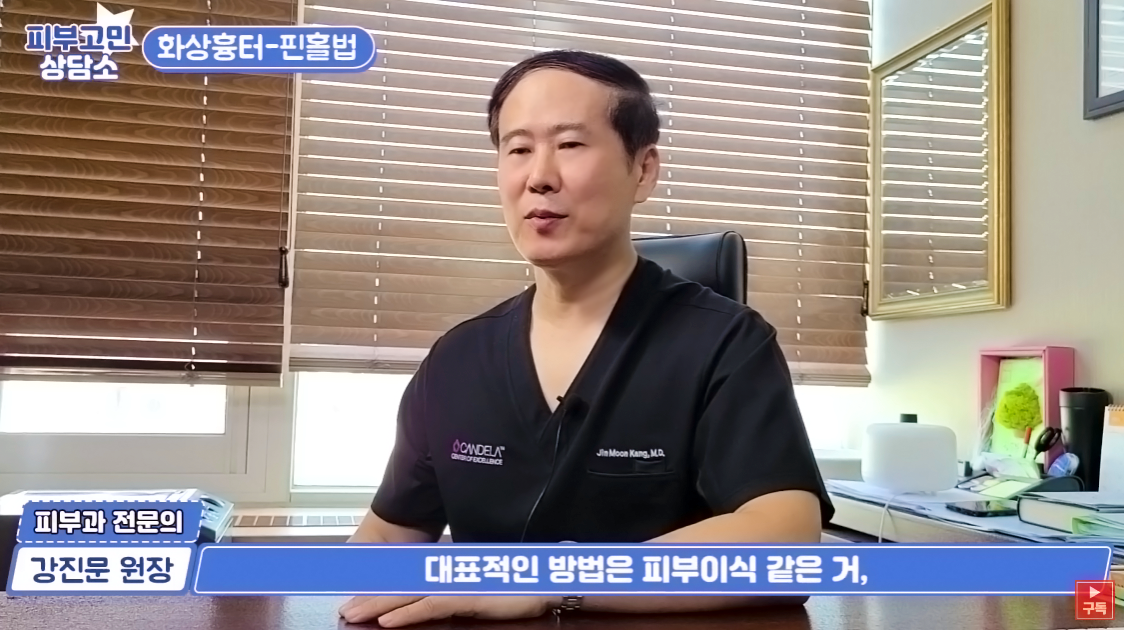
Dr. Kang Jin-moon, the chief director of Yonsei Star Dermatology, who has been treating burn scars for over 20 years, explains that for burn scars, he tends to recommend laser treatments like the Pinhole Technique over surgery. Even severe burn scars can often be approached with non-surgical laser treatment incorporating Yonsei Star Dermatology's expertise. However, treatment effects and recovery patterns may vary individually, so it is important to determine the direction after directly examining the scar condition.
For inquiries, consult us for non-surgical burn scar treatment

Chief Director Lee Sang-joo (MD, PhD, Yonsei University College of Medicine and Graduate School, completed dermatology residency at Severance Hospital, President of the Korean Dermatological Association) Chief Director Lee Sang-joo's Profile First published 2023-03-30 / Last reviewed 2026-06-16
Since the characteristics and treatment response of burn scars vary from person to person, we recommend determining an accurate diagnosis and treatment plan through direct consultation with medical staff.