
![[Yonsei Star Dermatology Sinchon] Acne Pigmentation & Red Acne Marks: Why Do They Remain? Treatment and Management](/_next/image?url=https%3A%2F%2Fagqdgbuateknhwpocrgu.supabase.co%2Fstorage%2Fv1%2Fobject%2Fpublic%2Fsources%2Fbbf3bebe-45b6-4415-bd04-bda18b2cac0f%2Fblog-images%2F224181634965_00_6bd57d794830.jpg%3Ftype%3Dw966&w=3840&q=75)
Many people find themselves constantly looking in the mirror at the spots where acne has subsided. Acne is not just a simple skin problem but an inflammatory skin disease, and after inflammation, brown marks or redness often remain as traces. The first question that usually comes up is, "Will these just disappear over time?" To answer directly, they may lighten, but the recovery speed and approach vary depending on the type of mark.
Pigment Marks and Red Marks Are Not the Same Traces
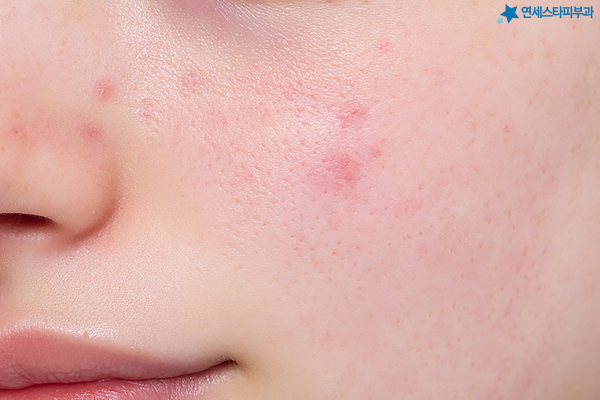
It's easy to lump acne marks together, but in reality, two entirely different types are often mixed. One is acne pigmentation, where melanin pigment remains, and the other is red acne marks, where dilated blood vessels show through. In the clinic, we surprisingly see many people who have both.
| Category | Color | Cause | Nature |
|---|---|---|---|
| Pigment Marks | Brown, Black | Melanin overactivity | Pigmentary change |
| Red Marks | Red | Capillary dilation, inflammatory trace | Vascular change |
Approaching brown-toned marks as a pigment issue and red-toned marks as a vascular and post-inflammatory reaction is the first step. If you need to understand acne itself, it may be helpful to review the content on Causes and Management of Acne.
Why Do Brown Marks Remain?
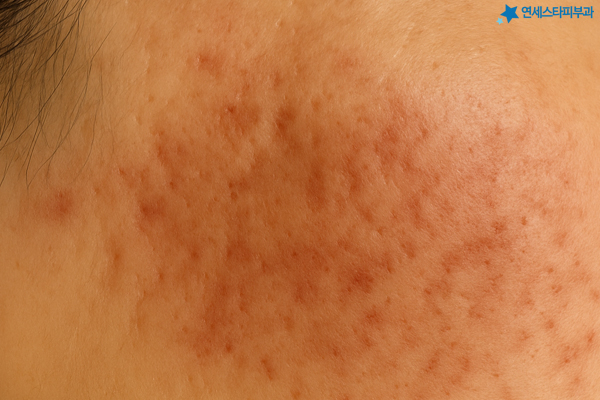
Brown marks after acne are medically referred to as post-inflammatory hyperpigmentation (PIH). When an inflammatory reaction occurs in the skin due to acne, melanin cells become overactive, or the produced melanin pigment descends into the dermis, leaving brown or black pigment marks.
Pigmentation may lighten over time, but it can take a considerable amount of time to return to a normal skin tone.
Specifically, pigmentation marks are reported to occur more easily in the following cases:
- When acne is squeezed or repeatedly picked with hands
- When inflammation persists for a long time
- When there has been a lot of UV exposure
- When the skin tone is relatively dark
Red Marks Are Vascular, Not Pigment

Red acne marks are more accurately understood as traces of dilated capillaries and inflammatory reactions rather than a pigment issue. Vascular dilation remains in the inflamed area, appearing red, and can persist longer if the skin is thin or if there has been recurrent inflammation. If overall facial redness is also a concern, you may want to refer to the content on Management of Facial Redness.
If red marks have settled into a scar form, we recommend checking Characteristics of Red Acne Scars separately, as marks and scars differ in depth.
For questions, Contact us for acne mark consultation
Treatment Approach Varies by Type of Mark
Since pigment marks and red marks have different causes, the approach to treatment also differs.
Pigment marks fall into the category of pigmentary disorders, so laser toning that selectively targets pigment is utilized. Pico-laser-based laser toning uses the principle of finely breaking down pigment particles with short pulse durations. Generally, multiple repeated treatments may be necessary, and the number or interval of treatments can vary depending on the skin condition.
Red marks are vascular lesions, so lasers that selectively react to blood vessels are used. The Vbeam Prima laser is known as a device that can help alleviate redness by reacting to dilated capillaries. If both pigment and red marks are present, a phased treatment plan may be established by combining the two lasers.
Home Care Principles to Follow
Daily habits influence the course of marks as much as treatment. It's good to remember these four points:
- Do not neglect for a long time with the thought that "it will disappear over time"
- Do not indiscriminately use unverified whitening products
- Do not repeatedly perform strong home care treatments
- First, stabilize the current inflammatory state of acne
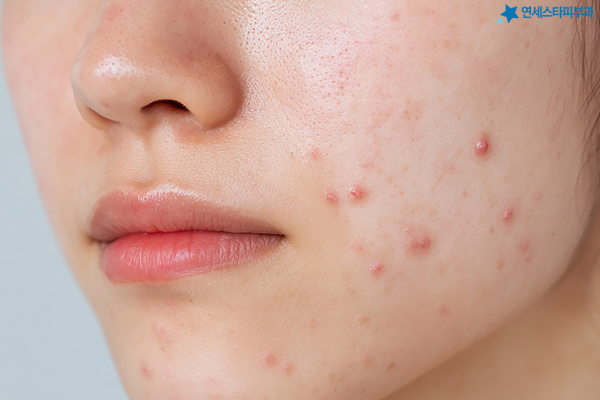
Especially if active acne remains, inflammation control takes precedence over pigment treatment. If you try to erase marks while new inflammation continues to appear, other marks are likely to accumulate on top.
Marks and Scars Are Different
Acne marks are changes in color or blood vessels that fade over time, but those that have hardened into depressed or raised forms are closer to scars. Since the management direction changes depending on whether the mark is flat or if there are irregularities on the skin surface, if you feel your skin is pitted, it is advisable to check Types and Management of Acne Scars together.
In Summary
Acne pigmentation and red acne marks are not just simple traces but skin changes that remain after inflammation. The treatment approach can vary depending on whether it's a pigment issue or a vascular issue, and above all, a plan tailored to your current skin condition is important. If you are concerned about marks, we recommend discussing appropriate methods with an accurate diagnosis.
For questions, Consult about mark treatment tailored to my skin

Representative Director Lee Sang-ju (Yonsei University College of Medicine & Graduate School, Doctor of Medicine, Completed Dermatology Residency at Severance Hospital, President of the Korean Society for Dermatology) Representative Director Lee Sang-ju's Profile First Published 2026-02-12 / Last Reviewed 2026-06-16
This article is for general medical information, and treatment methods and progress may vary depending on individual skin conditions. Accurate diagnosis requires consultation with medical staff.