

When you decide to remove a wrist tattoo, the first question that usually comes to mind is one: "How many sessions will it take to completely remove my tattoo?" To get straight to the point, the number of removal sessions varies depending on several conditions such as color, depth, ink volume, and skin tone, and there are individual differences. Therefore, a self-diagnosis to estimate the approximate number of sessions before starting can be helpful.
The indicators introduced below refer to a self-diagnosis chart created by the Kirby-Desai research team, which divides factors influencing the number of tattoo removal sessions into six categories, assigns scores to each item, and predicts the total. However, as this chart was created for 100 individuals, please use it only as a reference, not an absolute standard.
Skin Tone Determines Removal Difficulty
It might seem like tattoo removal and skin tone have little to do with each other, but they are more closely related than you might think. The darker the skin tone, the less laser penetration, making wrist tattoo removal more challenging. Koreans typically fall between 3 and 5 points in this criterion.
- If you are often told your skin is fair, score 3 points.
- If your skin tans easily or you enjoy tanning, score 5 points.
- If you are in between, estimate around 4 points.
You can score yourself by recalling your usual skin tone.
Principle of Tattoo Removal and Location Score
First, it's necessary to understand how tattoos are removed. It's not simply "covering it with white," but a process of irradiating the pigment in the dermal layer of the skin with a laser to break down the ink into tiny fragments.

The fragmented ink particles are then expelled from the body by immune cells through the blood and lymphatic vessels. Therefore, it is reported that the removal speed tends to be faster in areas with many lymphatic vessels. The wrist scores 5 points in this criterion.
The amount of ink is difficult to determine precisely by eye, but it can be roughly estimated by the darkness and size of the color. Mini tattoos etched by amateur tattoo artists with a small amount of ink score 1 point, while those received from professional tattoo artists range widely from 2 to 4 points. Lettering or heavily outlined drawings may use more ink than appears to achieve a dark color, so for wrist tattoos with lettering or dark designs, consider them between 3 and 4 points. It is also helpful to refer to the detailed guide on Tattoo Removal for skin concerns that require it.
More Colors Mean More Sessions

There's a reason why tattoo color is important. Black pigment generally responds well to any laser wavelength, making it easier to remove than other colors. Conversely, the more colors are mixed, the higher the additional score. Check which colors were used in the wrist tattoo you want to remove and add the points.
If You Have a Cover-Up or Scarring
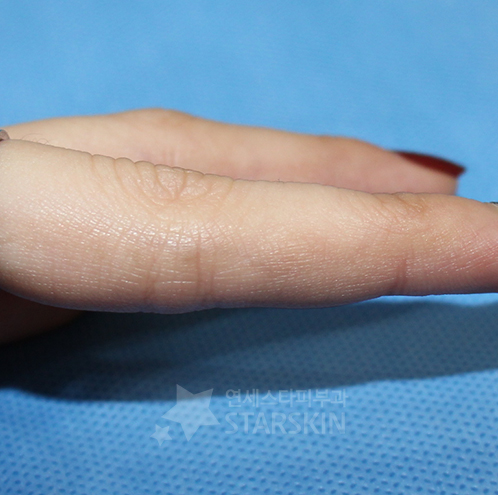
A cover-up tattoo refers to covering an initial tattoo that you didn't like with another tattoo. If you have a cover-up, 2 points are added. Some people also get tattoos to cover old surgical scars or large burn marks.
Sometimes, scars like keloids remain after tattooing. If a tattoo is accompanied by a scar, points are given differently depending on the condition.
- If there is little or only a minor scar, score 1 point.
- If a moderate trace remains, score 3 points.
- If deep and severe scarring is present, score 5 points.
Skin reactions can vary individually, so if Surgical Scar, Burn Scar, or Keloid Scar are present, it is advisable to consider the scar condition when determining the treatment direction.
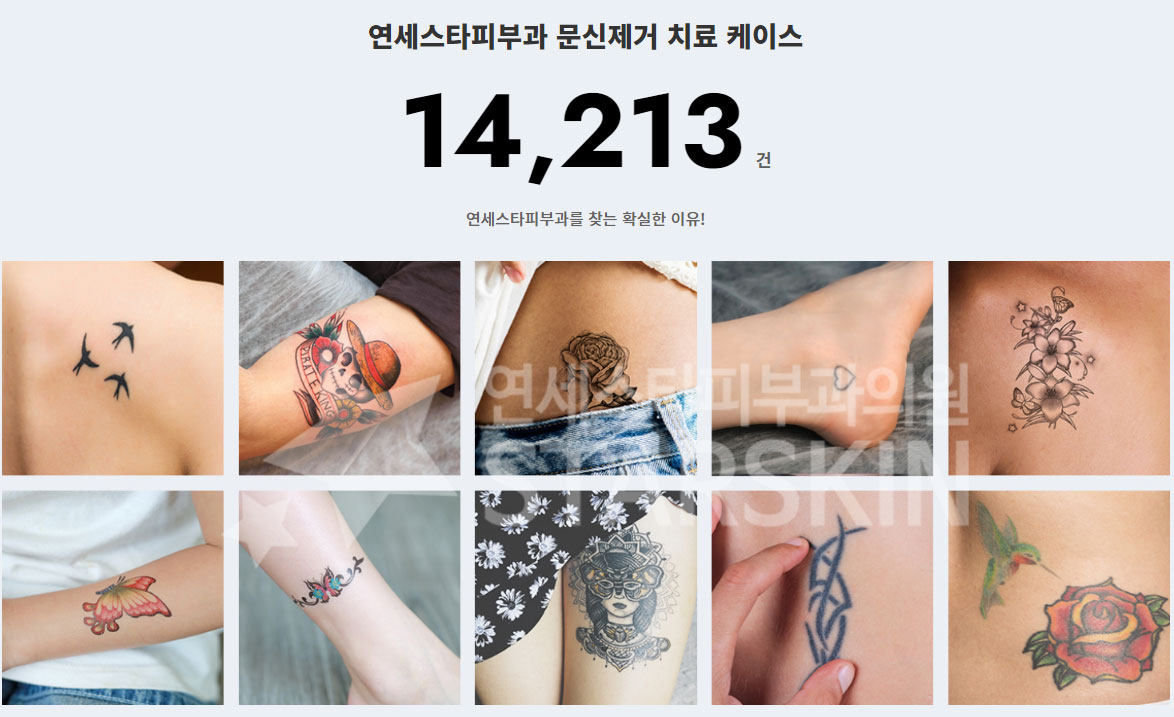
Once you have scored all six items, sum them up. The most common score range for Koreans is around 7 to 15 points. Check your score and refer to the estimated number of sessions, but please note that detailed factors such as the extent of the tattoo can only be accurately determined after consultation with a dermatologist, so this is for reference only.
In the clinic, it is more common for the actual number of sessions to vary slightly depending on the individual's skin recovery ability and ink depth, rather than precisely matching the self-diagnosis chart score.
If you are curious about the number of wrist tattoo removal sessions, you can review your score and current condition through a Tattoo Removal Consultation.
PicoWay Laser and R-Zero Technique

The self-diagnosis chart introduced earlier is based on the number of sessions for Nd:YAG laser equipment. Yonsei Star Dermatology Sinchon possesses PicoWay, which irradiates lasers in picosecond units.
The principle of tattoo removal lies in breaking down pigment more and into finer particles. Shorter picosecond irradiation allows for finer pigment fragmentation.
When a laser is irradiated onto the tattoo area, a bubble layer forms above it. Once the bubble layer appears, it becomes difficult to irradiate the laser again, so quickly eliminating it is key. The R-Zero Technique involves applying PFD medication to the bubble layer, reducing skin damage while allowing the laser to be irradiated repeatedly up to 4 times, which is utilized to reduce the number of tattoo removal sessions.
Management to Prevent Scarring

Yonsei Star Dermatology Sinchon has accumulated over 20 years of experience in scar treatment. Based on that experience, we also examine tattoo marks. We irradiate appropriate energy according to the individual's skin condition, and then use a CO2 laser to reduce blistering after the procedure, proceeding in a way that prevents scarring.

As this is a treatment that requires many repetitions over a long period, it is difficult to ignore the pain. We operate a low-pain system including topical anesthetic cream, air cooling, and laser anesthesia to ensure comfort throughout the process.
What to Know After the Procedure

Tattoo removal is not a one-time treatment but a process that involves multiple sessions. It is good to remember the following points for post-procedure care:
- Keep the treated area clean without irritation.
- Do not forcibly remove scabs or dead skin; let them fall off naturally.
- Pay attention to UV protection when going out.
- Allow sufficient recovery time as temporary swelling or redness may occur.
Temporary swelling, redness, scabs, or dead skin may appear depending on individual characteristics, so please proceed with treatment after thorough consultation with medical staff.
If you have more questions about tattoo removal, 💬 Consult Now
Chief Director Lee Sang-joo (MD, PhD, Yonsei University College of Medicine and Graduate School, completed dermatology residency at Severance Hospital, President of the Korean Dermatological Association) Chief Director Lee Sang-joo's Profile First Published 2023-07-13 / Last Reviewed 2026-06-16
The content of this article is for general information purposes only, and as the results of the same procedure may vary from person to person, please be sure to determine an accurate diagnosis and treatment plan through consultation with medical staff.