

Wrist Self-Harm Scars: Why Do They Weigh on the Mind?
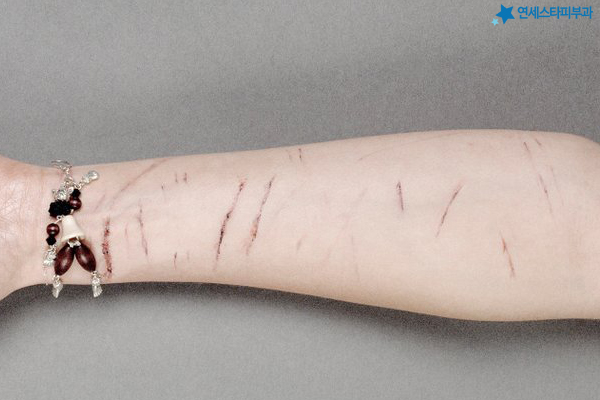
Wrist self-harm scars are often more than just skin marks; they can be a long-term emotional burden. "Can this scar really fade?" is often the first question asked in the consultation room.
The wrist is one of the most frequently exposed areas in daily life, leading to a particularly heavy psychological burden. The skin is thin, and blood vessels and nerves are densely packed, making it easy for scar tissue to become prominent during the healing process after an injury. In cases of repeated irritation, scars can remain as long lines, or appear as a complex of depressed scars, red marks, and raised scars.
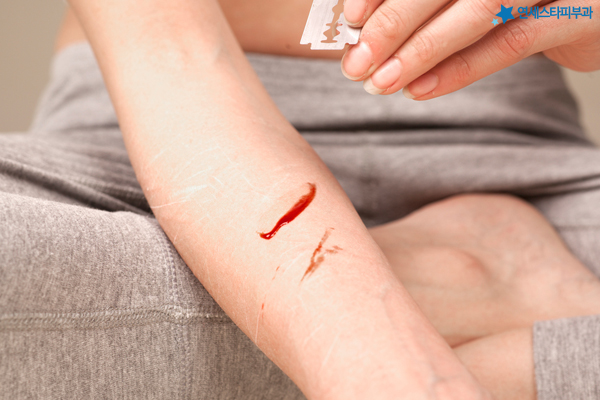
Why is Natural Healing Slow for Wrist Scars?
Wrist self-harm scars often involve deep damage to the dermal layer due to repeated irritation. Therefore, it takes a long time for them to naturally fade. The location of the wrist, in particular, makes healing more difficult.
- Frequent joint movement makes wounds prone to reopening repeatedly
- Frequent sun exposure increases the risk of pigmentation
- Thin skin makes scars appear more distinct
- Complex shapes make improvement difficult with a single method
For these reasons, significant improvement with ointments or creams alone is often difficult to expect.
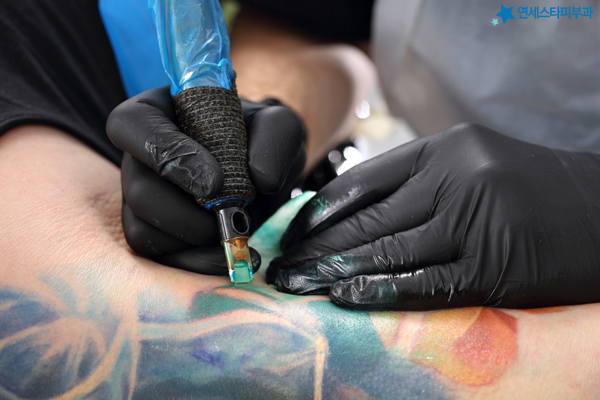
Reasons to Consider Treatment Rather Than Concealment
In the past, many people chose to conceal self-harm scars by wearing watches, bracelets, long-sleeved clothing, or covering them with tattoos. These are temporary methods to hide visible areas.
However, satisfaction is often low, and the difficulty of removal can increase if more intensive treatment is pursued later. In contrast, Pinhole Technique-based scar treatments that utilize lasers and promote regeneration aim to enhance the longevity of improvement. The changes expected from such treatments are as follows:
- Improvement in depressed depth
- Alleviation of rough skin texture
- Improvement in red marks and pigmentation
This treatment approach doesn't just lighten the color of the scar; it addresses skin texture and depth simultaneously.
What is the Pinhole Technique?
The Pinhole Technique is a laser treatment method that induces skin regeneration by creating microscopic holes at regular intervals in the scar area. From self-harm scars to burn scars, it is a versatile method that can be used even for difficult-to-treat types or conditions that have hardened over a long time, as it activates new collagen regeneration and can lead to the growth of new skin.
Especially for complex forms like wrist self-harm scars, which are long and linear with deep depressions, the Pinhole Technique can be a suitable option. Laser devices capable of precise output control, such as StarLux and Ultrapulse Alpha, play a role in more accurately treating the problematic area and inducing skin regeneration. Another characteristic is that it can be performed with minimal irritation to healthy skin.
The fundamental principle of scar treatment is that natural improvement comes from addressing not just the color, but also the depth and texture of the scar.
If the scar is deep or hardened, Pinhole Alpha precision treatment may also be considered.
For questions, inquire via chat consultation about wrist self-harm scar treatment
How Many Treatments Are Needed for Improvement?
Rather than disappearing completely with a single treatment, it often involves 5 to 10 or more sessions, progressing in stages depending on the scar's depth and condition. Individual results may vary. Therefore, it is necessary to consider a clinic and medical staff who can closely monitor the healing process and flexibly adjust the treatment plan accordingly.

The Most Important Factor is Customized Diagnosis
Not all cases are treated in the same way. The approach varies depending on the nature of the scar.
| Scar Type | Key Characteristics | Treatment Approach |
|---|---|---|
| Red Scars | Redness remaining due to vascular dilation | Focus on improving pigment and red marks |
| Depressed Scars | Surface sunken due to dermal damage | Focus on inducing regeneration and improving texture |
| Raised Scars | Scar tissue is prominent | Focus on surface refinement and flattening |
| Scars with Pigmentation | Pigmentation accompanying the scar | Step-by-step approach to pigment and scar |
As such, the application of lasers like the Pinhole Technique and Ultrapulse Alpha must vary depending on the type of scar, and an accurate skin diagnosis determines the treatment direction. In cases where the surface shape is complex and deep, Surgical Scar Revision may also be considered.

Important Considerations for Scar Management
To maintain the treatment effect naturally, daily care is also important. Reviewing the following points can be helpful:
- Consistently pay attention to UV protection for the treated area
- Minimize excessive irritation, especially in areas with frequent joint movement
- Follow medical staff's guidance on moisturizing and regenerative care
- Record changes in skin condition between treatment sessions
This type of care helps maintain treatment effects stably.

From Hiding to Gradually Improving
Self-harm scars on the wrist remain as traces of the past and memories many wish to erase, causing a significant burden for many. However, with precise scar laser treatments like the Pinhole Technique and Ultrapulse Alpha, there is now a path to lighten marks and achieve natural improvement.
Self-harm scars are more than just a skin problem; they are also an issue of self-esteem and recovery in daily life. Rather than enduring by hiding them, we hope that through accurate diagnosis and choosing the right treatment, you can gradually return to clear skin and daily life, even if it takes some time.

If the treatment direction feels daunting, we recommend consulting with medical staff first rather than worrying alone.
💬 Consult Now
Chief Director Lee Sang-joo (MD, PhD, Yonsei University College of Medicine and Graduate School, Completed Dermatology Residency at Severance Hospital, President of the Korean Dermatological Association) Chief Director Lee Sang-joo's Profile First Published 2025-12-04 / Last Reviewed 2026-06-16
Since scar conditions and treatment responses can vary from person to person, accurate diagnosis and treatment direction must be determined through consultation with medical staff.