

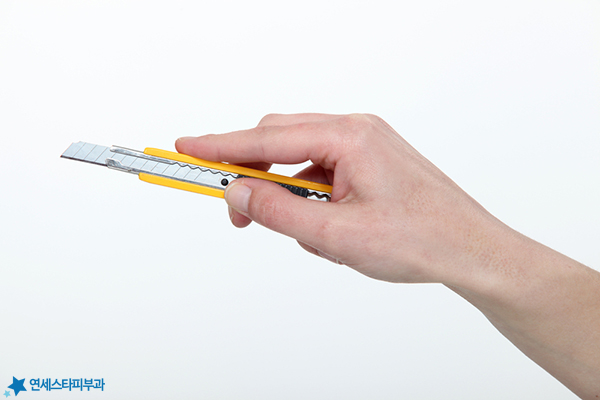
A wound caused by being cut or stabbed by a sharp object like a knife, scissors, or broken glass is called an incision. Many people find that after the bleeding stops and the wound appears to have healed on the surface, they leave it as is, only to later find prominent red or white marks, leading them to seek medical attention belatedly. Can incision scars be sufficiently improved with laser treatment? To answer directly, it is reported that satisfactory changes in terms of skin regeneration can be expected if the approach is tailored to the healed stage of the wound and the form of the scar.
Why Do Incisions Leave Scars?
When stabbed or cut by a sharp object, the priority is to quickly stop the bleeding initially, disinfect the wound, and prevent it from opening. Most initial treatments are performed promptly, but the real problem lies thereafter. While people assume it will naturally heal once the bleeding stops and it has somewhat closed, the incision scar takes hold.
Even a common incision can often be surprisingly deep, making it highly likely to leave a scar. Therefore, meticulous care in the early stages, before it solidifies into a noticeable mark, becomes an important topic. If you have similar concerns, it may be helpful to also look at the principles of managing scars remaining after surgery or scars caused by burns.
The Red Scar Stage: Don't Miss the Timing
Initially, even after the bleeding stops, the affected area may remain red, and depending on skin type, swelling may not subside easily. Fortunately, if the incision scar is still in the red stage, laser treatment can help accelerate the healing process.
Redness in the scar area is often caused by excessive vascular development.

Applying a vascular laser like Vbeam Prima to normalize this can be helpful. It is useful for addressing the visible redness now, and it can also lead to a positive outcome in reducing the formation of white, bumpy incision scars later. Therefore, it is generally better to start treatment as soon as possible after the bleeding has stopped.
The timing of scar treatment often determines the outcome. The early stage, while redness remains, is reported to be the most favorable period for recovery.

How to Approach Hardened White Scars
If a white linear incision scar remains or if it has a raised appearance, combined treatment with Pinhole Technique and Subcision can be helpful. Pinhole Technique is a laser method that helps the skin regenerate quickly and return to its original state, showing good results not only for incision scars but also for older scars such as burns. Depending on the depth and shape, methods like Mild Pinhole or Pinhole Alpha may be selectively applied.
There was a perception that old, established scars were difficult to treat and had to be lived with for life. However, with the upgrade of equipment such as Ultrapulse Encore and Ultrapulse Alpha, and the development of treatment methods, significant improvement has become possible.
In addition to lasers, Subcision is a procedure that severs the collagen fibrous bands pulling down the skin, allowing the depressed area to naturally fill in and restore. Utilizing these methods in combination can create a process of recovery similar to normal skin.
In the examination room, even for the same incision, the recommended approach varies greatly depending on whether it is in the red or white stage.
If you are unsure which stage your incision scar is in, you can casually inquire through Chat Consultation for Incision Scar Treatment Direction.

What's the Difference Between Laser and Surgery?
Of course, surgical methods can also address the problem. Neither one is an absolute answer. Depending on the extent, location, and skin condition of the incision scar, some cases may require surgery, while others may show good results with only laser and procedural methods. If a surgical approach is necessary, Surgical Scar Revision may be considered.
| Category | Laser, Procedural Method | Surgical Method |
|---|---|---|
| Treatment Period | Conducted over multiple sessions | Relatively short-term |
| Risk of New Scars | Relatively less burden | May create another scar |
| Suitable Cases | When natural improvement is desired | When excision is necessary due to scar extent or location |
Surgical methods, which can be completed in a short period but may leave another scar, and laser methods, which take time but reduce the burden, each have their own characteristics. We recommend that you understand which method's characteristics are more advantageous for you before starting incision scar treatment.

Things to Check Before Treatment
Rather than waiting indefinitely after the wound has healed, it is better to review the following points to determine the direction:
- Check if the scar is in the red stage or the hardened white stage.
- Examine the shape to see if the surface is depressed or raised.
- Check if the incision location is on a joint or facial muscle area.
- Decide whether you prefer natural improvement or a quick resolution.
- Do not give up prematurely, even if the scar is old.
For those who desire natural improvement with reduced potential for side effects, even if it takes a bit longer, we recommend laser treatment. As mentioned earlier, the sooner treatment begins, the more efficiently it can be applied in terms of time and cost, so please visit a dermatology clinic to have your condition thoroughly checked.

Also Care for Emotional Wounds
There is one more thing I would like to emphasize. If the cause is not an accidental injury but something like self-harm, the same problem may recur and leave deep marks even with treatment. Efforts are needed to heal emotional wounds along with scar treatment. If you have skin prone to prominent scarring, such as a keloid tendency, it is good to understand the characteristics of Keloid Scars in advance.
We will continue to provide good information to help you return to clear, scar-free skin.
If you are concerned about the timing and method of treatment, 💬 Consult Now

Chief Director Lee Sang-ju (MD, PhD, Yonsei University College of Medicine and Graduate School, completed dermatology residency at Severance Hospital, President of the Korean Dermatological Association) Chief Director Lee Sang-ju's Profile First published 2025-08-13 / Last reviewed 2026-06-16 Treatment results and recovery speed may vary by individual, and we recommend consulting with medical staff for an accurate diagnosis and treatment plan.