

You've probably had the experience of a seemingly insignificant scratch from a fingernail leaving a mark for longer than expected. Especially with fingernail scars or scratches on the face, it's common to neglect them, thinking "it'll disappear soon," only for the mark to harden. To put it simply, even a seemingly shallow scratch can leave almost no trace with early care, or it can remain prominent for a long time.
Why do shallow scratches become scars?
Even if a fingernail scratch appears shallow on the surface, the damage can extend to the dermal layer of the skin. During the healing process, if collagen is excessively produced or, conversely, tissue is lost, a scar can remain in the form of a depression, protrusion, or pigment change.
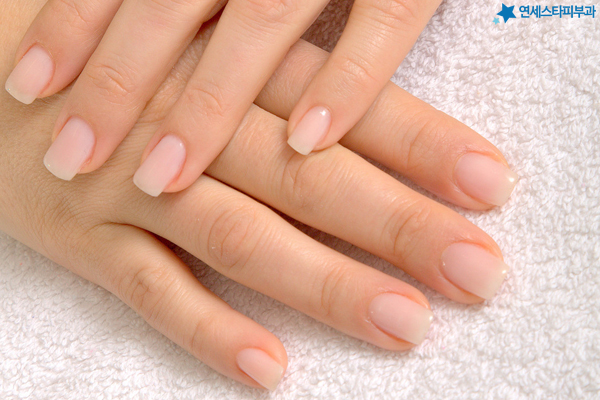
The face, in particular, has thin skin and abundant blood vessels. Therefore, even a scratch of the same depth may appear redder or more prominent than on other parts of the body. This is why even small scratches can be difficult to dismiss lightly.
Red scars and old scars require different treatment approaches
Scars require different approaches depending on when they occurred and their condition. Even for the same scratch scar, a newly formed red scar and a scar that has turned white and hardened over time are considered completely different stages.

| Category | Condition | Treatment Direction |
|---|---|---|
| Red Scar (Early) | Blood vessels are active | Focus on reducing redness and thickness; high potential for recovery |
| White Scar (Old) | Pigment has faded, fibrosis is progressing | Gradual improvement through regeneration stimulation; long-term approach needed |
Red scars are in a stage where blood vessels are still active, so it is known that appropriate intervention at this time has a high potential for recovery. On the other hand, old scars are in a fibrotic state, requiring an approach that induces regeneration and takes consistent time. If red marks do not subside well, it may be necessary to also check if there is a vascular change like facial redness.
Since the treatment direction varies depending on the scar's condition and duration, it is important to first receive a diagnosis from a dermatologist rather than repeatedly applying symptomatic treatment on your own.
In the clinic, we often see many people who come in after missing the appropriate treatment period. Scars that would have been easier to treat with early intervention often take more time to improve once they have hardened.
Lasers to consider based on scar condition

The equipment considered for use varies depending on the type of scar. Which equipment is suitable depends on the scar's color, depth, and duration, and is determined through consultation.
- Vascular Laser (Vbeam Prima): Selectively acts on the blood vessels of red scars, used to improve redness while minimizing damage to surrounding tissue. This is one of the methods that can be considered for early fingernail scars or scratches.
- Regenerative Laser (Ultrapulse Alpha, StarLux ProFractional): Induces skin regeneration using a CO₂ method, and can be used to approach depressed facial fingernail scars or old scar tissue.
Both methods may have different effects and required frequencies depending on the individual's skin condition. Regenerative laser treatments have a recovery period and precautions after the procedure, so be sure to consult sufficiently with a specialist before deciding. If the depression is deep or the scar is hardened, procedures such as Surgical Scar Revision may also be considered.
If you are curious about the stage of your scar, you can check first by inquiring via chat consultation about scar treatment directions.

Approaching scars in stages rather than a single treatment
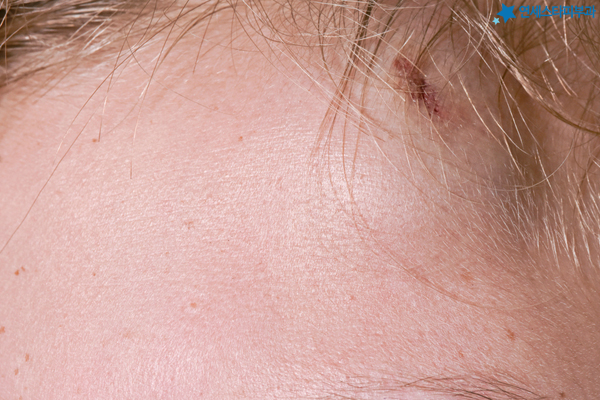
Scar treatment often involves a process of gradual improvement over several sessions, rather than being completed with a single procedure. Consistent consultation, observing the scar's changes and adjusting the direction, can influence the outcome. Surgical scars or cosmetic surgery scars resulting from surgery or trauma also follow the same principle, approaching each stage based on its condition.
For raised or hardened scars, adjunctive methods such as Triamcinolone Scar Injection may also be considered.
Early scar management you can do at home
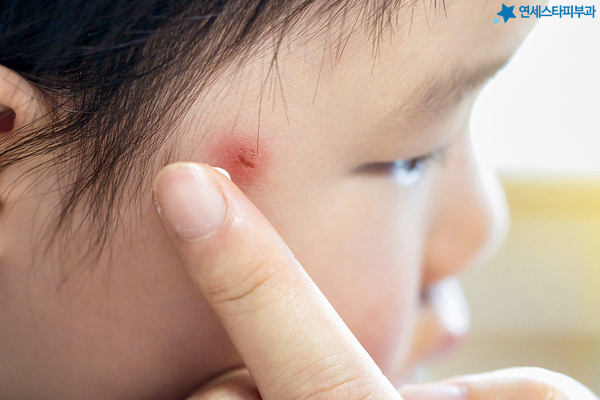
How you manage the first few days after an injury can affect the scar's progression. We recommend taking care of the following:
- Keep the wound area clean and do not forcibly remove scabs.
- Reduce exposure to UV rays; UV exposure to scars can worsen pigmentation.
- Avoid scratching or touching unconsciously.
- Use over-the-counter scar ointments or patches as an auxiliary measure for initial care.
- If the mark is not hardening and changes are not stopping, consider medical intervention.
If the scar has already formed, ointments or patches alone have limitations, so combining them with a medical approach is often more effective.
Even if it seems minor, it's better to check early

Fingernail scars on the face may seem minor at first, but if the timing is missed, they can become permanent marks. The outcome can differ between addressing it when it's in the red stage and approaching it after it has hardened, so if you're unsure, it's better to have it checked first.
If you're wondering how to manage even a small scratch scar, 💬 Consult Now
Chief Director Lee Sang-joo (MD, PhD, Yonsei University College of Medicine and Graduate School, completed dermatology residency at Severance Hospital, President of the Korean Society for Dermatology) Chief Director Lee Sang-joo's Profile First published 2026-04-29 / Last reviewed 2026-06-16
This content is for general information purposes only, and the outcome may vary depending on individual skin conditions. Please consult with medical staff for an accurate diagnosis and treatment plan.