

Hard, raised scars on the skin draw attention every time you look in the mirror, and depending on their location, they can even make you self-conscious about your clothing or expressions. The first question many people ask is simple: "Will this raised scar subside if I leave it alone, or do I need treatment?" To put it simply, the answer depends on the type of scar. This is because some scars gradually flatten over time, while others may spread to surrounding areas if left untreated.
Why do raised scars form?
When the skin is damaged, our body produces collagen to fill the wound with new tissue. If this process concludes appropriately, the scar flattens out. However, if collagen accumulates excessively beyond what is needed, a hard, raised scar remains on the skin surface.
In the examination room, even with similar injuries to the same area, the recovery process varies greatly from person to person. This is because the depth of the wound, its location, and individual constitution all play a role.
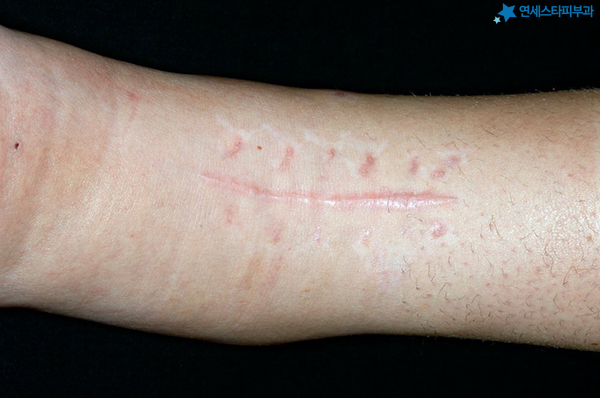
What's the difference between hypertrophic scars and keloids?
Raised scars can be broadly divided into two types: hypertrophic scars and keloid scars. Although they may look similar on the surface, their characteristics differ, leading to different treatment approaches. Accurately distinguishing between the types is the starting point for treatment.
| Classification | Hypertrophic Scar | Keloid Scar |
|---|---|---|
| Extent | Stays within the wound boundary | Spreads larger than the wound |
| Course | Tends to subside over time | Difficult to expect natural improvement |
| Discomfort | Less pain and itching | May be accompanied by pain and itching |
| Influencing Factors | Wound irritation | Strong genetic and constitutional influence |

What is a hypertrophic scar?

This is a generally common type of scar. In the process of damaged skin healing, it becomes firm and raised, often appearing reddish, and the surface may be uneven, making the skin texture feel rough.
Fortunately, hypertrophic scars usually do not cause significant discomfort such as pain or itching when touched. Furthermore, they often show a tendency to gradually subside and improve over time.
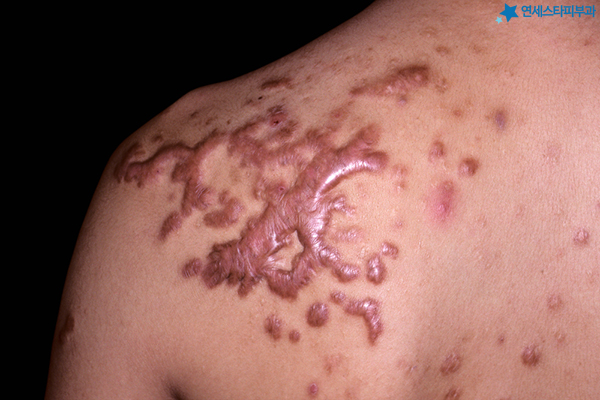
Why are keloids so tricky?
While not everyone develops them, individuals who experience particular difficulty with raised scar removal are likely to have a keloid constitution. This type is heavily influenced by genetic and constitutional factors, swelling larger than the original wound and having a high recurrence rate, making treatment challenging and often causing considerable discomfort.

If left untreated, they can worsen by spreading and proliferating, making natural improvement unlikely. Therefore, accurate early identification and response are crucial.
Keloids are known to take longer to treat and be more difficult to manage than hypertrophic scars. Therefore, distinguishing between the two scars and approaching them accordingly is paramount.
If you tend to swell easily when your skin is irritated or develop scars easily, it's advisable to be cautious. If you notice the following signs, we recommend paying more attention to scar management:
- If you have experienced large, thick scars from even small injuries.
- If you feel the scar is gradually spreading beyond the original wound area.
- If the redness and firmness do not subside over time.
- If the scar area is accompanied by discomfort such as pain or itching.
- If you have a wound in areas where keloids commonly form, such as the ears, chest, or shoulders.
You can find answers to your questions through Inquire about Scar Type Classification and Treatment Consultation.
How can they be treated?
Even if raised scars appear similar, to treat them safely and effectively, it is necessary to understand their individual characteristics and choose the appropriate treatment. Keloids, in particular, have a strong constitutional component, making them take longer to treat and more difficult to manage than hypertrophic scars.
One of the most common methods for reducing the height of raised scars is Triamcinolone Scar Injection. This relatively simple method can lead to a reduction in the raised area and is widely used. However, the injection can be quite painful, and the effects may not last long, often making repeated treatments a burden.
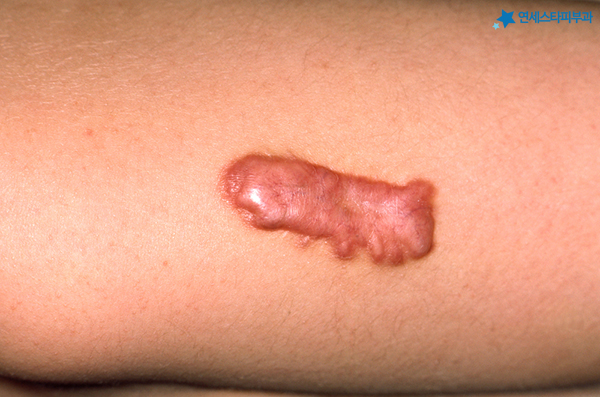
There are also approaches to reduce such discomfort. Attempts are being made to manage scars and maintain more stable effects through methods that combine laser treatment with injections to lower the recurrence rate, or low-pain injection methods that reduce discomfort, rather than relying on a single treatment. If the scar is deep and extensive, Surgical Scar Revision may also be considered, and Hyperbaric Oxygen Chamber may be combined to aid the scar healing environment.
Therefore, if you have a challenging scar like a keloid, we recommend carefully checking how the hospital treats it and how post-treatment care is managed before making a decision. This is especially true if the scar area is wide or if it's a specific situation like a cosmetic surgery scar.

Scar treatment begins with accurate assessment
Have you been experiencing discomfort from a scar that hasn't diminished over a long time, sometimes accompanied by pain or itching? The fastest path to treatment begins with accurately identifying what type of scar you have.

Since the appropriate approach varies depending on the type and condition of the scar, it is safer to establish a treatment plan through a specialist's consultation rather than self-diagnosis. If you are concerned about keloid scars or other scars that tend to leave lasting marks, we recommend discussing your options thoroughly to determine the best course of action.
💬 Consult Now
Chief Director Lee Sang-ju (Yonsei University College of Medicine · Graduate School, Doctor of Medicine, Completed Dermatology Residency at Severance Hospital, President of the Korean Dermatological Association) Chief Director Lee Sang-ju's Profile First Published 2025-10-23 / Last Reviewed 2026-06-16
This content provides general information about scars, and actual symptoms and treatment responses may vary individually. Please consult with medical staff for an accurate diagnosis and treatment plan.