

Have you ever felt that even after applying highly-rated cosmetics like spicule ampoules, PDRN creams, and Vitamin C serums, your depressed acne scars haven't improved? It's possible that deeply sunken scars aren't due to a lack of effort, but because the starting point of care itself lies elsewhere, not just on the skin's surface.
Unchanged Scars Are Not a Matter of Effort
Before giving up, thinking that no amount of application will help, it's necessary to first check one thing: whether your current care targets the actual structure of the scar. Depressed scars are the result of changes that occurred inside the skin, so simply trying to fill the surface may not be the right approach.
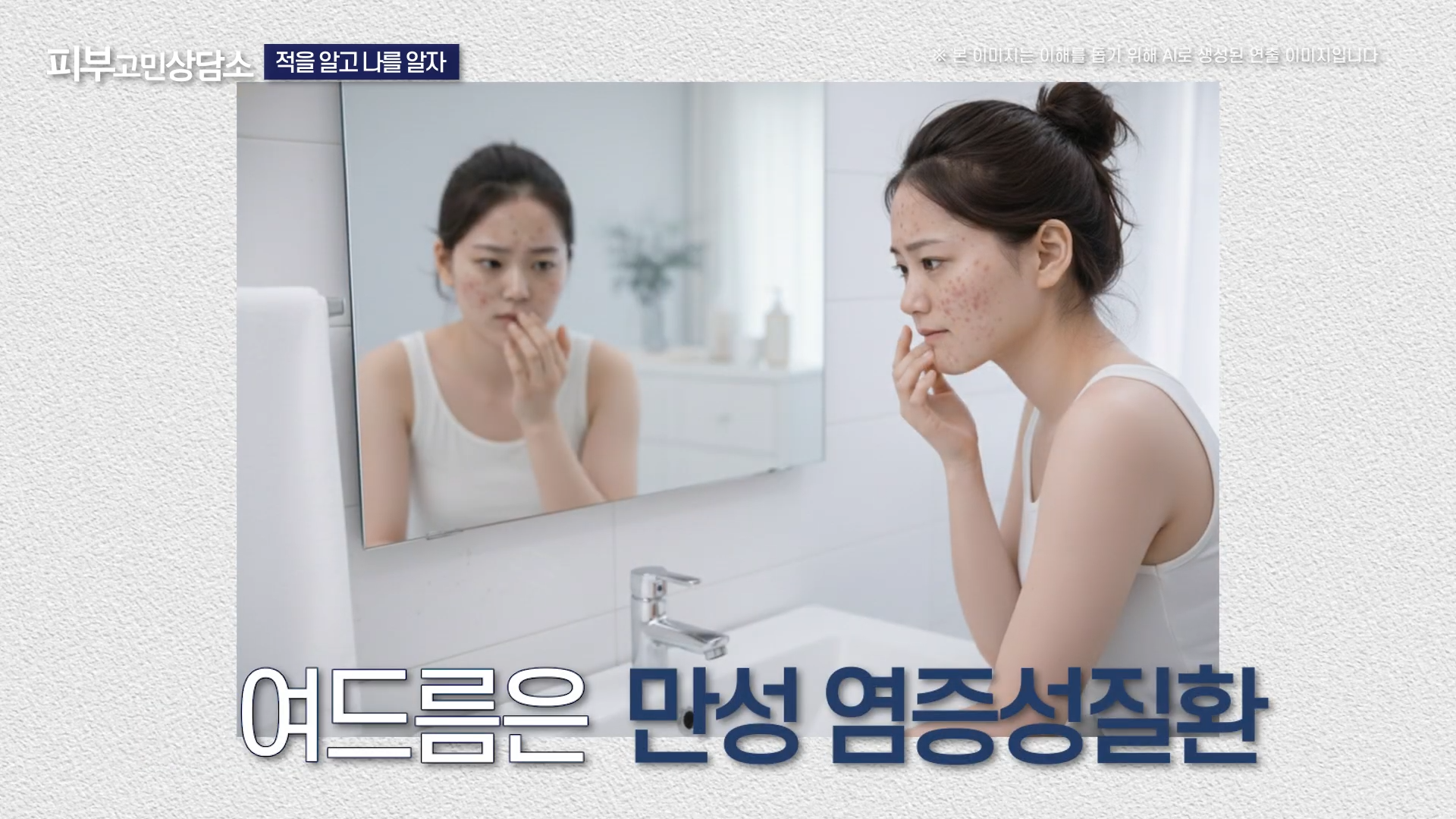
Acne is medically classified as a chronic inflammatory disease where hormones, sebum, keratin, and bacteria interact complexly. Simply put, a small war is still ongoing within the skin. After this inflammation subsides, the sunken areas remain as what we commonly call acne scars.
Depressed Scars Are Not Just Marks, But Structural Changes
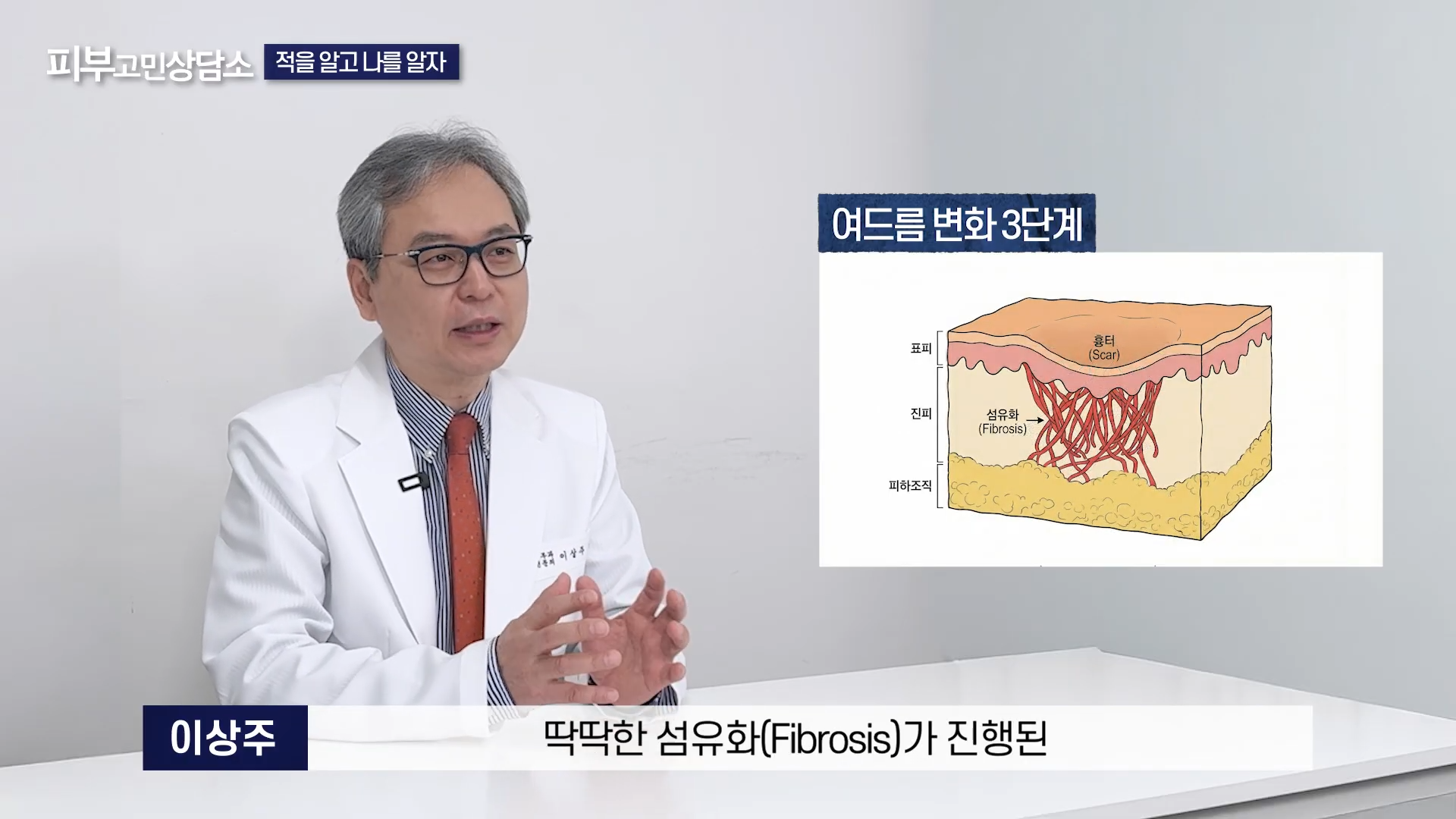
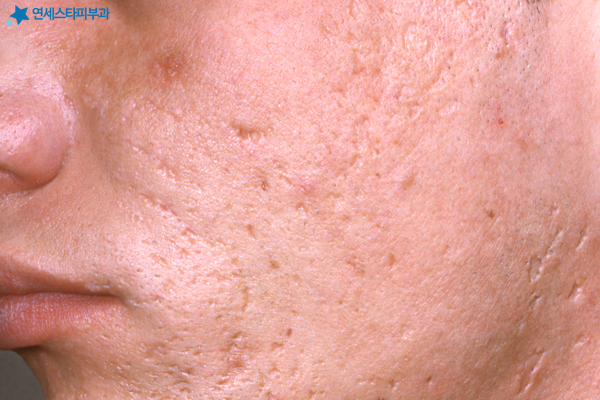
Acne scars are not simply depressed skin. They are a type of structural defect where tissue is damaged and entangled by inflammation, leading to a hardening fibrosis stage. Since significant changes have already occurred internally, it can be difficult to feel noticeable improvement by simply applying good ingredients on the surface.
This doesn't mean that home care ingredients like spicules are meaningless. They can help open blocked pathways for early comedonal acne. However, the situation is different for inflammatory acne or acne that recurs in the same spot, because the sebaceous glands, the root of acne, are already excessively enlarged.
Only Touching the Surface Leads to Recurrence in the Same Spot

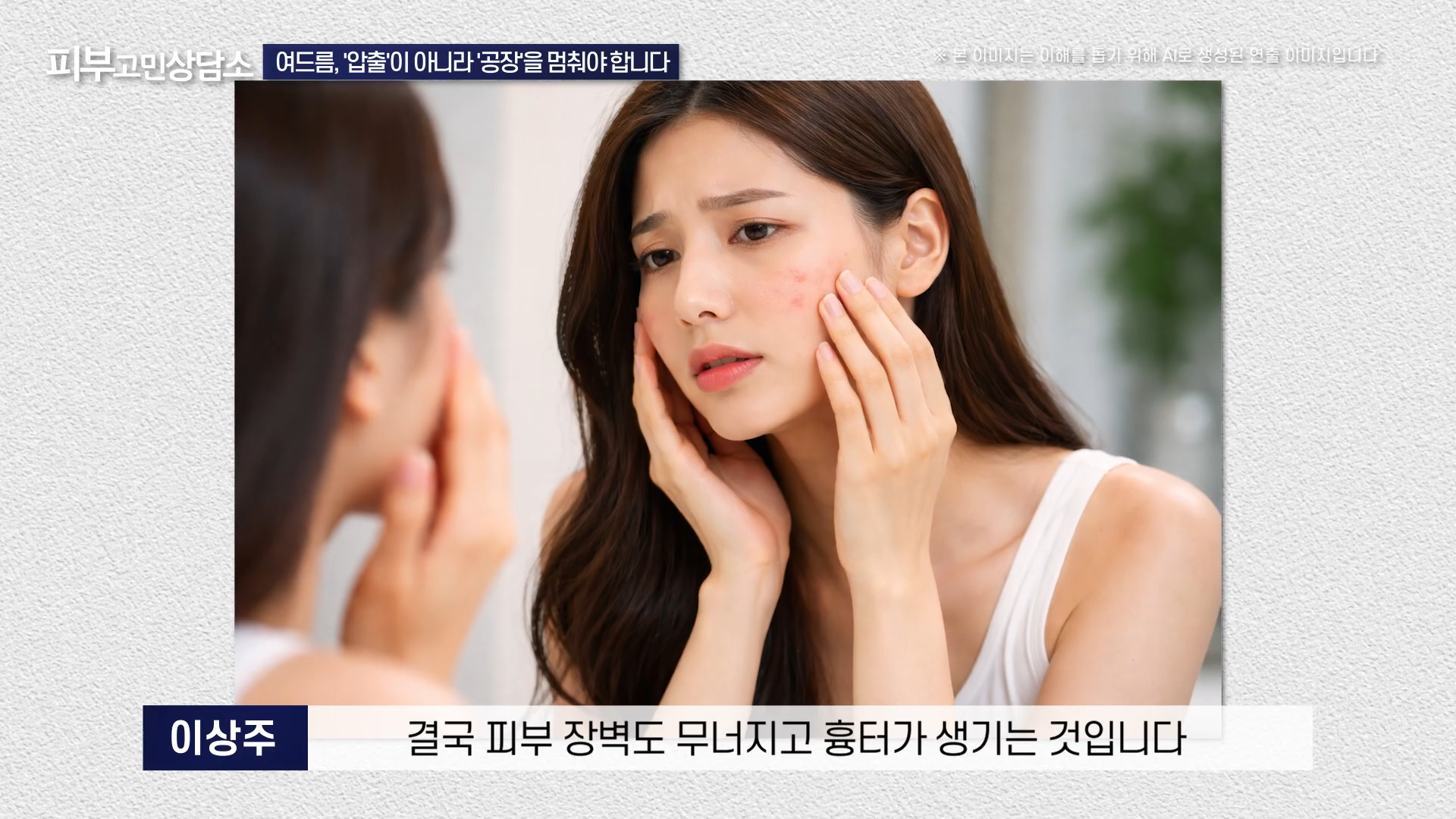
As long as the factory producing sebum continues to operate, acne will reappear even if only the surface is treated with home care. In this process, the skin barrier can break down, easily leading to scars. This is why it's important to address the core of sebum production from the acne stage.
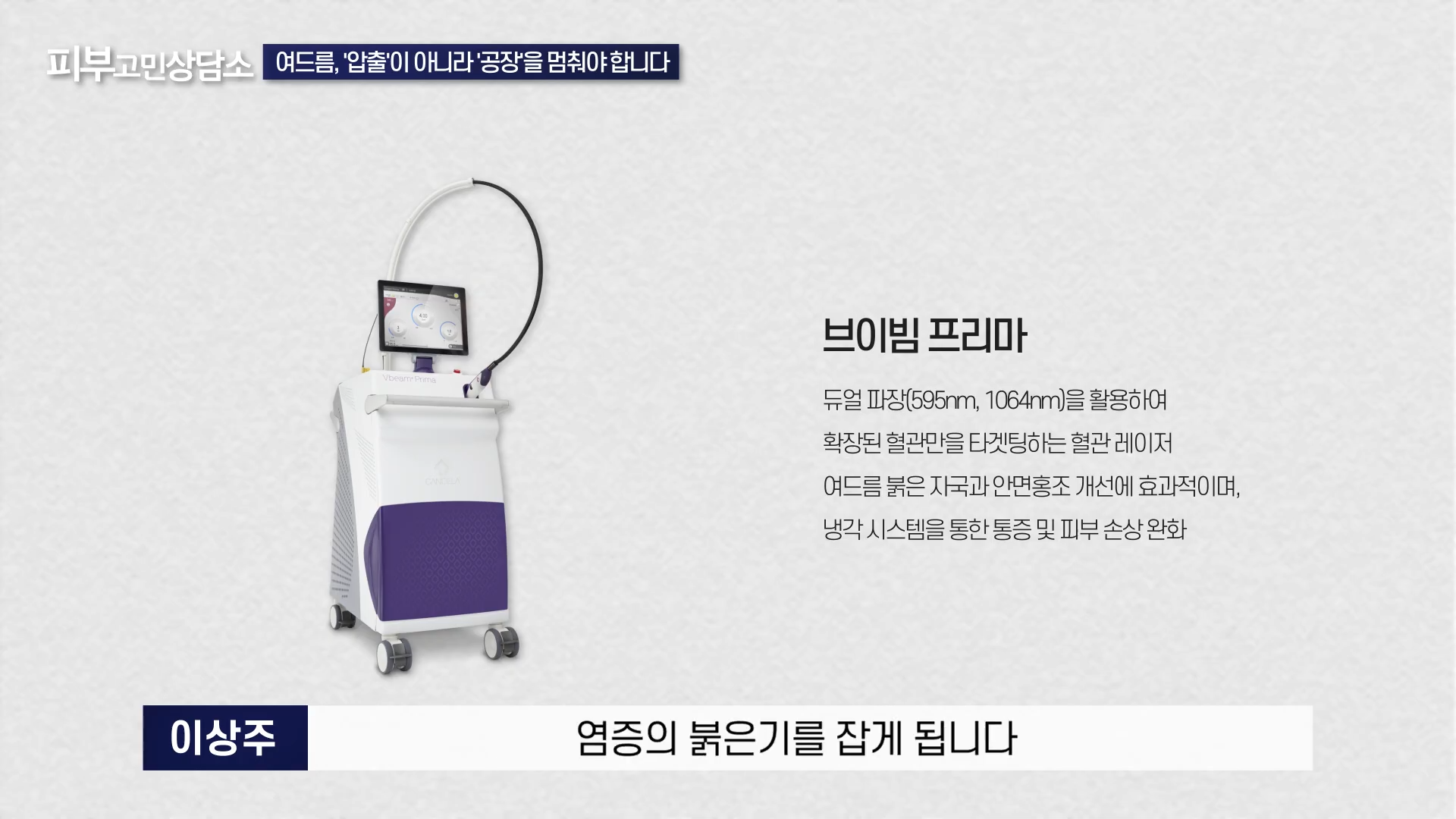
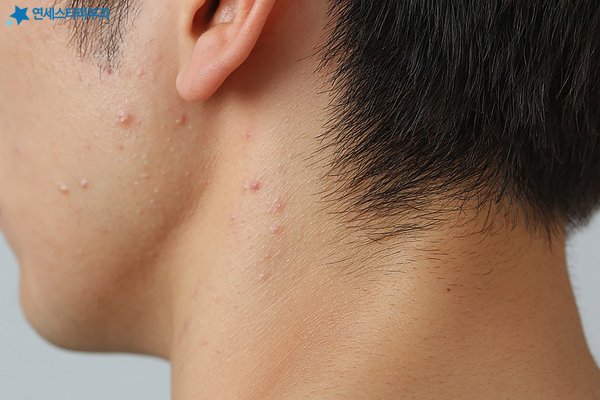
In the clinic, patients who come in before scars have fully formed tend to recover more easily. If blood vessels are properly managed during the red mark stage, it may be possible to reduce the progression to permanent, deeply depressed scars. Early assessment can be even more helpful if red acne scars or facial redness are also present.

Why Ointments Are Not Very Effective for Depressed Scars
It can be difficult for depressed acne scars to significantly improve with cosmetics or ointments. In areas of severe inflammation, tissue can become entangled, creating tough, rope-like fibrosis within the skin. These ropes pull the skin surface inward, creating the sunken appearance. As long as the internal structure remains unchanged, there is a clear limit to what can be achieved by applying anything to the surface.

Since ointments have difficulty acting quickly on deep layers of the skin, it's easy to feel that there's no change. At this stage, professional medical treatment is necessary. One point to note is that acne scars vary in shape, so repeatedly using only one type of laser has its limitations.
Depressed acne scars require different approaches depending on their shape. Determining the treatment direction by distinguishing between icepick, rolling, and hardened types is reported as key.
Before deciding on treatment, checking the following three points can help you determine the right direction:
- Is there a method that can physically lift depressed scars?
- Is an approach possible that breaks the fibrotic bands within the skin and fills the empty space?
- Are methods available that can treat even old, stubborn, and difficult-to-treat scars?
- Is it possible to combine treatments according to the scar shape?
If you have any questions, you can easily check by contacting us via chat for depressed acne scar treatment direction.
CHECK 1. Can it be physically lifted? (Icepick Scars)

For deep, icepick-like scars, it can be difficult for lasers to reach the bottom.
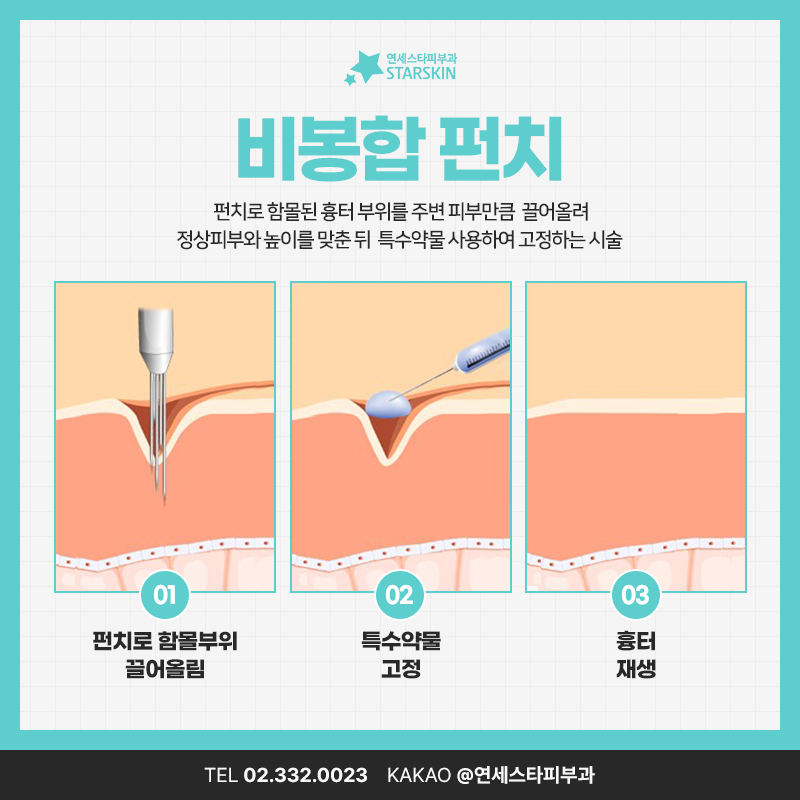
In this case, it's good to check if a Suture-Free Punch procedure is possible, which physically lifts the depressed skin by punching it out. Since it doesn't involve stitches, the recovery period is relatively short, about 5 days, and because it matches the height itself rather than shaving the surface, a much smoother result can be expected. If deep and narrow shapes are prominent, we recommend looking at the depressed acne scar section as well.
CHECK 2. Does it break the ropes and fill? (Rolling Scars)
Underneath rolling scars, tough fibrotic bands are located.
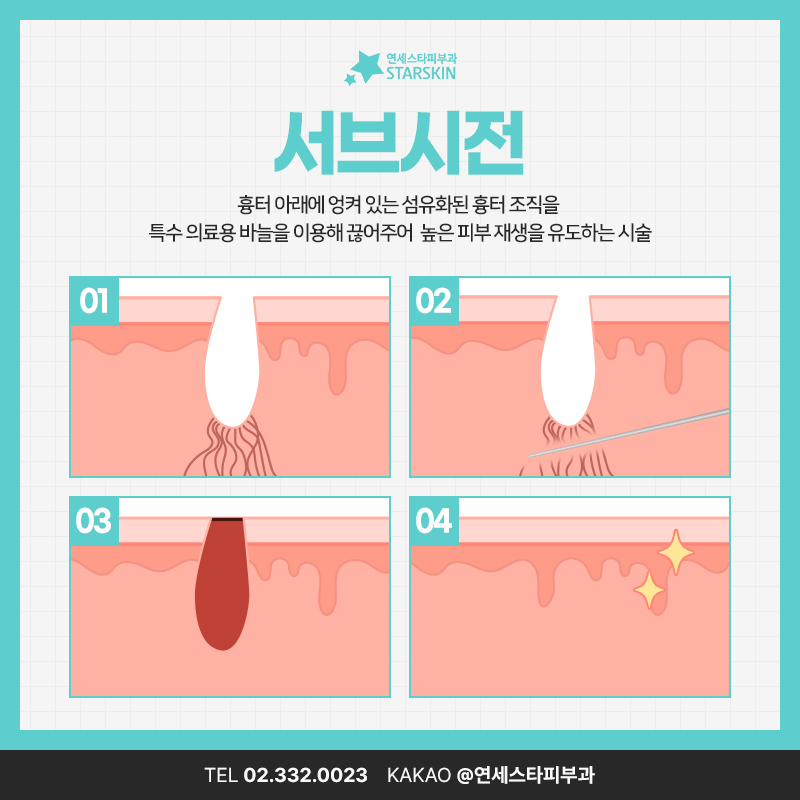
If these bands are not broken with Subcision, even adding temporary filling procedures like fillers will have limitations. Simply filling is not enough for high satisfaction. After breaking the bands with Subcision, inducing collagen regeneration in the empty space with regenerative injections like Juvelook can provide a more stepwise approach. This treatment method has been discussed in a paper published in the European Journal of Dermatology in 2010 and is still one of the actively used methods today.
CHECK 3. Can even old, hardened scars be treated? (Stubborn Scars)
For stubborn acne scars that have already hardened like stone, special skills are needed to enhance the effectiveness of laser treatment. The Pinhole Technique is a prime example. This principle involves creating microscopic holes with CO2 lasers like Ultrapulse Alpha or StarLux to soften hardened tissue. For scars that have been present for a long time or those with mixed, hardened characteristics, gradual improvement can be expected.
The Pinhole Technique initially gained recognition as an effective method for treating burn scars. Now, it is widely used for various scar treatments, including acne. Even for scars that have been established for a long time, Mild Pinhole can help collagen bundles loosen, allowing the tissue to return to a more flexible and soft state. If the hardening is severe, advanced methods like Pinhole Alpha may also be considered.
Before Giving Up, Identify Your Scar Type
As a problem recurs over time, scars tend to develop into more challenging forms to treat. If you don't see changes with ointments or home care, we recommend going through the checklist we've covered today and considering a treatment direction that suits you. Even for the same depressed scar, the appropriate method differs depending on whether it's an icepick, rolling, or hardened type.

If you're curious about which scar type your scar is closer to, or which combination would be suitable, you can easily ask below.
💬 Consult Now
Chief Director Lee Sang-ju (MD, PhD, Yonsei University College of Medicine and Graduate School, completed dermatology residency at Severance Hospital, President of the Korean Dermatological Association) Chief Director Lee Sang-ju's Profile First published 2026-03-30 / Last reviewed 2026-06-16
Treatment response and recovery speed may vary by individual, so we recommend consulting with medical staff for an accurate diagnosis and treatment plan.