
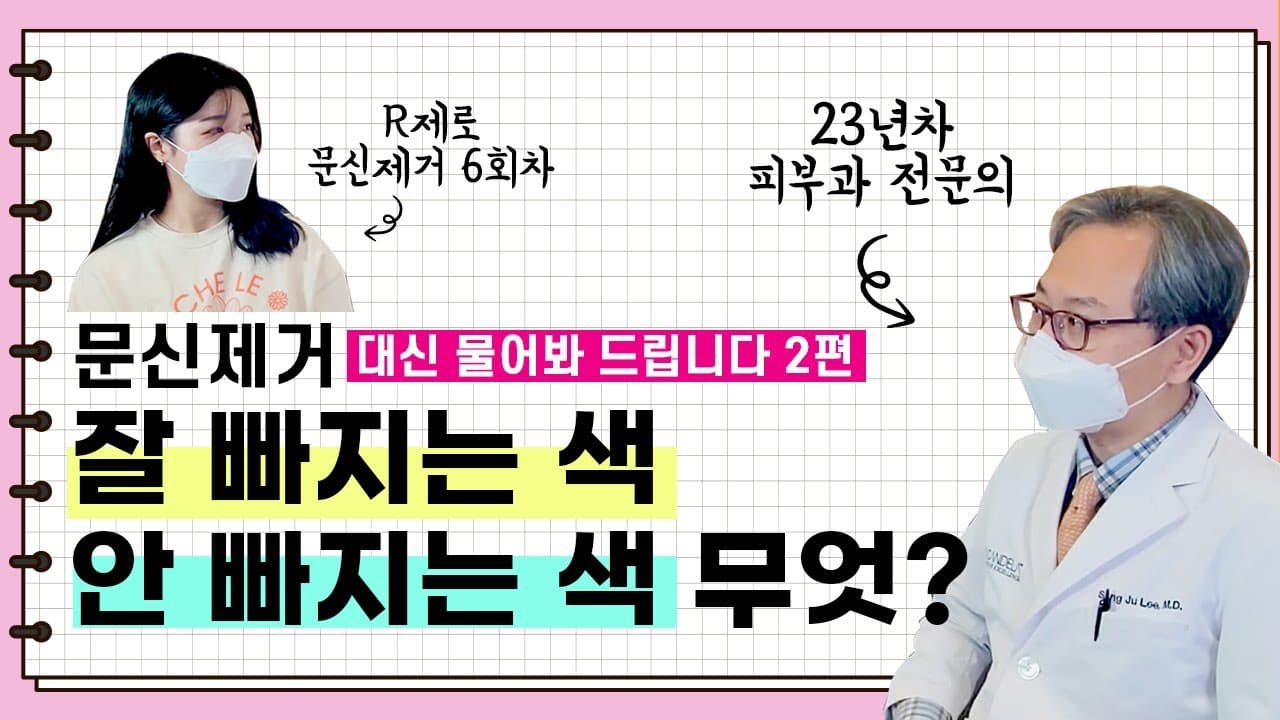
The first question people ask when considering color tattoo removal is which colors fade well and which do not. Although all tattoos may look similar, the substances used for each color are different.
Different Components for Each Color
Black and blue colors, which contain a lot of iron, tend to fade well. Red was once considered difficult to remove, but with the PicoWay Laser, it can be removed more easily.
Conversely, some colors fade more slowly.
| Color | Reaction Tendency | Reason |
|---|---|---|
| Black, Blue | Fades well | Contains a lot of iron |
| Red | Easily removed with PicoWay | Wider range of wavelength selection |
| Yellow | Slow | Similar to skin color, risk of skin damage if output is too high |
| White | Slow | Mixed with titanium, less laser reaction |
Yellow is difficult to remove because it is similar to skin color, and excessive output can damage the skin. White contains titanium, which results in less laser reaction and the pigment not breaking down easily.
Nevertheless, removal is possible because we proceed with customized wavelengths for each color. The equipment and wavelength configurations are summarized in the R-Zero Pico-Frectat Tattoo Removal guide.
Even with the Same Color, Removal Speed Varies by Area
Even with the same energy applied, there are differences in how much immune cells clear the pigment, and the amount of ink injected varies by area.
- Thicker skin on hands and feet tends to fade slower.
- Arms tend to be removed faster in comparison.
The removal speed varies depending on the body part and the amount of ink.
The Identity of Brown Marks Remaining
If brown marks remain after removal, it can be considered post-inflammatory pigmentation. East Asians often experience post-inflammatory pigmentation when tattoo pigments break down and surrounding skin is damaged.
Brown pigmentation naturally resolves over time.
However, if you wish to lighten the marks sooner, you can accelerate the process with pigmentation laser treatments like Pico·Dual·Gold-Diamond Toning.
Concerns About Pain
Since there is almost no tattoo pigment remaining in the body, pain is minimal even with high-output laser irradiation. You can understand it as a process where the laser breaks down tattoo ink deep within the skin. The perception of pain may vary individually.
Criteria for Determining Visit Intervals
Breaking down ink does not mean immediate removal. Color tattoo removal occurs as our body's immune cells engulf and clear the broken ink. After the laser breaks it down, immune cells need time to work.
In the past, treatments were spaced more than two months apart. With the advent of PicoWay Laser, it became possible to irradiate with strong energy in a short time, breaking down pigment into much smaller particles, allowing for monthly treatments.
As the number of sessions increases, the amount of pigment to be broken down decreases. In the initial stages, with abundant pigment, immune cells are active, but in later stages, immune cells need more time to locate the pigment. Therefore, from the 5th session onwards, treatments are performed every two months.
Habits to Maintain During Healing
Skin often heals without scarring when kept moist. The main purpose of regenerative cream is to keep the skin moist, and it secondarily contains growth factors that aid regeneration. If you don't have regenerative cream, a moisturizer can also help. If not applied, the healing speed tends to slow down.
It is advisable to quit smoking if possible. One drink is acceptable, but excessive alcohol consumption can lead to fatigue and slow wound healing. It is recommended to avoid both for about a week. Light exercise that causes a slight sweat is fine, but please avoid strenuous exercise for about 3 to 7 days while the wound heals.
The overall treatment flow can be found in the Tattoo Removal Treatment Guide. If you need consultation by color, please use Inquire via Chat Now.
Authored and Medically Reviewed by Representative Director Dr. Sang-Joo Lee (Dermatologist) Graduated from Yonsei University College of Medicine · Ph.D. in Medicine from Yonsei University Graduate School Completed residency in Dermatology at Severance Hospital · Former Chief of Dermatology at National Police Hospital View Medical Staff Profile
First Published 2023-10-06 · Last Reviewed 2026-07-29
This article contains general medical information and does not substitute for individual diagnosis and treatment. Results and recovery progress may vary individually.