
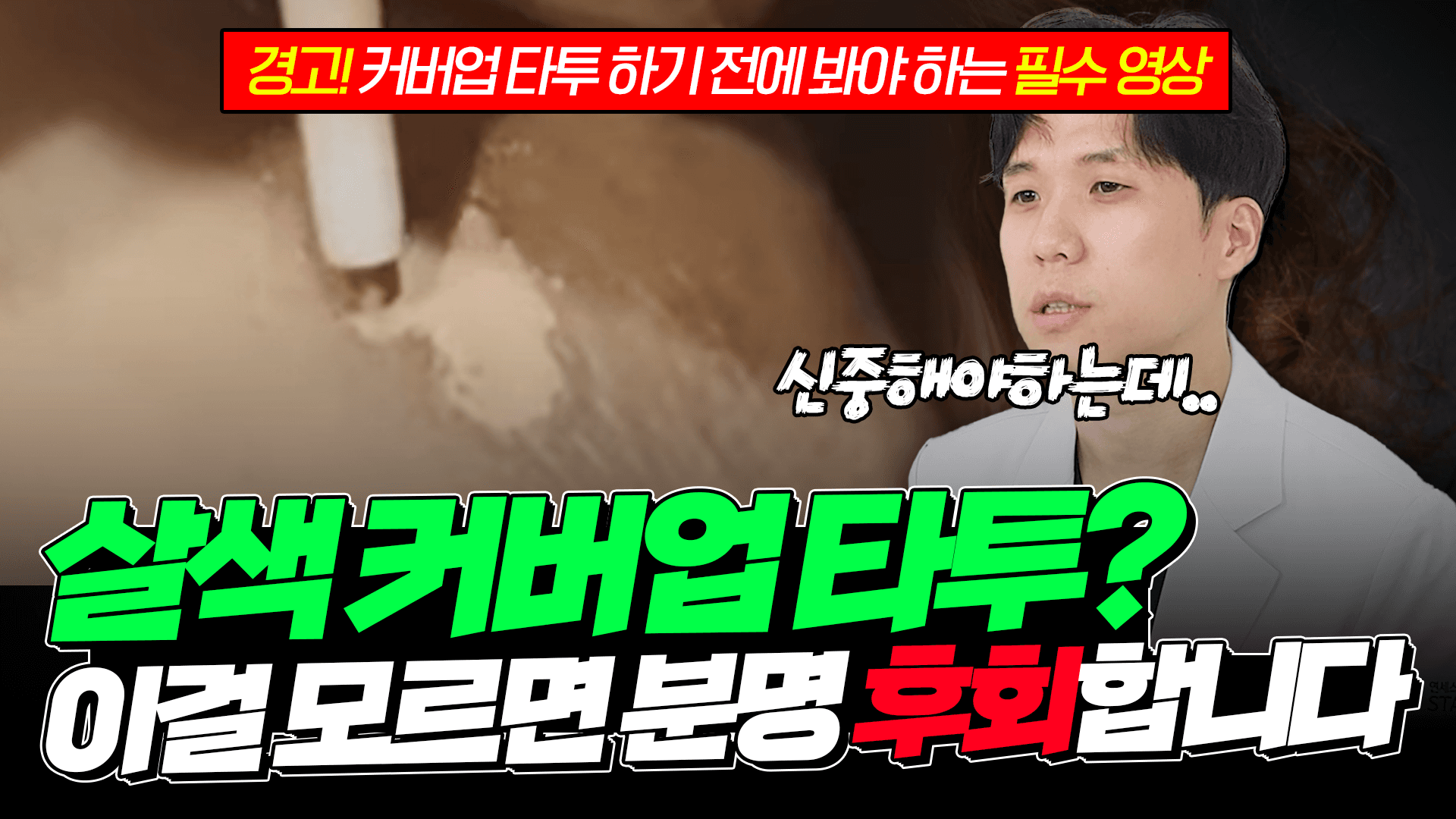
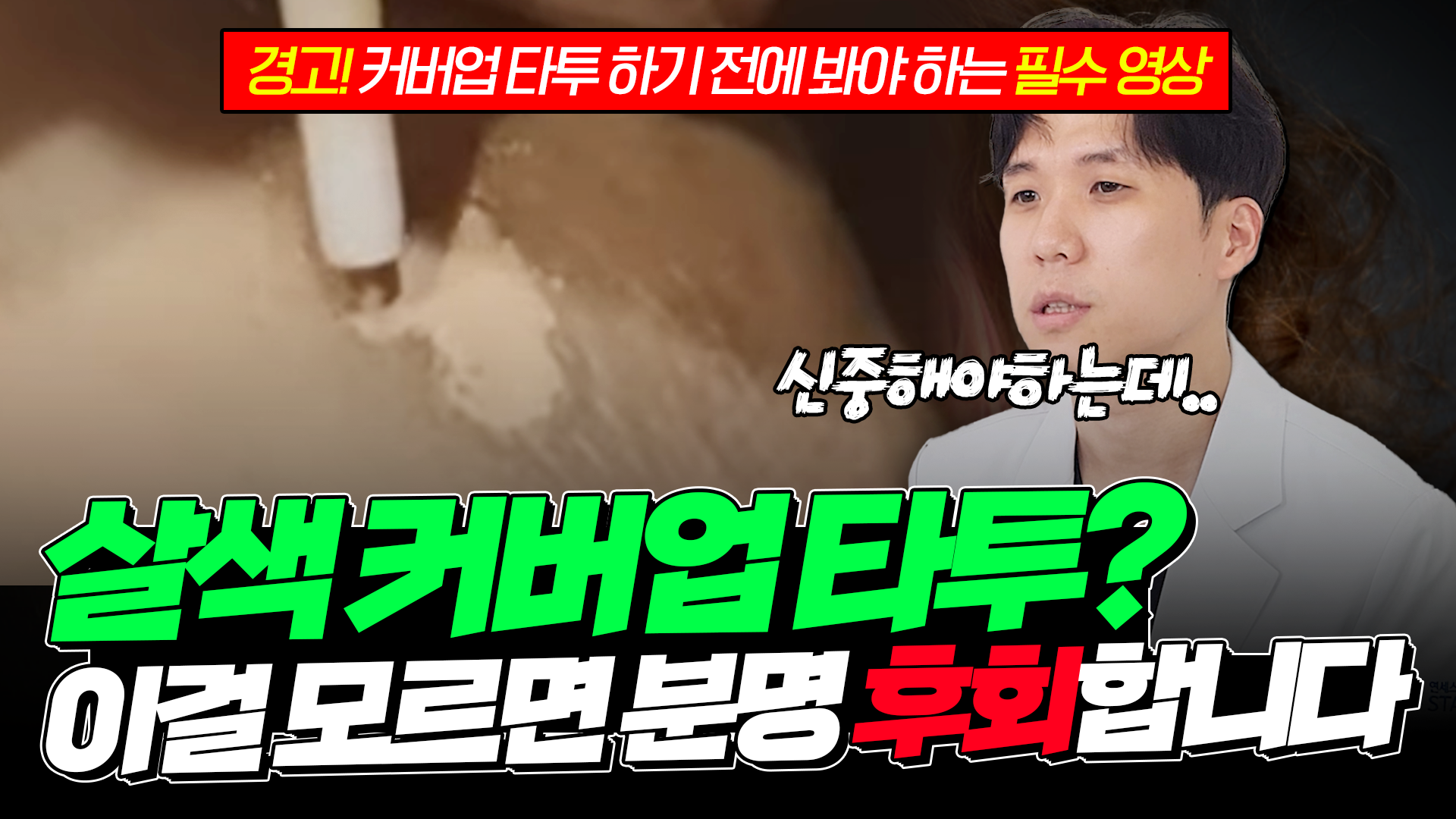
More people are trying to cover up concerns like scars or stretch marks with skin-colored tattoos. While melasma, stretch marks, dark circles, scars, and tattoos can be treated by dermatology clinics, some choose cover-ups due to the burden of repeated treatments.
We've compiled what you should know before getting a skin-colored cover-up tattoo.
Why it's difficult to perfectly match skin color
During the cover-up process, tattoo artists mix various colors to create a shade as similar to the skin color as possible. However, it's common for people to be dissatisfied after the procedure because the injected pigment doesn't match their skin tone.
When a skin-colored tattoo is applied over an existing tattoo, it often mixes with the original tattoo color, resulting in a blotchy appearance.
Even good results can change over time
Even if you received a cover-up from a highly skilled artist and it was initially unnoticeable, problems can arise.
Our skin color changes slightly with the seasons. Even if the results were good initially, many people regret it later as the covered area becomes noticeable over time.
Furthermore, skin-colored tattoos, which use a mixture of various pigments, may contain substances that can cause allergic reactions in certain skin types.
The most difficult color to remove
The time required for removal varies by color. The colors below take longer to remove.
| Order | Color |
|---|---|
| 1 | Blue, Black |
| 2 | Yellow, Red |
| 3 | Green, White |
| 4 | Skin-colored cover-up |
Skin-colored tattoos take a very long time to remove, even among colored tattoos. Many cases involve the pigment turning darker or green during the removal process, leading to a mottled appearance. Dozens of treatments may be necessary, and complete removal might not be possible.
Especially if a cover-up was done over an existing tattoo, it means pigment was layered over pigment, requiring a much longer period.
Proceeding to reduce treatment duration
Typical removal involves one laser irradiation per session, during which white bubbles appear over the tattooed area. The R-Zero Technique involves spraying a special PFD medication that eliminates these white bubbles.
- Up to four laser irradiations are possible per session.
- When combined with the Pinhole Technique (R-Zero Pinhole Method), faster removal effects can be achieved compared to conventional methods.
Detailed information can be found in the R-Zero Pico-Frectat Tattoo Removal guide and Pinhole for Burn & Surgical Scar treatment guide.
When trying to remove a bump, you end up with two
If you get a cover-up tattoo over a problem area like a scar or pigment and are dissatisfied with the result, you must first remove that tattoo. Only after the pigment is completely gone can the original problem area be treated. This significantly increases both treatment duration and cost.
If you have concerns about scars, pigmentary disorders, or stretch marks, we recommend receiving customized treatment for your symptoms from an experienced dermatologist. The treatment flow can be seen in the Tattoo Removal Treatment Guide, and any remaining pigmentation can be addressed with Pico·Dual·Gold-Diamond Toning.
If you are considering a cover-up, please contact us via chat before making a decision. Individual results may vary.

Authored and Medically Reviewed by Chief Director Dr. Lee Sang-joo (Dermatologist) Graduated from Yonsei University College of Medicine · Dermatology Resident at Severance Hospital Doctor of Medicine · Author of "Pigmentary System," "Medical Body Care" View Medical Staff Profile
First Published 2023-12-21 · Last Reviewed 2026-07-29
This article provides general medical information and does not substitute for individual diagnosis and treatment. Results and recovery may vary by individual.