


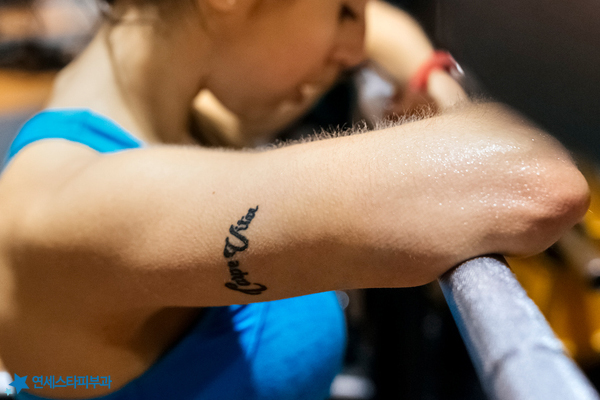
English initials, favorite phrases, unforgettable dates. Lettering tattoos, embodying individuality and meaning, are chosen by many.
However, when the time comes to remove them, many are surprised by how much more challenging it is than expected. Laser tattoo removal typically takes 1 to 2 years, and sometimes even longer, with the time commitment being a major drawback.
Let's explore why seemingly simple tattoos take so long and what methods can mitigate this disadvantage.

Three Challenging Conditions for Lettering Tattoos
| Condition | Significance in Removal Process |
|---|---|
| Fine, intricate lines | Pigment particles are densely concentrated within fine lines, requiring longer destruction time |
| Depth of black pigment | While laser reactivity is high, deeper dermal penetration necessitates multiple sessions |
| Tattoo artist's style | Varies in pigment injection depth and concentration, potentially extending the duration beyond expectations |
When pigment is concentrated in fine lines, the stimulation delivered to the surrounding skin tissue can also be relatively concentrated.

The Challenge of Previous Treatments Was Time
When a laser delivers energy to pigment particles, white bubbles appear on the skin surface.
While bubbles remain, laser light cannot properly penetrate the skin, making it difficult to treat the same area more than once consecutively within a single session.
Typically, tattoo removal lasers often require 10 or more sessions at 1 to 2-month intervals, and complete removal could realistically take several years. Increasing the intensity excessively, however, heightens the risk of skin damage and scarring, causing many to hesitate before starting treatment.

Re-opening the Penetration Pathway
A key aspect of R-Zero is addressing the bubble issue, which was previously a barrier to repeated treatments. After irradiating with a picosecond laser, a special medication is applied to the area to quickly remove the generated bubbles.
Once the bubbles disappear, the laser light's penetration pathway is re-secured, allowing for additional irradiation on the same day. Without excessively increasing intensity, one can expect an effect similar to multiple treatments in a single visit, which can help shorten the overall duration.
This method is particularly useful for tattoos requiring precise and concentrated approaches, such as lettering. More details are available in R-Zero Pico-Frectat Tattoo Removal, and you can compare device differences with Nd:YAG Tattoo Removal.
Not Applicable to All Cases Equally
The number of repeated irradiations and the applicability of the R-Zero method are determined by the medical staff based on skin condition and tattoo characteristics. Individual differences may exist, and sufficient consultation before treatment is necessary.
When considering scar burden, please also check Pinhole for Burn & Surgical Scar.
Variables to Adjust
R-Zero is a procedure that requires comprehensive adjustment of several variables:
- Timing of special medication application
- Interval between repeated irradiations
- Laser output settings
Not only the performance of the equipment but also the experience and competence of the medical staff who operate it correctly directly influence the results.
Approaching as a Medical Procedure
Tattoo removal is not merely a cosmetic procedure; it is a medical act that directly applies energy to skin tissue. We recommend undergoing the procedure at a medical institution with experienced, specialized medical staff.
You can view the treatment procedure in Tattoo Removal Treatment Guide, and if you're curious about the conditions of your tattoo, please leave a message via Chat Inquiry Now.
Authored · Medically Reviewed by Dr. Kang Jin-Moon, Chief Director (Dermatologist) Graduated from Yonsei University College of Medicine · Resident in Dermatology at Severance Hospital · Current Adjunct Professor, Department of Dermatology, Yonsei University College of Medicine Member of the Korean Society for Dermatologic Surgery · Member of the Korean Dermatological Association View Medical Staff Profile
First Published 2026-05-28 · Last Reviewed 2026-07-29
This article contains general medical information and does not substitute for individual diagnosis and treatment. Results and recovery progress may vary by individual.