

Low-temperature burn scars are surprisingly common with increased use of heating devices in winter. At first, they may seem minor and easy to overlook, but over time, they can leave marks. Do burn scars only result from major accidents? To answer directly, even low temperatures can lead to scars if the skin is stimulated for a long time.
Mini heaters, electric blankets, and hot packs used comfortably indoors or when going out help ward off the cold. However, caution is needed as prolonged contact with the same area can accumulate deep skin irritation, leading to low-temperature burns.
Why Low-Temperature Burns Should Not Be Taken Lightly
Often, even if there isn't a significant visible change immediately and it seems like it will quickly return to normal, it can leave scars over time. Especially in winter, minor and major burns occur frequently in daily life.
Low-temperature burns, where the skin is stimulated for a long time even at low temperatures, often progress without the person knowing. Since the sensation of heat is not strong, exposure time tends to be longer, making the damage more likely to be deep.

Stages of Burns: From First to Third Degree
Burns are categorized by the depth of skin damage.
| Classification | Depth of Damage | Characteristics |
|---|---|---|
| First-degree burn | Epidermis | Redness, can recover with prompt first aid |
| Deep second-degree burn | Beyond dermis | Blisters, deep wounds, high likelihood of scarring |
| Third-degree burn | All skin layers | Extensive damage, requires specialized treatment |
Minor irritations that can return to their original state with prompt first aid are classified as first-degree burns. However, if skin damage is deep, simple home first aid may not be sufficient, and it can lead to conditions like deep second-degree burn scars that leave lasting marks and require time for treatment.
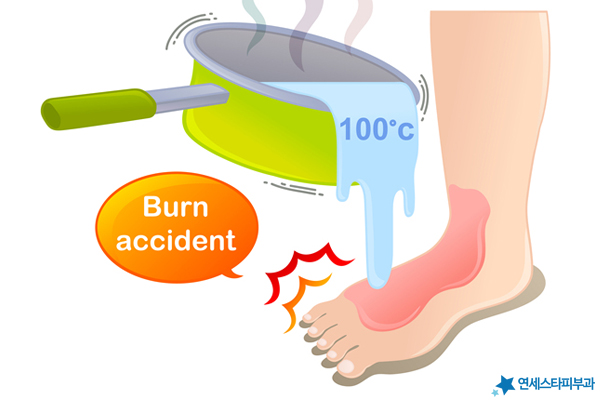
Why Deep Second-Degree Burn Scars Are Dangerous
From deep second-degree burns, where damage extends beyond the dermis, the likelihood of scarring increases. A key characteristic is that it doesn't just end with skin redness and increased temperature.
If the damage reaches the dermis, persistent pain, deep wounds, and blisters are likely to accompany it, and from this stage, the possibility of scarring should be considered.
At this point, it is advisable to take quick action to prevent additional inflammation through the wound and to combine appropriate laser treatment to improve burn scars.

Here's a summary of what to do in an emergency immediately after a burn:
- Cool the burned area sufficiently with clean running water.
- Do not intentionally burst blisters.
- Protect the wound area from contamination.
- If the damage is judged to be deep, do not rely solely on self-treatment; consult with medical staff.
If you're overwhelmed by burn scar management, it might be helpful to first look at The Progression and Treatment Direction of Burn Scars. Once you understand the stages of progression, you can comfortably ask any questions via Chat Consultation for Burn Scar Laser Treatment.
Laser Treatment Directions Vary by Stage
If the scar is still in its early stage and has not yet become a raised white scar, Vbeam Prima, a vascular laser, can be applied to address redness caused by vascular abnormalities and manage deep second-degree burn scars to prevent them from worsening.
Even if a burn scar has formed from an old accident, laser treatment is still possible. Gradual treatment can be continued using the Ultrapulse Alpha device, which enhances skin regeneration, and the Pinhole Technique, which has shown effectiveness in various scar treatments.
The Pinhole Technique involves creating microscopic holes in the affected lesion with a laser to boost regeneration. It is known for being relatively less affected by the thickness of the treated skin or the duration of burn scar formation. If redness is the primary concern, there are also connections to the approach discussed in Facial Redness and Redness Management.

Why Treatment Plans Differ for Each Scar
Treating burn scars takes a considerable amount of time. If the damage extends to the dermis, as in deep second-degree burn scars, even more time and effort are required.
In the examination room, the shape of the problematic lesion and skin condition vary from person to person, so the approach cannot be the same even for the same diagnosis. It is necessary to meticulously plan the choice of laser device, treatment intensity, and treatment cycle, considering these complex factors.
In some cases, other procedures may be applied in conjunction with laser treatment, and methods will be flexibly adjusted according to the improving situation during treatment. If the scar is depressed or raised, Surgical Scar Revision may also be considered.
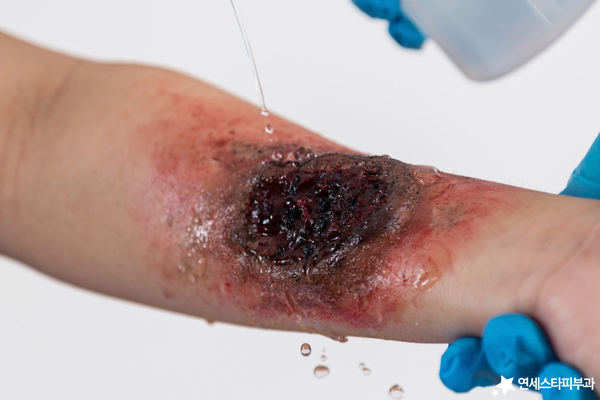
Home Care to Enhance Treatment Effectiveness
When treating burn scars, the choice of clinic and home care can both influence the speed of improvement. As regular laser treatment can easily dry out the skin, it's important to pay attention to daily care.
- Consistently moisturize to maintain a stable skin barrier.
- Thoroughly apply sunscreen to reduce the possibility of pigmentation.
- Do not scratch or irritate the treated area.
- Adjust the treatment cycle and home care methods according to medical staff guidance.
When clinic treatment and home care go hand in hand, you can expect a synergistic effect of treatment while minimizing side effects like pigmentation. However, individual differences in improvement may exist, so if you're curious about the right approach for your scar, try Chat Consultation for Home Care and Treatment Cycle.
Deep second-degree burn scars, which involve damage to the dermis, require a gradual, step-by-step approach over time. The key is to create a plan tailored to the scar condition and skin type, starting with redness management in the early stages and adding lasers that boost regeneration for established scars.
Chief Director Lee Sang-Joo (MD, PhD, Yonsei University College of Medicine and Graduate School, Completed Dermatology Residency at Severance Hospital, President of the Korean Society for Dermatology) Chief Director Lee Sang-Joo's Profile First Published 2026-02-03 / Last Reviewed 2026-06-16
This content is for general information purposes only, and treatment results and progress may vary individually. Accurate diagnosis and treatment direction must be confirmed through face-to-face consultation with medical staff.