


Tattoos are completed in a relatively short time. However, the removal process can take longer than expected. This is especially true for large tattoos on extensive areas like the entire arm, back, or calf.
With advancements in laser technology, large tattoo removal has become a sufficiently viable treatment. However, there are some points worth considering before starting, which we will discuss together.

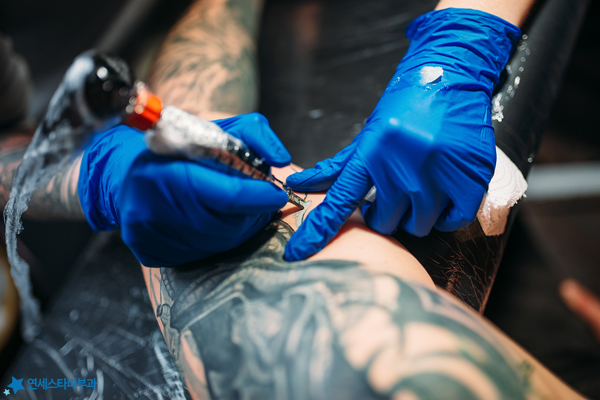
How Ink Disappears
Tattoo removal works by using a laser to break down the ink injected into the skin into tiny particles, which are then absorbed by macrophages in the body, gradually fading the tattoo.
The challenge is that the ink is deeply injected into the dermal layer of the skin. During the removal process, laser energy must penetrate the skin surface to reach the pigment at that depth.
For large tattoos, there's an additional consideration: if a wide area is treated at once, skin irritation can increase, so appropriate energy control and treatment intervals must be considered together.

The Meaning of Using Multiple Wavelengths
Various lasers are used for tattoo removal, and equipment continues to evolve. Recently, pico lasers, which deliver pulses in picosecond units, are widely utilized. This method delivers strong energy in a shorter time than traditional nanosecond lasers, finely breaking down pigment.
PicoWay is one such pico laser. The wavelengths it uses are as follows:
- 532nm
- 730nm
- 785nm
- 1064nm
Being able to use these different wavelengths allows for efficient application not only to black ink but also to some colored tattoos. Equipment configurations can be checked for R-Zero Pico-Frectat Tattoo Removal and Nd:YAG Tattoo Removal respectively.

Variables Considered When Making a Plan
In summary, the range of tattoos that can be removed more quickly and safely with equipment has expanded. Large tattoos with multiple colors take a long time and are complex, but the performance of the laser contributes to shortening that process.
Tattoo removal is a treatment performed over multiple sessions, not just one. Intervals are set to allow for recovery after laser treatment, and the entire process may be longer for larger tattoos.
| Consideration Factor | Impact on Plan |
|---|---|
| Overall size | Scope to cover in one session and total number of sessions |
| Depth and density of pigment | Conditions for energy to reach |
| Color composition | Necessary wavelengths and approach |
| Skin type and sensitivity | Degree of tolerance to irritation |
| Treatment interval | Time allowed for recovery |
These factors must be combined comprehensively to establish a treatment plan.

Technique for Removing Bubbles
During tattoo removal procedures, the R0 technique may also be utilized. When a tattoo is treated with a laser, a white bubbling phenomenon occurs on the skin surface, which can temporarily interfere with laser penetration.
The R0 technique rapidly removes these white bubbles with a special medication, allowing for multiple laser passes in a single session.
Many people worry about scarring if the laser passes multiple times, as skin irritation also increases. However, scarring is influenced more by the treatment method and skin condition than simply the number of passes. For scar management, please refer to the Pinhole for Burn & Surgical Scar treatment guide.

Confirm and Start with Consultation
Large tattoo removal often involves extensive areas and high pigment density, making the treatment plan more crucial than for regular tattoos. The treatment method and duration may vary depending on the tattoo's condition and skin type.
We recommend accurately assessing the size, color, and depth, then consulting thoroughly with medical staff to establish the equipment, procedure, and plan before starting. The consultation process is outlined in the Tattoo Removal Treatment Guide, and any questions can be answered by chatting with us now.

Authored and Medically Reviewed by Chief Director Dr. Lee Sang-Joo (Dermatologist) Graduated from Yonsei University College of Medicine · Dermatology Resident at Severance Hospital · Ph.D. in Medicine from Yonsei University College of Medicine Graduate School Currently Adjunct Professor, Department of Dermatology, Yonsei University College of Medicine · Author of Medical Skincare, Medical Bodycare View Medical Staff Profile
First published 2026-03-09 · Last reviewed 2026-07-29
This article contains general medical information and does not substitute for individual diagnosis and treatment. Results and recovery progress may vary by individual.