
Many people think that old tattoos, with their faded colors, might be harder to remove. However, the opposite is true.
As time passes, tattoo pigments gradually fade and the pigment particles in the skin decrease, making it often easier to remove older tattoos.
There's no need to give up just because it's old. What's more important is where and how you safely remove it.

Equipment for Pigment Treatment
PicoWay Laser finely breaks down pigment with short wavelengths and fast pulse speeds. This is why it can achieve removal speed while minimizing skin damage.
It evenly treats pigment even in faded old tattoos, leading to high satisfaction. You can see the equipment configuration in the R-Zero Pico-Frectat Tattoo Removal guide.
Method of Increasing Irradiation Sessions
Recently, the R-Zero Technique, which improves upon existing limitations, is used concurrently. It allows up to 4 laser irradiations per session, which can help reduce treatment duration.
The Pinhole Technique creates microscopic holes to lower the risk of scarring, leading to faster skin recovery and fewer concerns about side effects. The principle is explained in the Pinhole for Burn & Surgical Scar treatment guide.
Anesthesia System for Pain Management
Tattoo removal involves treating pigments deep within the skin, so pain may be accompanied. Therefore, a safe anesthesia system for pain relief is important.
| Anesthesia Method | Procedure | Features |
|---|---|---|
| Topical Anesthetic Cream | Anesthetic applied to skin surface | Basic pain relief |
| Cold Air Cooling | Cold air sprayed on treatment area | Reduces skin temperature to decrease pain |
| Non-sleep Nitrous Oxide | Administered while conscious | Relieves both fear and pain |
Non-sleep nitrous oxide is considered a safe sedation method. The ability to communicate with medical staff during the procedure, allowing for precise laser treatment, is also an advantage.
If you are concerned about pain, check if the clinic offers safe anesthesia options like non-sleep anesthesia with nitrous oxide and air cooling.

Where Results Differ Even with the Same Equipment
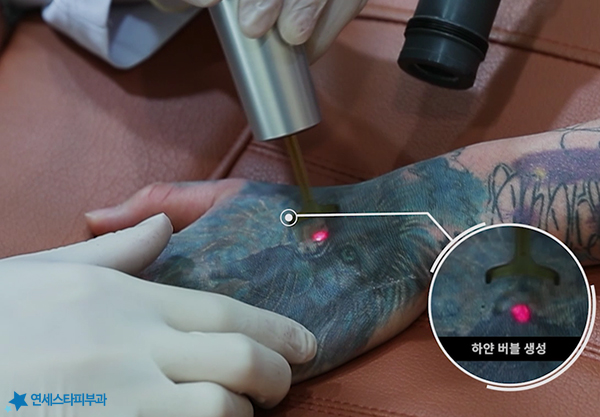
Even with the same PicoWay Laser, results can vary depending on the medical staff's proficiency, as there are many variables to adjust:
- Skin type
- Type of tattoo pigment
- Depth of pigment penetration
Adjusting laser intensity and irradiation intervals delicately according to these factors leads closer to clean results without scarring. If the procedure is performed directly by an experienced specialist, side effects such as blisters or pigmentation can be minimized.
In Summary
For faded, old tattoos, meeting appropriate laser equipment, an anesthesia system, and a skilled practitioner can lead to noticeable changes even in a short period. Individual results may vary.
Tattoo removal is not just about pigment removal; it's a procedure that requires consideration of skin health and safety. You can check the overall treatment flow in the Tattoo Removal Treatment Guide, and if you have any questions, please leave them via Chat Now.

Authored and Medically Reviewed by Representative Director Dr. Jinmoon Kang (Dermatologist) Graduated from Yonsei University College of Medicine · Completed Dermatology Residency at Severance Hospital · Former Professor at Bundang CHA Hospital Currently Adjunct Professor, Department of Dermatology, Yonsei University College of Medicine · Member, Korean Society for Medical Lasers View Medical Staff Profile
First Published 2025-10-29 · Last Reviewed 2026-07-29
This article contains general medical information and does not substitute for individual diagnosis and treatment. Results and recovery may vary individually.