

A burn is not just a superficial skin injury; it can extend damage to the dermal layer beneath. If you thought a burned area had healed but are left with red marks, indentations, or color changes, your first question might be, "Will this become a scar if left as is?" To answer directly, it is reported that the earlier medical professionals begin managing skin changes caused by burns, the more the degree to which they solidify into scars can be reduced.
In this article, we will systematically explain why burn scars form, what signs indicate the progression of burn scars, and how clinics approach treatment.
Why Burn Scars Differ from Simple Wounds
Burns often don't just involve superficial peeling but also deform collagen and elastic fibers in the dermis. If damaged tissue heals with collagen haphazardly arranged, it can change color over time and easily result in bumpy or hardened scars.
Especially if symptoms like blisters, oozing, redness, color changes, and indentations appear together, it may be a stage difficult to recover from with natural healing alone. This is even more true for deep second-degree burns where the burn depth has affected the dermal layer.
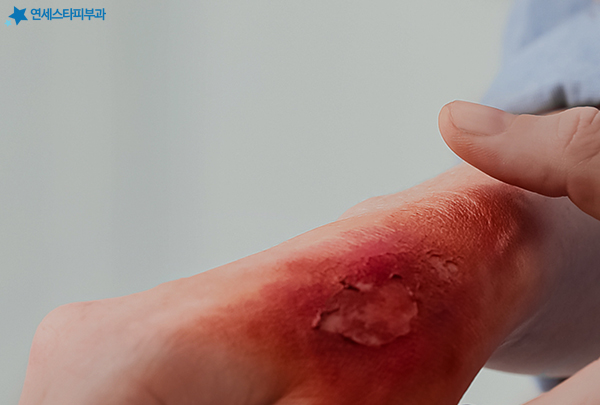
Burns often damage not only the skin's surface but also the dermal layer beneath, and recovery patterns vary depending on depth and form.
We Recommend Consultation if You See These Signs
In the clinic, many people visit late, observing changes after the burn has somewhat healed rather than immediately after the burn. If the following signs persist, it may be progressing into a scar rather than a simple wound, requiring attention:
- If blisters or oozing do not subside for a long time
- If redness in the burned area persists for several weeks or more
- If the skin surface is indented or feels hard and lumpy to the touch
- If color changes (hyperpigmentation or dullness) different from the surrounding skin remain
- If the scar appears more prominent over time
Since skin damaged by burns is not just a surface problem, we determine the approach by considering both the depth of the damage and the form of the scar.
How to Approach Deep and Old Scars
For deep and old chronic burn scars, high-output lasers such as StarLux or Ultrapulse Alpha are utilized. They deliver strong energy deep into the dermal layer in a short time, helping regenerate damaged skin tissue and smoothing uneven skin texture.
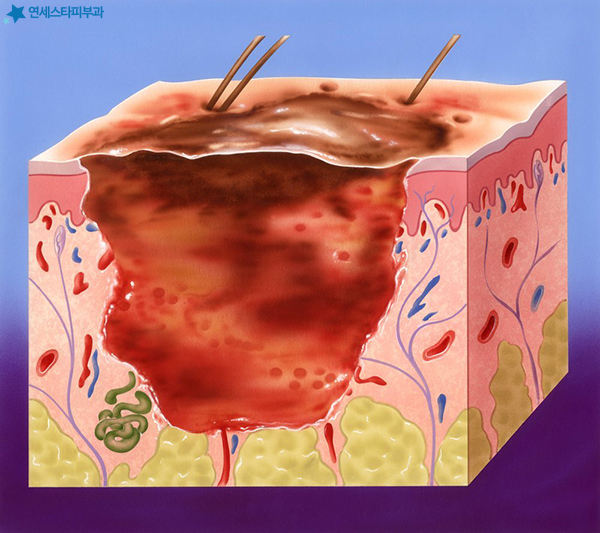
Especially by using the Pinhole for Burn & Surgical Scar to create microscopic holes at regular intervals in the skin, hardened scar tissue gradually loosens, inducing natural restoration. Since it is not a method of widely ablating the skin, the recovery burden is relatively low, and improvement in skin texture can be expected. If the scar is deep or extensive, Surgical Scar Revision may also be considered.
If you have any questions, you can easily ask them via chat consultation about burn scar treatment directions.
Redness and Pigmentation Are Addressed Separately
For prolonged redness after a burn, the Vbeam Prima laser, which selectively acts on blood vessels, is used. It stabilizes dilated blood vessels in the skin, helping to calm red marks and inflammation, and even out skin tone. For early-stage scars, Vbeam Prima-centered management can help prevent worsening. Persistent redness in the burned area shares a similar treatment principle with V-beam Facial Redness Treatment.
If the skin appears dull or mottled even after recovery, residual melanin pigment may be present. In such cases, combining PicoWay Laser Toning to clear the pigment can help restore an even tone. PicoWay selectively targets pigment with short pulse durations, allowing for pigment improvement with reduced burden on surrounding tissue.
| Remaining Scar Type | Primary Focus |
|---|---|
| Deep, hardened indentations | Ultrapulse Alpha, Pinhole for Burn & Surgical Scar |
| Persistent redness | Vbeam Prima |
| Dullness, hyperpigmentation | PicoWay Laser Toning |
Since the depth and form of scars vary for each individual, whether to apply a method alone or in combination is determined after diagnosis.
Why Is Starting Early Important?
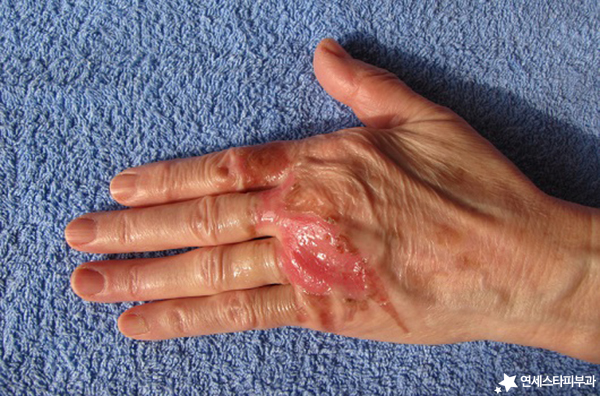
Burn scars tend to harden and deepen in pigmentation over time. Therefore, it is reported that starting treatment in the early stages of redness or discoloration can reduce the extent to which a scar sets in.
Under the diagnosis of medical professionals, combining Ultrapulse Alpha, Vbeam Prima, and PicoWay according to the scar condition can address skin texture, pigmentation, and elasticity together. Ultimately, the important thing is to start at a place that can meticulously identify the problem and determine which laser to use and how.

Even seemingly minor everyday burn accidents can lead to noticeable scars, causing considerable stress for many. Once a scar has formed, natural healing has limitations, and some people give up on treatment and live with their scars.
Management to Consider During Recovery
To maintain the treatment effect for a long time, daily care is also important. We recommend taking care of the following:
- Consistently use sunscreen during the recovery period to reduce hyperpigmentation
- Do not scratch or pick at the burned area arbitrarily
- Moisturize sufficiently to reduce dryness and irritation
- If scar changes are observed, consult with medical professionals rather than self-diagnosing
With the Pinhole Technique or a combination of lasers tailored to the situation, even old burn scars can expect natural improvement, so please do not give up on the problem and approach it step by step in a safe environment.

If it's difficult to gauge what stage your scar is in or which method is right for you, try using burn scar consultation chat.
We will return with more information to help you maintain clean and healthy skin. Thank you.


Chief Director Dr. Sang-Joo Lee (MD, PhD, Yonsei University College of Medicine and Graduate School; Dermatology Resident, Severance Hospital; President, Korean Dermatological Association) Chief Director Dr. Sang-Joo Lee Profile First published 2025-10-21 / Last reviewed 2026-06-16 This article provides general information, and as scar patterns and recovery processes can vary individually, please consult with medical professionals for an accurate diagnosis and treatment plan.