
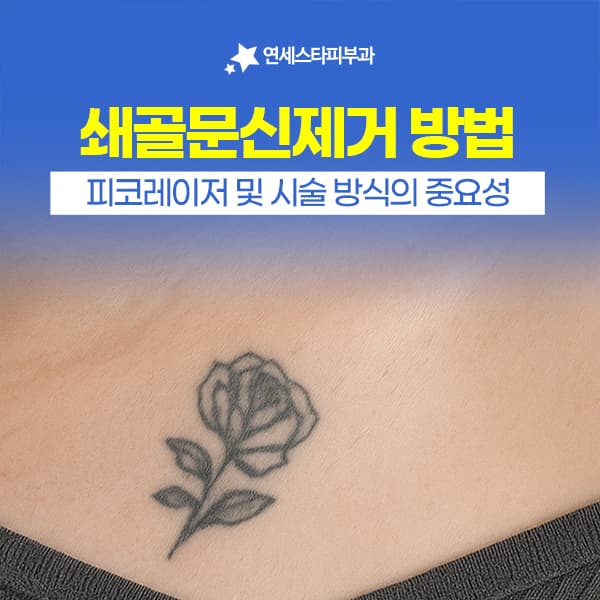
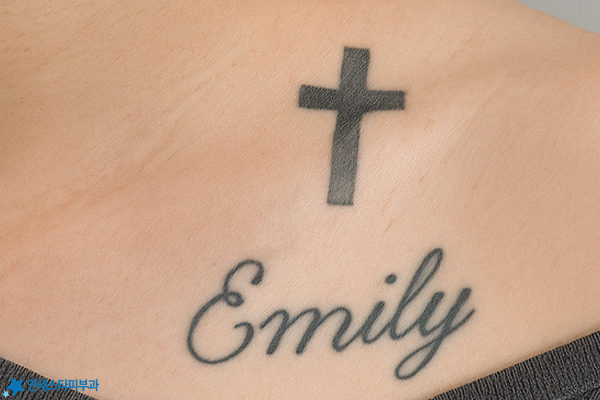
The clavicle is a popular spot for delicate lettering or small designs, as it is naturally exposed between the collarbones.
There is also a steady increase in people considering removal due to life changes like employment or marriage, or faded designs.
However, the clavicle is considered an area that requires particular caution during laser procedures on the body.
First, there is almost no fat layer to cushion the area
The clavicle area has very thin subcutaneous tissue, and the bone is immediately palpable.
While a thick fat layer can cushion laser energy to some extent, the clavicle has almost no such layer. Energy is delivered more directly to nerves and tissues.
This is the biggest reason why tattoo removal pain feels stronger in this area than in others.
Second, sensory nerves are densely packed
The area around the clavicle has a dense distribution of sensory nerves.
Even small stimuli can cause strong sensations of foreignness, stinging, and tingling, making it feel much more sensitive even at the same output.
Third, frequent movement slows recovery
The tension in the skin around the clavicle constantly changes with every movement of the shoulders and arms.
Even after the procedure, daily movements cause repeated irritation, requiring more attention to recovery management than other areas.
Fourth, ink often settles deeply
Due to the thin skin layer, the ink may be located deep within the dermis during the tattooing process.
Even for small mini tattoos, if the pigment is deep or dense, the number of sessions may increase more than expected.
| Factor | Characteristics observed in the clavicle |
|---|---|
| Cushioning layer | Almost no fat layer |
| Nerves | Dense sensory nerve distribution |
| Movement | Tension changes with shoulder and arm use |
| Ink | Often located in the deep dermal layer |
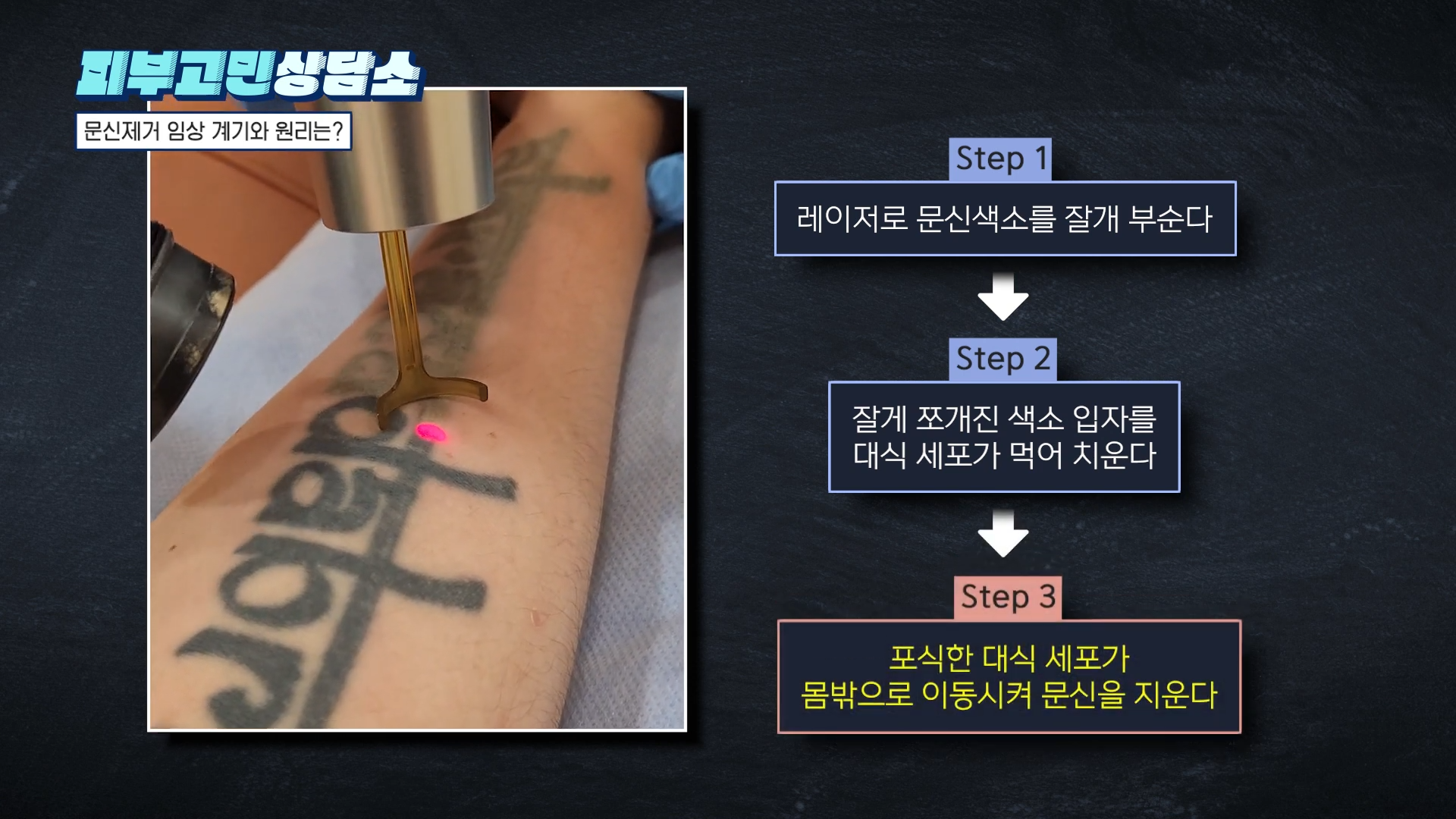
Therefore, the approach differs
Because these four factors overlap, it is difficult to proceed with the same output and interval as other areas.
- Pain management must be included in the treatment plan.
- Rather than increasing the output to reduce the number of sessions, it is safer to adjust the intensity and approach it in stages.
- A period is needed to reduce shoulder use and irritation after the procedure.
This is why it is difficult to consider it a simple procedure, even if the size is small.
In summary
Clavicle tattoo removal is determined more by the characteristics of the area than by its size. The thin skin layer, dense nerves, frequent movement, and deep ink all affect pain, recovery, and the number of sessions.
Since the depth and density of your tattoo, as well as the appropriate output and interval, must be determined through direct consultation, please use Consult about the removal direction suitable for my tattoo via chat.
This article was reviewed by Dr. Lee Sang-joo (Dermatologist), the chief director. He leads Yonsei Star Dermatology Sinchon and will serve as the president of the Korean Dermatological Association in 2026. First published 2026-08-12 · Last reviewed August 16, 2026
This content provides general medical information, and individual differences in condition and treatment response may occur. Please decide on treatment and methods through consultation.