
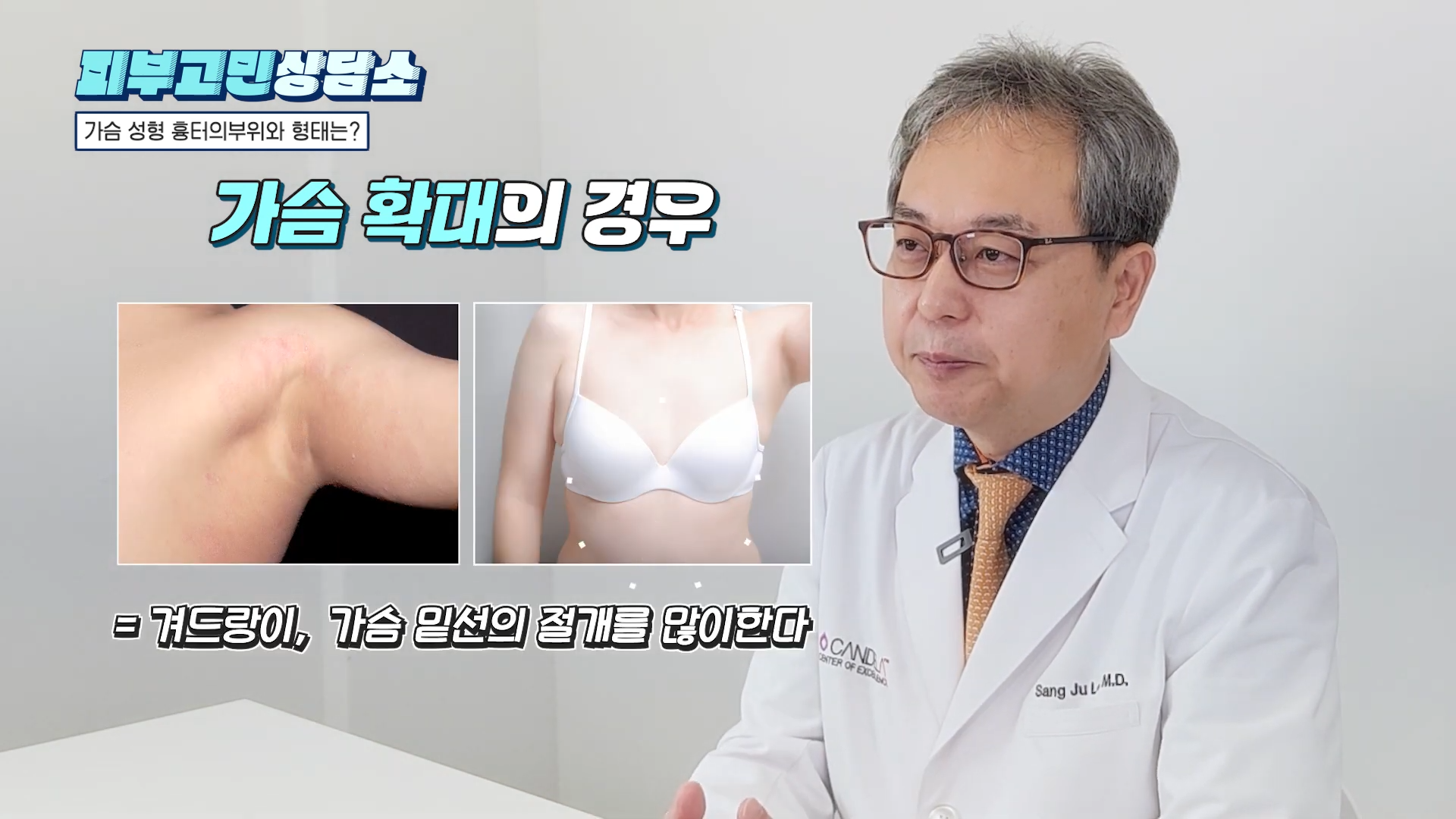
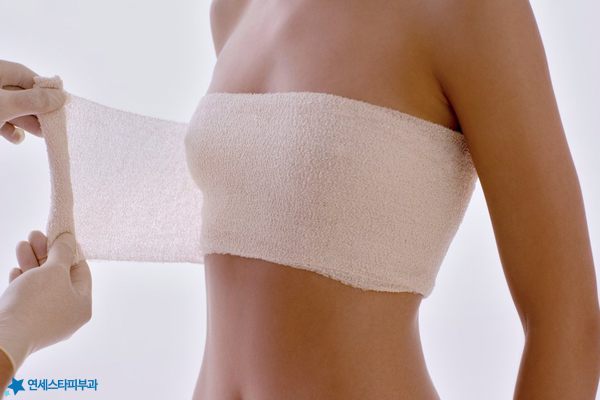
Breast augmentation surgery is performed by making incisions in areas that are as inconspicuous as possible, such as the armpit or the inframammary fold. However, even with meticulous suturing, it is not uncommon for red marks or raised lines to remain at the incision site.
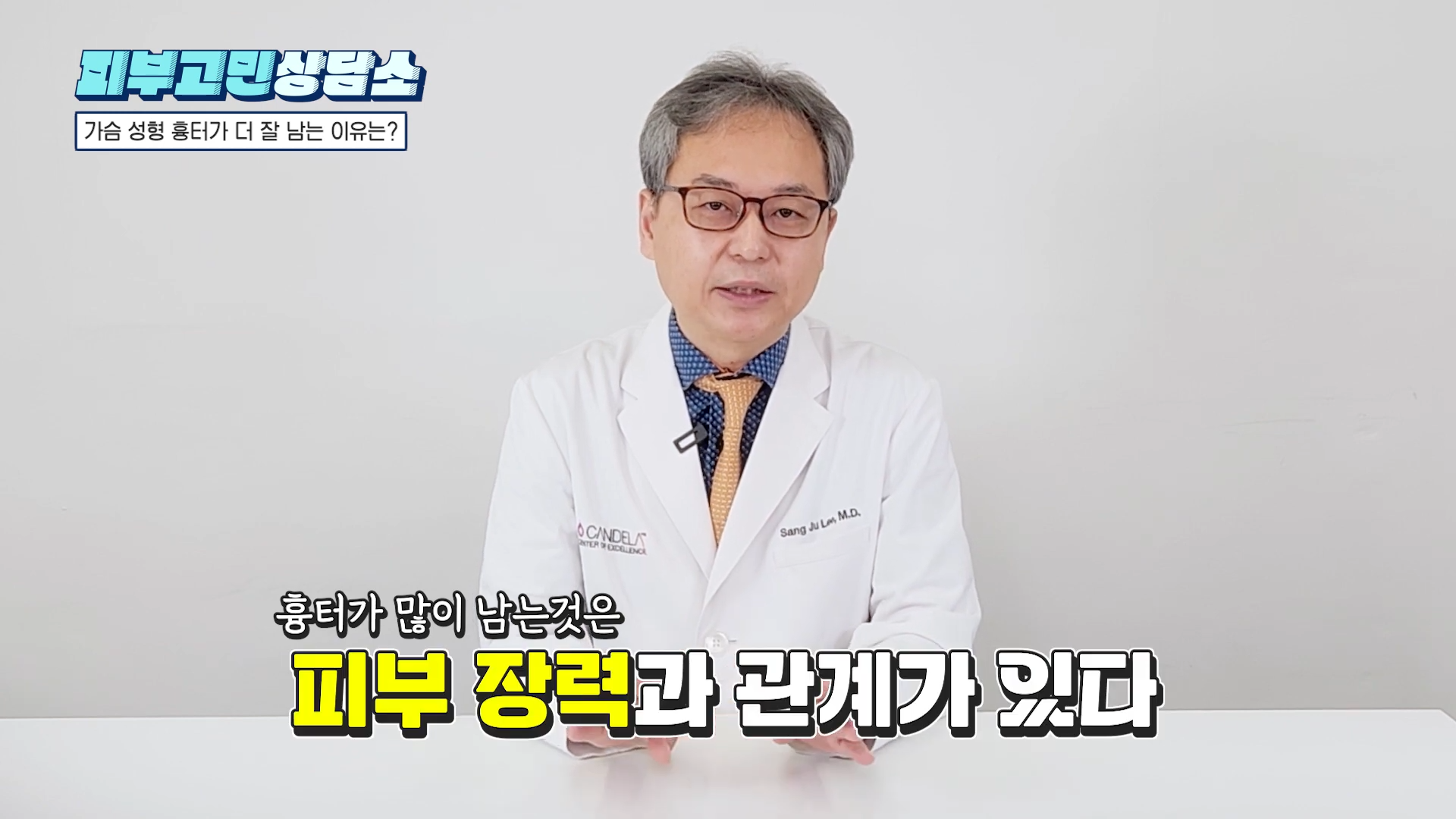
Reasons for Scars Remaining at the Incision Site
The reason is the skin's 'tension'. Tension is the force by which the skin pulls or is pulled. When an implant is inserted, its weight and size increase, causing the surrounding skin to be continuously stimulated by pulling. Tension acts more strongly in areas with a lot of movement, which is one of the main reasons why breast augmentation scars tend to form easily. Especially in summer or when wearing revealing clothing, there is a high concern about visible scars, leading to increased interest in post-surgical scar management.
Timing to Start Treatment
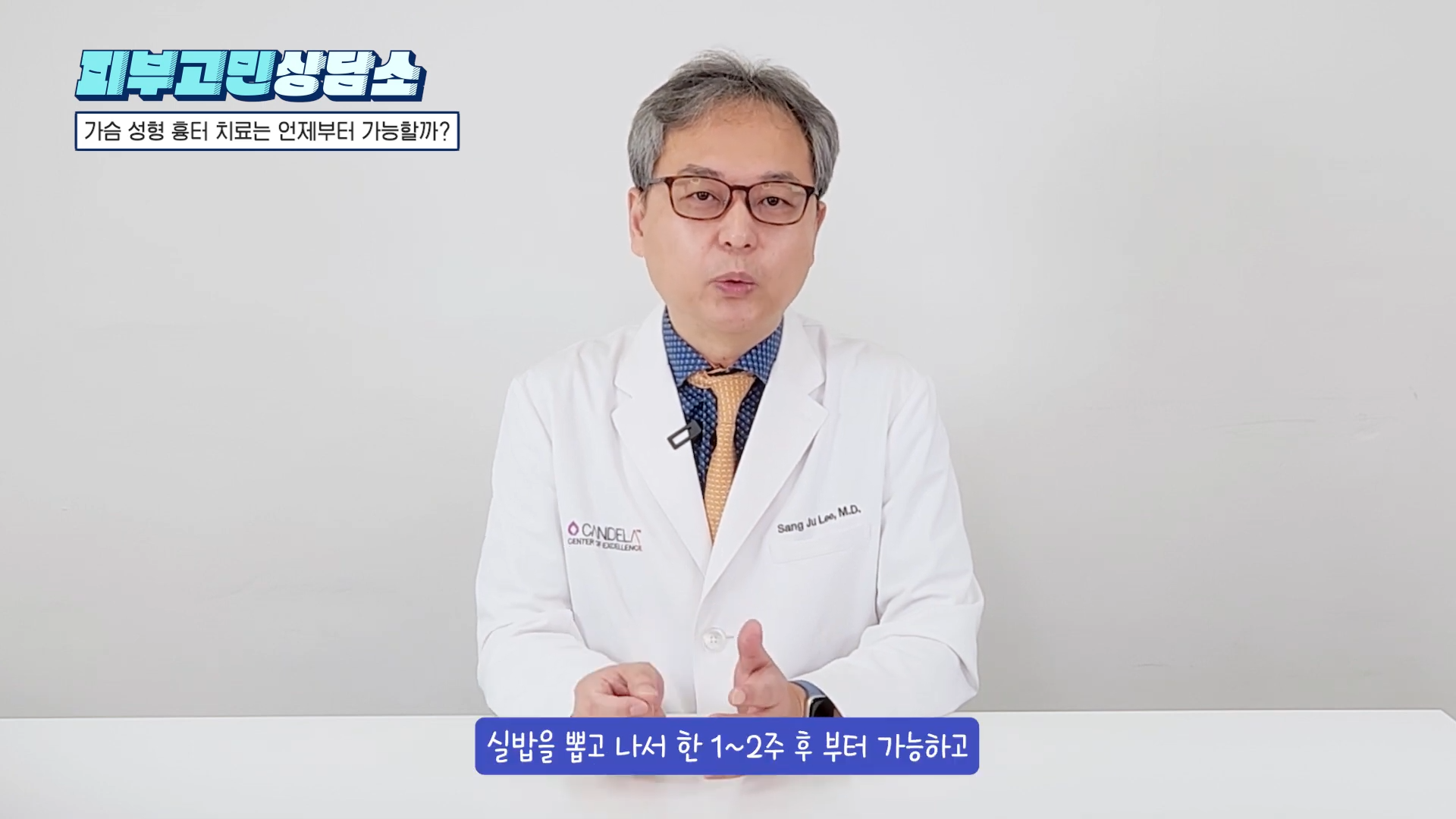
Immediately after surgery, the wound is not yet healed, so it is difficult to start laser treatment right away. Breast augmentation scar treatment can generally begin 1 to 2 weeks after suture removal, and this period is the optimal time for early scar management.

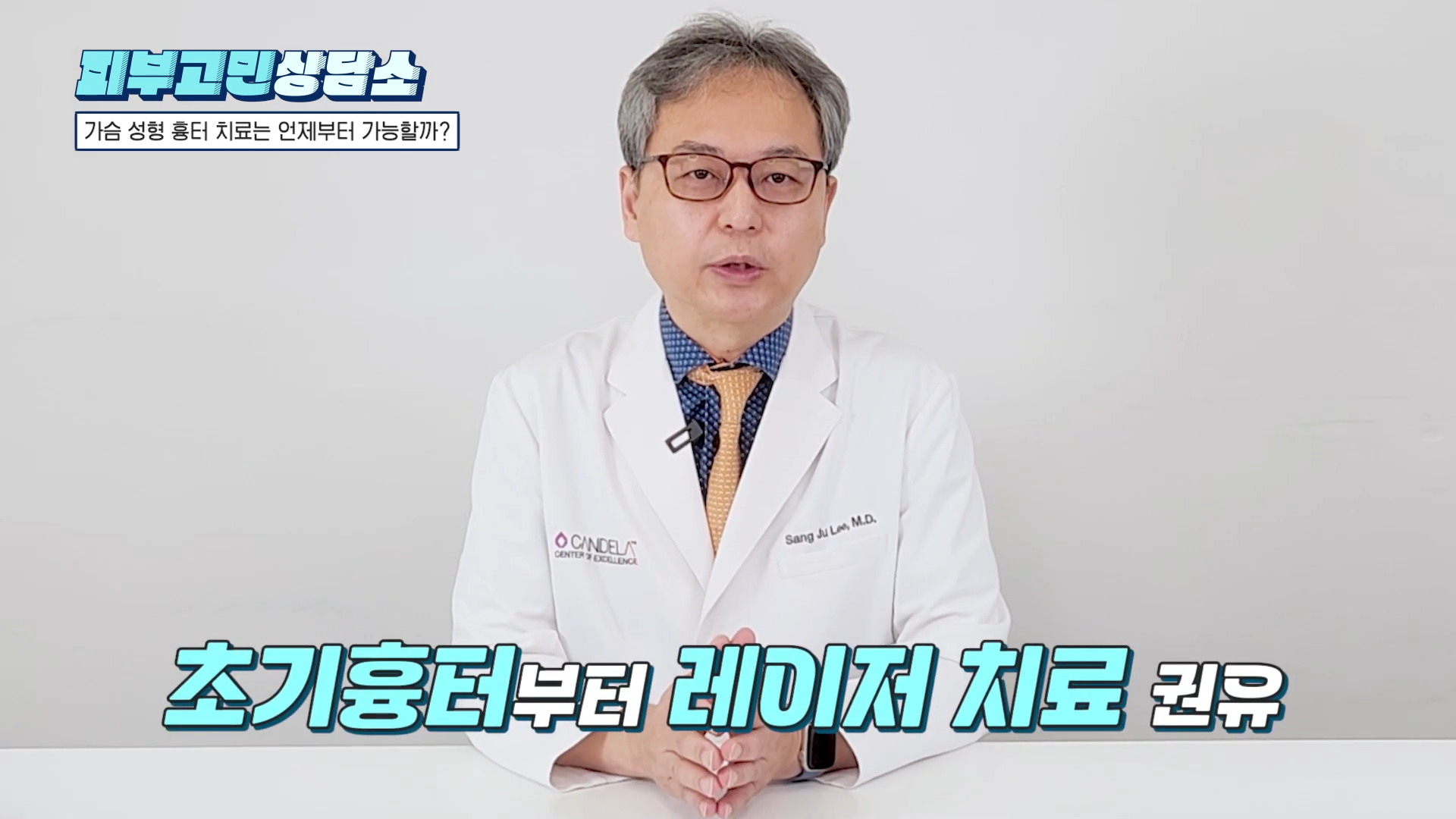
Scar treatment is more advantageous the earlier it begins. If treatment starts in the early stage when the scar is still red, it can be approached before the scar thickens or hardens into a white color, making it more effective. Conversely, if this period is missed and the scar is fully established, the treatment period tends to be longer. However, this is a general guideline, and the timing of treatment may vary depending on the individual's recovery status and scar formation pattern. It is important for a dermatologist to directly assess the scar condition to determine the precise timing.
Breast surgery scars appear in various forms depending on their shape, time of occurrence, and individual constitution. Choosing the appropriate treatment method for each type is key to achieving optimal results.
Treatment Methods by Type
Red Line Scars: Vbeam Prima (Vascular Laser)
If the incision site still appears as a red line in the early stage, a vascular laser such as Vbeam Prima is used. The laser wavelength selectively acts on hemoglobin in the blood vessels, helping to organize excessively proliferated or expanded blood vessels and reduce redness. The treatment time is short and recovery is relatively fast, making it less burdensome for early breast augmentation scar management.
Old Line Scars: Pinhole Technique The Pinhole Technique is effective for breast surgery scars that have hardened into a white color or become raised lines over time. Using a regenerative laser, microscopic holes are created densely on the scar surface, which helps to relax the clumped fibrous tissue and activate skin regeneration. It is characterized by being performed without incision or suturing, thus avoiding additional scar marks. Through repeated treatments, gradual changes are observed, leading to natural improvement without concerns about additional scarring.
Even old breast augmentation scars can be treated with lasers. However, it is more realistic to approach treatment with the goal of improving them to be as inconspicuous as possible, rather than completely eliminating them. Since the treatment period and number of sessions vary depending on the duration, size, depth, and individual constitution of the scar, consultation with a specialist should precede.
Keloid Scars: Combined Vascular Laser + Triamcinolone Scar Injection In individuals with a keloid constitution, post-surgical scars can develop into thick, raised forms extending beyond the original incision area. Previously, steroid injections were primarily used to reduce the height, but this method had limitations as injections alone did not significantly reduce the likelihood of recurrence.
Recently, a combined treatment approach that uses steroid injections along with lasers to improve abnormal blood vessels has been widely utilized. This method reduces scar height with injections and precisely stimulates scar tissue with lasers to reduce the possibility of recurrence.
Why Reoperation is Not the Answer
Some people might think that undergoing reoperation to remove breast augmentation scars would be more effective. However, reoperation for scar removal involves another incision and suturing, which carries the risk of creating new scars. In contrast, laser treatment can directly access scar tissue without incision, allowing for treatment without concerns about additional scar formation.
For breast augmentation scars, it is more advantageous to start treatment quickly in the early stages. At this point, it is crucial to carefully check the condition that needs to be addressed and choose the appropriate plastic surgery scar treatment for the type. We recommend establishing an accurate assessment and customized treatment plan through thorough consultation with a dermatologist.
In Summary
Early stages are more advantageous, so please check your condition and treatment plan through consultation.
Author · Chief Director Lee Sang-joo (Dermatologist) As the Chief Director of Yonsei Star Dermatology Sinchon, he has long specialized in pigment and scar treatment. He will serve as the President of the Korean Dermatological Association in 2026 and is an adjunct professor at the Department of Dermatology, Yonsei University College of Medicine. His clinical history can be found in his profile. · Last reviewed August 6, 2026
This article provides general medical information, and treatment methods and results may vary depending on the condition of surgical scars and individual skin characteristics. Please consult a dermatologist for an accurate diagnosis and treatment plan.