

Keloid scars are changes where the skin, during the healing process, hardens and swells beyond its original boundaries. The first question many patients ask in the consultation room is often, "I've been consistently applying ointment or getting injections, so why isn't it shrinking?" To answer directly, keloids are scars that are difficult to flatten with just one method.
When the skin is damaged, our body undergoes a self-healing process over time. Usually, a scab forms, a faint mark remains, and then it flattens out. However, in some cases, the mark gradually grows larger or rises above the surface. The uneven surface and different color from the surrounding skin are not only aesthetically bothersome, but if the size increases, it can become uncomfortable in daily life.
Why do keloids rise?
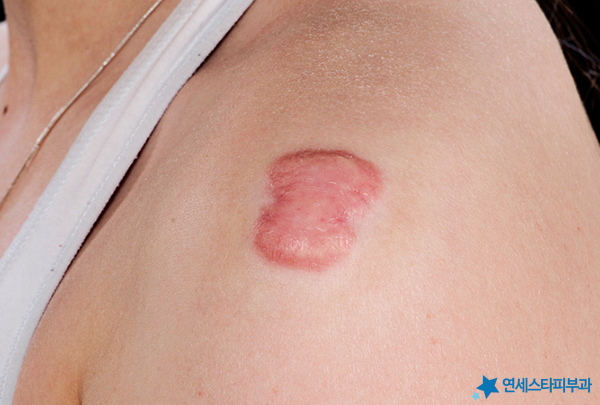
Keloids appear as raised bumps due to excessive collagen production during the healing process of damaged areas. They are not limited to specific injuries and can be caused by various stimuli such as burns, surgery, or acne.
Especially in cases of deep wounds like surgery, the body's regenerative process is more active, which increases the possibility of abnormal collagen proliferation leading to problems. This means that even with the same stimulus, the outcome can differ depending on how the healing process progresses.
Keloids are scars that grow beyond the original wound area, and it is difficult to conclude that they will disappear on their own over time.
Is it only a matter of constitution?

Keloids are often easily perceived as a problem that only affects people with a genetic or constitutional predisposition. It is true that if parents have a keloid constitution, their children are more likely to develop them.
However, this does not apply 100 percent of the time. As environmental changes in hormones or the immune system can alter one's constitution over time, there is a possibility that keloids that were not present before may suddenly appear later. It is often difficult to accurately determine if one has such a special constitution before sustaining an injury, leading many to seek medical attention belatedly.
Where do they commonly occur?
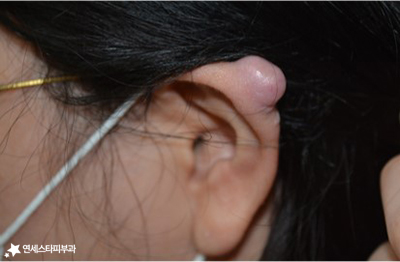
Keloids can start in surprisingly diverse locations. In the consultation room, it's not uncommon to see cases where they started from minor stimuli and then swelled up. Here are some typical examples:
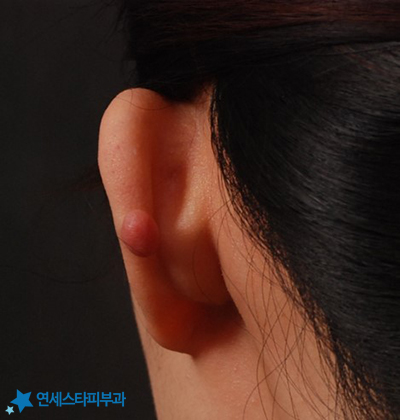
- Cases where a lump forms at the site of an ear piercing.
- Surgical sites with deep incisions, such as a C-section.
- Cases where an insect bite or a small acne mark swells up.
- Areas that have risen during the recovery process after a burn.
Even if the initial cause seems minor, keloids can swell and grow, which is why many people around us have related concerns. Not only keloids, but also scars remaining after surgery or scars remaining after cosmetic surgery require management in a similar context.
Why are injections and ointments alone insufficient?
Once a keloid has formed, it is difficult to achieve good results with single treatment methods like injections or ointments. The recurrence rate is high, and in the case of Triamcinolone Scar Injection, the scar tissue is so firm that the medication must be injected by tearing the tissue, which can cause considerable pain. As a result, many people feel burdened by continuing treatment.
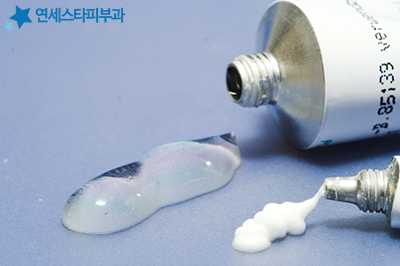
Ointments also have limitations. While they can help keep the affected area moist and soft, this is primarily for prevention or recurrence control and is insufficient as a treatment for established scars. This can lead to a feeling that the keloid isn't healing over time, and some may even give up, believing it will never disappear.
Before deciding on a treatment direction, it can be helpful to consider the following points:
- The time when the scar first appeared and its size changes over time.
- Whether it's a red mark or an old, hardened white mark.
- Whether the same area is being repeatedly stimulated.
- Previous treatments received and their responses.
For questions, inquire via chat consultation about keloid scar treatment
A comprehensive approach to treatment
The best approach is to combine treatment methods according to the condition. Injection treatment, while causing some pain during the procedure, has the advantage of relatively quickly flattening the raised area. At Yonsei Star Dermatology Sinchon, we incorporate the clinic's unique know-how to reduce existing pain by more than half with low-pain injections, combined with laser procedures to improve skin color and lower the possibility of recurrence, thus comprehensively treating keloid scars.
Scars appear differently in each person. Early-formed red marks, old established white marks, etc., vary in detailed shape and condition. We approach these various cases with diverse equipment and treatment by medical staff with extensive experience.
| Scar Condition | Primary Treatment Direction |
|---|---|
| Raised, firm keloid | Centered on injection treatment to reduce volume |
| Early red mark | Combined management considering color and recurrence |
| Old white mark | Combined laser treatment to refine surface and color |
For large scars, Surgical Scar Revision may also be considered.
The earlier you start, the easier it is

For larger keloids, it's advisable to start treatment with recurrence risk in mind. If a keloid mass remains in the body, it can act as a seed, influencing it to swell up again. Conversely, starting treatment early tends to be relatively easier.
At this point, it's not uncommon for people to underestimate the problem and believe that scar ointment alone can calm it down. However, even with the same method, the range of results can vary depending on how it's performed. Therefore, if you feel your scar is growing, we recommend checking the progression of keloid scars.
Although it is known as a challenging scar to treat, by approaching it step-by-step according to its condition, you can reduce its volume and manage recurrence. Before giving up, please check what stage your scar is in.
Inquire via chat consultation about keloid scars

Yonsei Star Dermatology Sinchon will continue to provide valuable information for your clean and healthy skin. Thank you.
Chief Director Lee Sang-joo (MD, PhD, Yonsei University College of Medicine and Graduate School, completed dermatology residency at Severance Hospital, President of the Korean Dermatological Association) Chief Director Lee Sang-joo's Profile First published 2025-01-14 / Last reviewed 2026-06-16
This content is for general information purposes only, and treatment effects and responses may vary individually. We recommend consulting with medical staff for an accurate diagnosis and treatment plan.