


There's a reason why color tattoo removal can feel difficult. Tattoo ink is often a combination of several pigments, not a single color, and each color absorbs light at a different wavelength. This was the background that made it difficult to remove all colors at once with existing lasers.
Conditions that Increase Difficulty
| Condition | Details |
|---|---|
| Color Family | Yellow, light green and green, mint and turquoise, and blue are generally difficult to remove. |
| Absorption and Reflection | Some colors are reflected or do not absorb laser energy well. |
| Ink Concentration and Depth | Removal becomes more difficult if the concentration is high or the ink is deeply embedded. |
| Old Overlays | Ink that has been layered multiple times has more clumped particles. |
| Bright and Pastel Colors | These inks have low brightness, making removal slower. |
These conditions collectively explain why color tattoos were historically considered difficult to remove. In some cases, colors remained even after multiple treatments.
Areas with High Pain or Slow Recovery
Areas with thin or sensitive skin may experience stronger pain and slower recovery.
- Wrists
- Ankles
- Around the ribs
- Neck
- Fingers
- Face, eyebrows, eyeliner, and lip tattoos
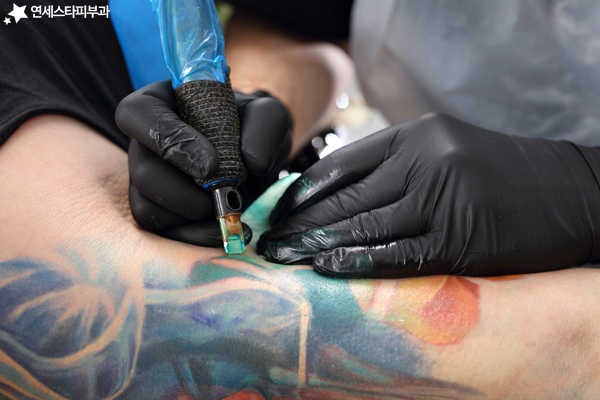
Cases where tattoos were previously layered or covered up also add to this. If the ink is layered multiple times, or if the pigment is dense and deeply concentrated, removal can be more difficult and recovery may be slower.
How Ultrafast Pulses Handle Ink
Ink deeply embedded in the dermis is generally difficult for lasers to reach.
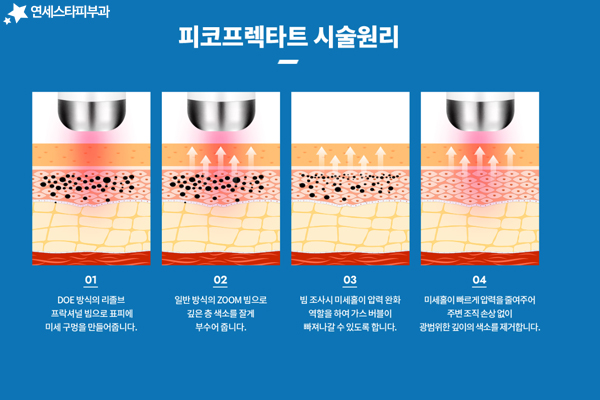
PicoWay uses ultrafast pulses, in picosecond (one trillionth of a second) units, to deliver energy quickly and powerfully to ink particles. It can break down ink into much smaller particle units than traditional nanosecond pulses, making it easier for the body's immune cells to process.
Information on the equipment configuration can be found in R-Zero Pico-Frectat Tattoo Removal, and methods using different wavelengths can be found in Nd:YAG Tattoo Removal.

Using Multiple Wavelengths in One Device
If a single device can apply multiple wavelengths, it allows for precise targeting of various colored inks. This approach addresses difficult-to-remove colors like blue, green, red, and yellow.
Adding the R-Zero Technique allows for up to 4 passes in a single session. This method speeds up removal by reducing the number of treatment sessions, and even for multiple or complex ink colors, it allows for continuous application of tailored wavelengths in one sitting.
The Conditions Have Changed Now
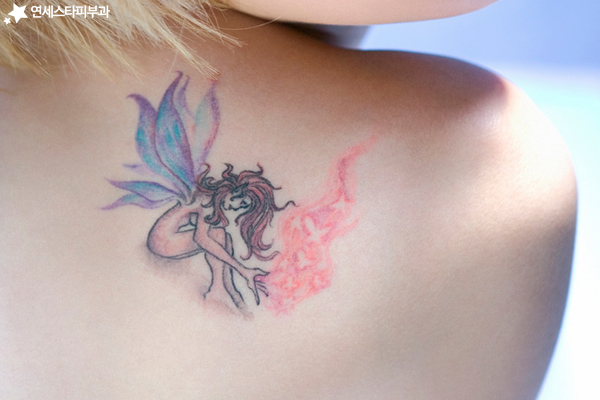
In the past, it was thought that color tattoo removal was difficult to complete. However, with the development of devices like picosecond lasers and advancements in treatment methods, various color tattoos, including yellow, light green, and blue, can now be removed. Individual results may vary.
What to Check During Consultation
If you are considering color tattoo removal, there are things to check before worrying about budget or wanting to remove it quickly. We recommend consulting a clinic where you can accurately assess your tattoo's condition, such as ink color and concentration, skin condition, and tattoo depth, to create a treatment plan.
The overall treatment flow is available in Tattoo Removal Treatment Guide. You can also easily inquire via chat now.

Authored and Medically Reviewed by Chief Director Lee Sang-Joo (Dermatologist) Graduated from Yonsei University College of Medicine and Graduate School, Doctor of Medicine · Severance Hospital Dermatology Resident Currently Adjunct Professor, Department of Dermatology, Yonsei University College of Medicine · Author of "Acne Bible," "Medical Skincare" View Medical Staff Profile
First Published 2025-11-26 · Last Reviewed 2026-07-29
This article contains general medical information and does not substitute for individual diagnosis and treatment. Results and recovery may vary by individual.