


Semi-permanent eyeliner, eyebrow, and lip tattoos, applied for cosmetic purposes 10 to 20 years ago, often discolor or smudge over time, becoming a new concern. Lines that were initially clear and natural can turn bluish or irregular in color as years pass.
Stage Where Makeup Can't Cover It
When the color smudges and the tone becomes uneven, it becomes difficult to cover with makeup. The number of people seeking semi-permanent tattoo removal is steadily increasing, but we often hear that they don't know where to start. We've organized frequently asked questions from consultations in order.

Principle of Finely Crushing Pigments
PicoWay Laser is already widely used for semi-permanent tattoo removal. It delivers energy in extremely short pulses, in picoseconds (one trillionth of a second), to finely crush pigment particles through a photoacoustic effect.
It's characterized by delivering energy in a shorter time than traditional nanosecond lasers, which can reduce thermal damage to surrounding tissues while treating pigments. However, semi-permanent tattoos often differ from regular tattoos in pigment composition and penetration depth, so a specialist's diagnosis before treatment is important.
Among PicoWay Lasers, PicoWay supports various wavelengths, including 532nm, 730nm, 785nm, and 1064nm. This configuration allows for addressing different colors, such as the discolored blue of eyeliner or the browned pigment of eyebrows. You can quickly understand the differences in equipment configuration by comparing it with the Nd:YAG Tattoo Removal guide.
What's More Necessary for the Eye Area
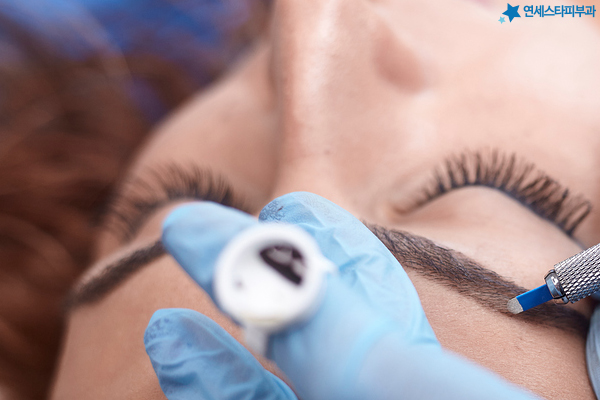
Semi-permanent eyeliner tattoo removal, due to its location in the special area around the eyes, requires a higher level of safety management than general tattoo removal. It should be performed at a medical institution equipped with safety devices such as special eye protection caps, eye ointment, and eye drops to protect the eyeballs during the procedure.
| Item | Reason Needed |
|---|---|
| Special eye protection cap | Equipment to protect the eyeball during the procedure |
| Eye ointment and eye drops | Safety equipment to be used together for procedures around the eyes |
| Plan tailored to color and depth | Due to pigment characteristics that are difficult to approach with uniform standards |
| Maintaining appropriate output | Directly related to reducing side effects such as blisters and scars |
| Moisturizing and UV protection | Scar and pigmentation management for the facial area |
What Determines the Number of Sessions and Duration
The number of sessions and duration for semi-permanent tattoo removal vary depending on the depth of pigment penetration, the type and color of the pigment, and the treatment area. It is rare for everything to be removed in a single session, and repeated treatments are usually performed over several sessions.
Semi-permanent eyeliner tattoos are difficult to approach with a single standard due to the diverse composition and penetration depth of the pigments. There are cases where attempting excessively fast removal can worsen pigmentation or scarring. A customized plan considering color and depth, an environment equipped with safety devices for the eye area, and a skilled specialist are the three reasons why these must be present together.
Will Increasing Output Finish It Faster?
Unreasonably increasing laser intensity does not necessarily reduce the number of treatment sessions.
Maintaining appropriate output according to skin condition and pigment depth is actually more effective, and this is also directly related to reducing side effects such as blisters and scars.
One way to increase the efficiency of a session without increasing intensity is the R-Zero Technique. This technology rapidly removes the bubbles formed on the skin immediately after laser irradiation with a special medication, allowing for up to 4 repeated irradiations in one session. As a result, it can help reduce the total number of treatment sessions and can be precisely utilized in procedures requiring a delicate approach, such as semi-permanent tattoos. The technique is explained in the R-Zero Pico-Frectat Tattoo Removal guide.

Recovery Management is Even More Important for Facial Areas
Semi-permanent tattoos often have a complex mix of discolored pigments remaining. PicoWay can address different colors with multi-wavelength precision and crushes pigments with picosecond-unit energy, minimizing damage to surrounding tissues. Its ability to precisely approach delicate areas like eyebrows and eyeliners is why it is gaining attention in semi-permanent tattoo removal clinics.
- Multi-wavelength precision for color-specific response
- Maximizing single-session efficiency through repeated irradiation within a session
- Alleviating the burden of side effects by combining scar management
Semi-permanent tattoo removal is a procedure performed on key areas of the face. This is why scar and pigmentation management is particularly important. After the procedure, strictly follow the specialist's instructions for moisturizing and UV protection, and if necessary, combining additional management for scar prevention can aid recovery.
Consulting before discoloration progresses further can also be a good option. The overall procedure can be found in the Tattoo Removal Treatment Guide, and individual questions can be asked via Chat Now.

Authored and Medically Reviewed by Chief Director Dr. Lee Sang-Joo (Dermatologist) President of the Korean Dermatological Association in 2026 · Current Adjunct Professor, Department of Dermatology, Yonsei University College of Medicine Graduated from Yonsei University College of Medicine and Graduate School with a Ph.D. in Medicine · Resident in Dermatology at Severance Hospital View Medical Team Introduction
First Published 2026-06-29 · Last Reviewed 2026-07-29
This article contains general medical information and does not substitute for individual diagnosis and treatment. Results and recovery progress may vary by individual.