
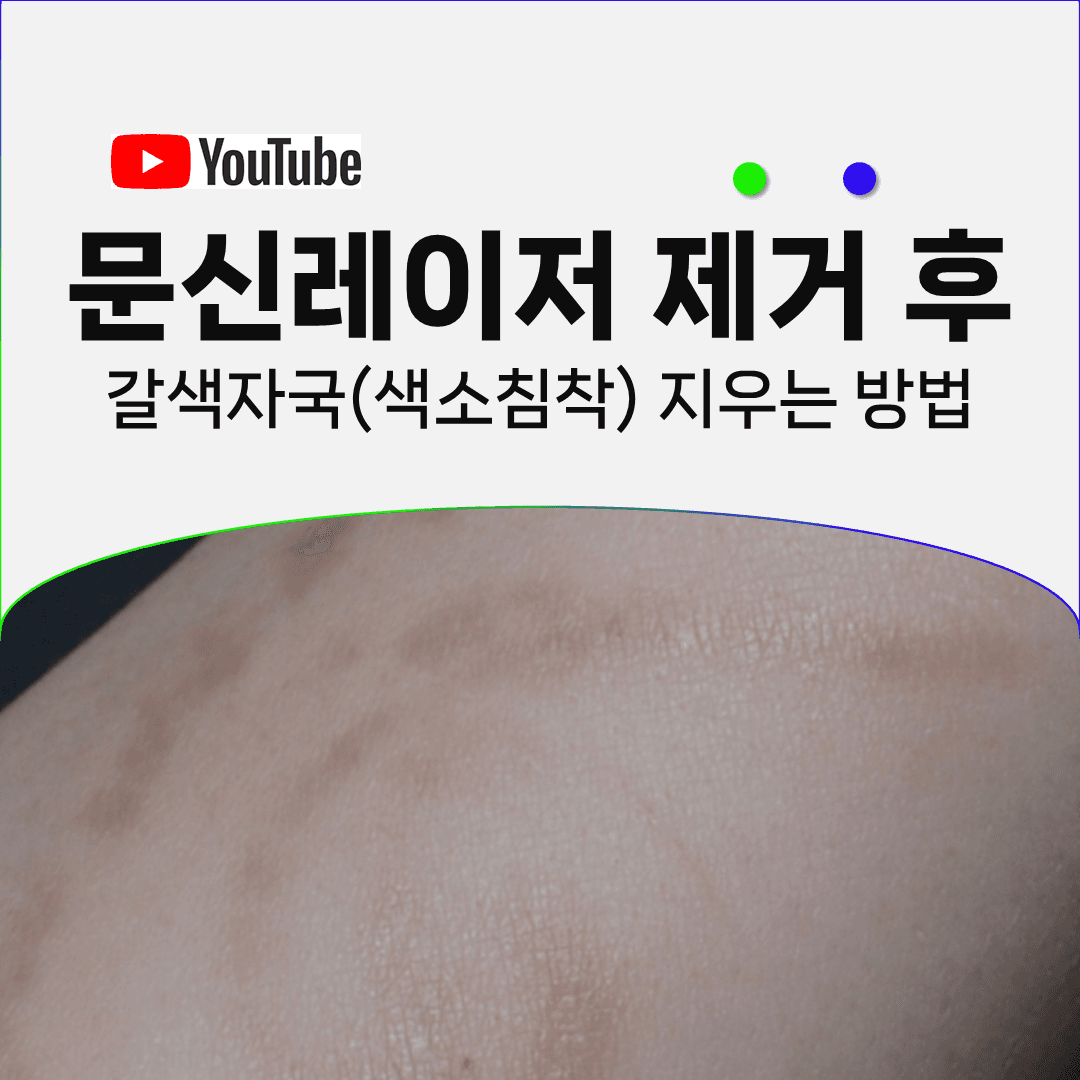
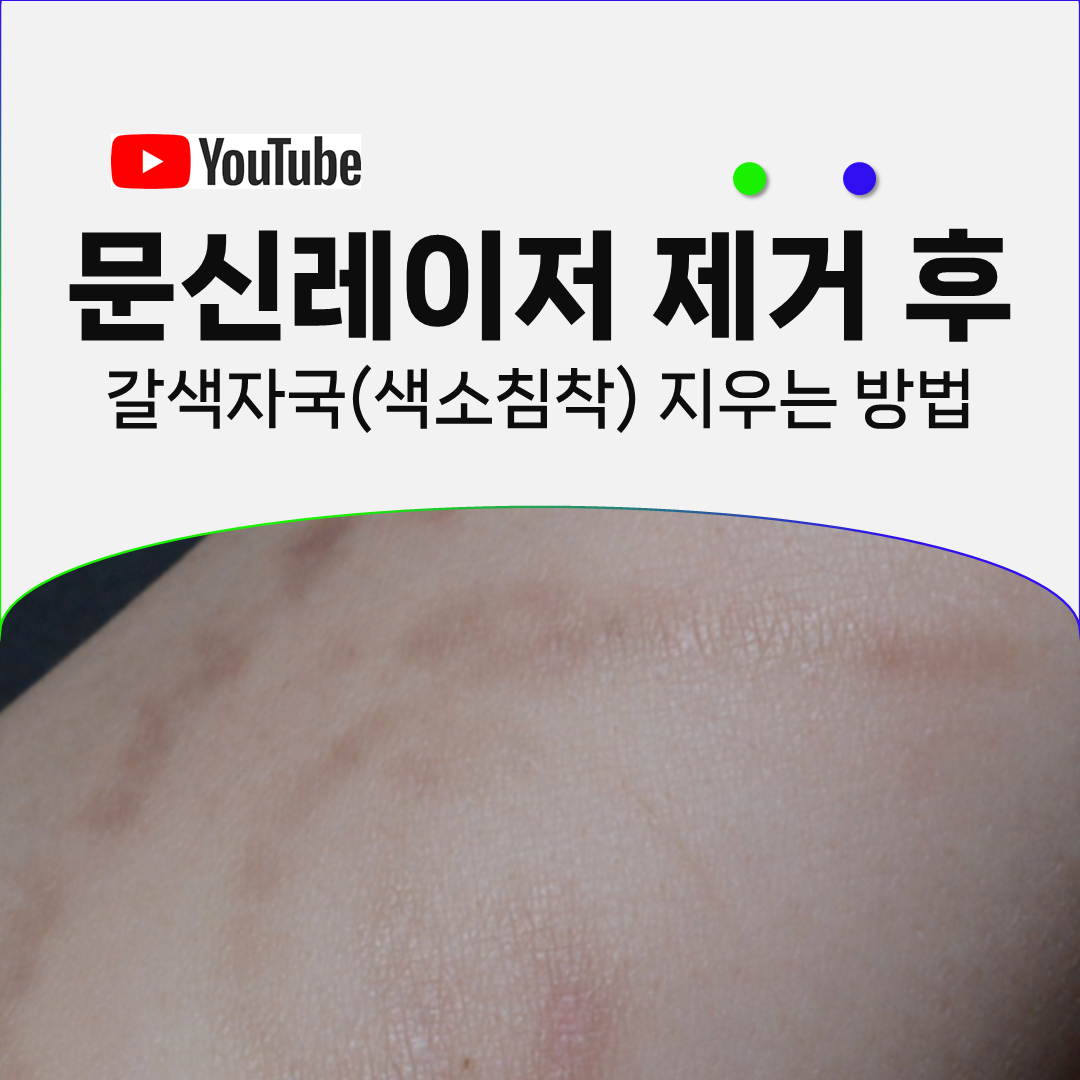
Many people wish to remove their tattoos as cleanly as possible but are concerned about the brown marks that remain towards the end of laser removal.
These brown marks are post-inflammatory hyperpigmentation. We've organized information on why they occur, what happens if left untreated, and what can be done to expedite their fading.
Stage where lasers no longer react
When only brown marks remain, most of the tattoo pigment has already faded. At this point, it's much more common for the area to show no reaction, no matter how much laser is applied.
This stage can effectively be considered the end of the tattoo laser removal procedure. It also means that a different approach is needed than the pigment-shattering stage. The methods for the removal stage are summarized in R-Zero Pico-Frectat Tattoo Removal and Nd:YAG Tattoo Removal.


Sequence of turning brown
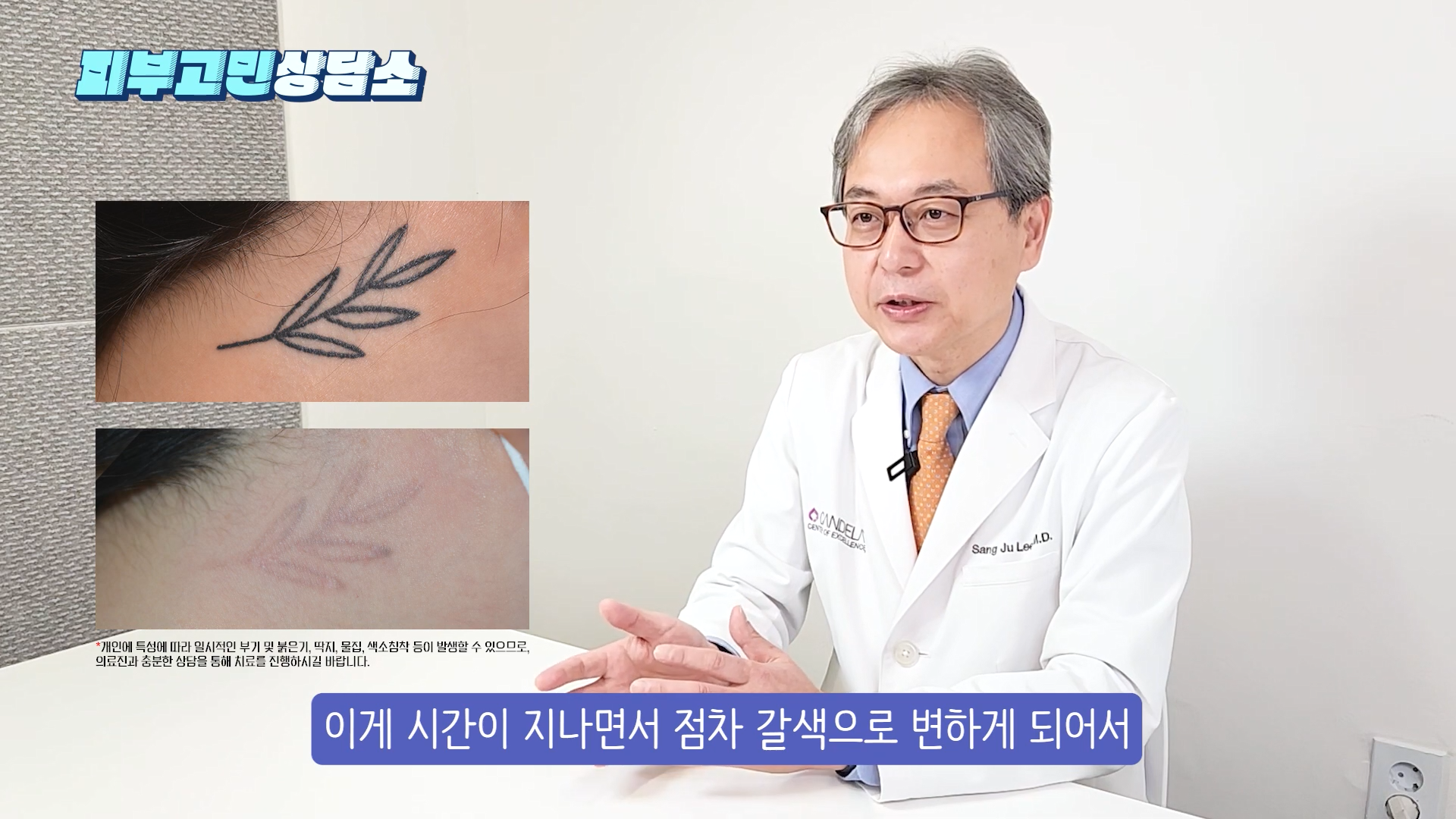
During the process where laser energy breaks down tattoo pigment in the skin, the skin experiences some irritation.
- Immediately after tattoo removal, the skin may be slightly swollen and red.
- Over time, this area gradually turns brown.
- That brown color remains as post-inflammatory hyperpigmentation.
It's easier to understand this as a progression from redness to brown.

Time for fading if left alone
There may be individual differences depending on one's condition. However, most cases resolve over time even without separate treatment.
Brown marks after tattoo laser removal often naturally fade to a nearly invisible level over 6 months to 2 years.

Reasons why waiting is still difficult
Tattoo removal can take a long time, from at least 6 months to several years. After going through that time, it's natural to be bothered if brown traces remain.
Our clinic understands the strong desire for quick removal. That's why many people ask if there's a way to eliminate brown marks. The overall treatment flow can be seen in Tattoo Removal Treatment Guide.

Stronger laser can make it darker
Brown marks are similar to other pigment treatments. If the laser is applied too strongly, stimulating melanin cells, it could actually worsen the condition.
This means that choosing to increase intensity for quicker removal could backfire.


Toning: Weak and repeated treatments
The remaining brown post-inflammatory hyperpigmentation is approached by continuing pigment laser treatments for trace removal at 2 to 3-week intervals. This includes laser toning, which involves repeated treatments with weak intensity.
| Item | Method |
|---|---|
| Treatment Interval | 2 to 3 weeks |
| Intensity | Repeated application with weak intensity |
| Number of Sessions | Approximately 5 to 10 sessions |
| Time to Change | May fade over about 1 year |
The toning equipment configuration can be found in Pico·Dual·Gold-Diamond Toning. If you are concerned about remaining brown marks, you may want to leave an inquiry via chat.
Authored and Medically Reviewed by Chief Director Kang Jin-Moon (Dermatologist) Graduated from Yonsei University College of Medicine · Severance Hospital Dermatology Resident · Current Adjunct Professor, Department of Dermatology, Yonsei University College of Medicine Member of Korean Dermatological Association · Korean Medical Laser Association · Korean Society for Aesthetic and Dermatologic Surgery · Author of Medical Body Care View Medical Staff Introduction
First published 2024-09-05 · Last reviewed 2026-07-29
This article contains general medical information and is not a substitute for individual diagnosis and treatment. Results and recovery progress may vary by individual.